US President Donald Trump announced on Saturday that a peace agreement with Iran has been 'largely negotiated' and is subject to finalization. In a post on his Truth Social platform, Trump stated that the 'final aspects and details' of a 'Memorandum of Understanding' are currently being discussed and 'will be announced shortly.'
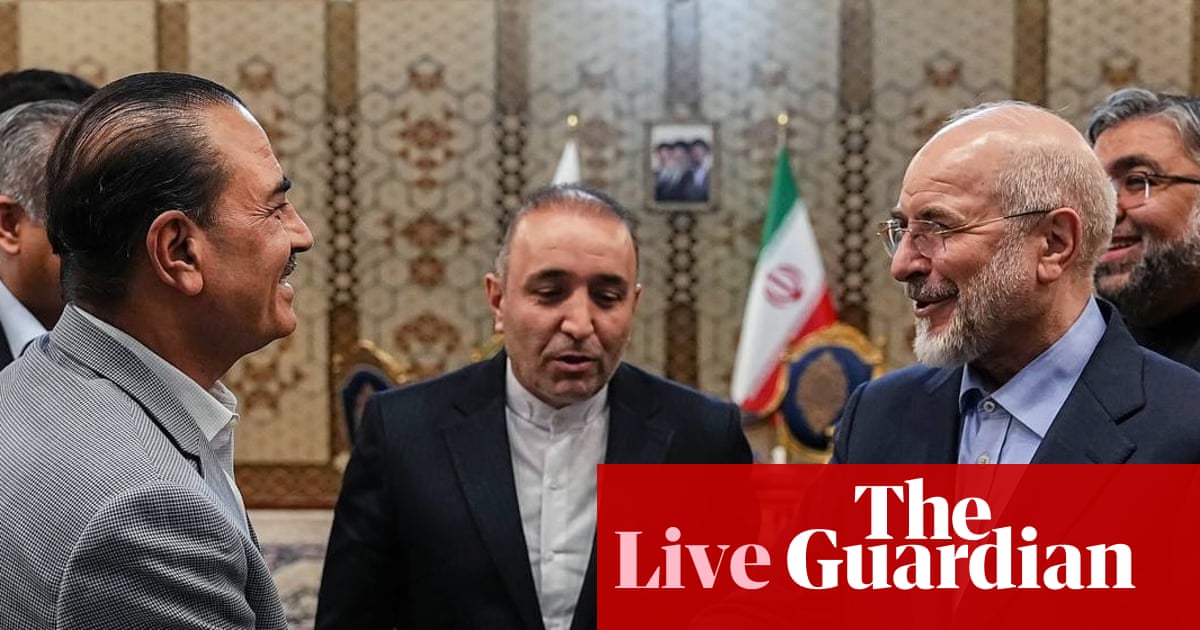
A central component of the announced agreement would be the reopening of the Strait of Hormuz, one of the world's most strategically important waterways. This narrow passage between Iran and Oman handles approximately one-fifth of global oil transit. Trump wrote: 'In addition to many other elements of the Agreement, the Strait of Hormuz will be opened.'
The announcement came after separate phone calls with leaders of several Muslim-majority countries and Israeli Prime Minister Benjamin Netanyahu. According to Trump's account, the negotiations involve not only the United States and Iran but also 'various other countries,' including Turkey and Pakistan as mediators, along with other Middle Eastern powers.
However, Iranian officials immediately disputed Trump's characterization of the negotiations. Iran's Revolutionary Guard Corps (IRGC) dismissed Trump's comments as propaganda, according to Iran's Fars news agency, emphasizing that Tehran had made no commitments regarding its nuclear program. The IRGC stated that nuclear issues had not been discussed at the current stage of negotiations, despite Trump previously describing this as a central condition of any agreement.
Particularly contentious is the question of control over the Strait of Hormuz. While Trump announced its opening as part of the deal, Fars reported that the waterway would remain under Iranian management according to the latest exchanged proposals. This contradicts Trump's announcement and is 'incomplete and inconsistent with reality,' according to Iranian sources.
Iranian Foreign Ministry spokesman Esmaeil Baghaei acknowledged 'a trend towards rapprochement' but cautioned: 'It does not necessarily mean that we and the United States will reach an agreement on the important issues.' This careful phrasing suggests that despite possible progress, significant disagreements remain.
The negotiations are taking place against the backdrop of a conflict that erupted in February 2026 between the United States, Israel, and Iran. Since then, regional tensions have escalated considerably, with control over vital shipping lanes becoming a central point of contention.
Notably, Trump's announcement made little mention of Iran's nuclear program and highly enriched uranium, topics that have traditionally been at the center of US-Iranian tensions. According to some reports, the nuclear program may be subject to separate two-month negotiations that could begin after a possible peace agreement.
The differing accounts of negotiation progress highlight the complexity of the talks and varying interpretations of what has been achieved so far. While Trump speaks of a largely negotiated agreement, Iranian officials appear to have a much more cautious assessment.
The international community is watching developments with great attention, as an agreement could have far-reaching implications for regional stability, global energy markets, and international security architecture. The Strait of Hormuz is crucial to the world economy, and any disruption to shipping traffic there has immediate impacts on oil prices globally.
The involvement of multiple regional actors, including Pakistan as a mediator and Turkey as a participant, reflects the complex diplomatic architecture required to address the multifaceted nature of US-Iranian tensions. The negotiations reportedly encompass not only immediate conflict resolution but also broader questions of regional security arrangements and economic cooperation.
As details remain scarce and official positions continue to diverge, the coming days will be critical in determining whether the optimism expressed by Trump translates into concrete progress toward ending one of the most significant geopolitical conflicts of recent years.
Fast take
US President Donald Trump announced on Saturday that a peace agreement with Iran has been 'largely negotiated' and is subject to finalization.
NOFRAME signal
Medium divergence · 20 Sources · 5 Regions
What remains open
Coverage is not fully split, but it is not identical either. That makes the comparison useful: the fact base shows the common core, while the perspectives show where political, regional, or institutional priorities change the emphasis.
Dossier compass
Which media spaces carry the story and how broad the source base is.
Source mix
Underlit angles
- Details about role of other regional actors
- Specific content of calls with regional leaders
- Detailed analysis of geopolitical implications
Open originals
Go straight to the linked articles. NOFRAME does not replace those sources.
Why it matters
Coverage is not fully split, but it is not identical either. That makes the comparison useful: the fact base shows the common core, while the perspectives show where political, regional, or institutional priorities change the emphasis.
Timeline
The Hindu · May 23, 2026 at 11:07 PM
Trump says agreement with Iran 'largely negotiated,' includes opening strait
The Guardian · May 23, 2026 at 11:14 PM
Middle East crisis live: fate of strait of Hormuz hangs in balance as Trump claims Iran deal ‘largely negotiated’
Middle East Eye · May 23, 2026 at 11:38 PM
IRGC dismisses Trump comments on Iran nuclear talks
NY Times World · May 23, 2026 at 11:48 PM
Iran War Live Updates: Trump Says Peace Deal Is Near