Russia launched a massive missile and drone attack on Ukraine's capital Kyiv in the early hours of May 24, 2026, resulting in at least two to four deaths and injuring 77 to 83 people, including children. The assault drew particular attention for the confirmed use of Russia's hypersonic Oreshnik ballistic missile, which had previously been deployed against Ukraine in November 2024.
The attack targeted multiple locations across the Ukrainian capital, affecting residential buildings, schools, and government facilities. Ukraine's Foreign Ministry confirmed that its building sustained minor damage from nearby explosions. The strike also specifically targeted water supply infrastructure, with three Russian missiles aimed at water facilities, highlighting the systematic nature of the assault on civilian infrastructure.
Russia's Defense Ministry confirmed the deployment of several advanced weapons systems in what it described as a retaliatory strike. In addition to the Oreshnik missile, Russian forces used Iskander, Kinzhal, and Tsirkon missiles, targeting what Moscow claimed were military command facilities, airbases, and defense industry enterprises. The Oreshnik missile was reportedly fired from the Kapustin Yar test site, aimed at the Bila Tserkva area in the Kyiv region.
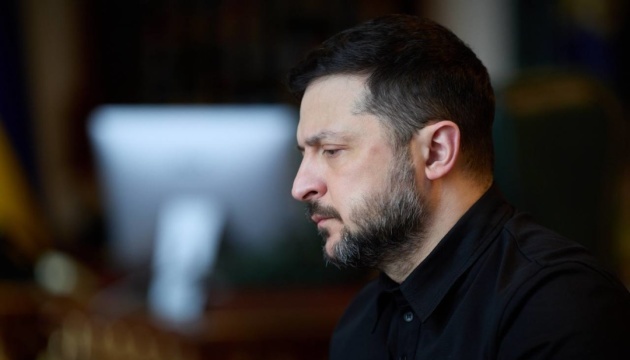
Ukrainian President Volodymyr Zelensky strongly condemned the attack, calling the Russian leadership "really insane" and emphasizing that such actions should not go unpunished. Following the assault, Zelensky visited the most heavily damaged areas of the capital and engaged in diplomatic consultations with French President Emmanuel Macron and Norwegian Prime Minister Jonas Gahr Støre, seeking international support and coordination.
The attack occurred against a backdrop of escalating tensions between the two nations. Russia's UN Ambassador Vassily Nebenzia had previously declared that negotiations with Ukraine were impossible following a Ukrainian attack on a college dormitory in Starobelsk in the Lugansk People's Republic. This rhetorical escalation had signaled potential military retaliation from Moscow.
International leaders responded with sharp condemnation of the Russian assault. French President Macron and EU foreign policy chief Kaja Kallas specifically denounced the use of the Oreshnik ballistic missile. NATO issued warnings about "devastating" consequences should nuclear weapons be used in the conflict, following reports from Ukraine's SBU security service that depleted uranium had been found in an unexploded Russian missile recovered in Chernihiv Oblast.
The Oreshnik missile represents one of Russia's most advanced weapons systems. The hypersonic weapon can reach speeds exceeding five times the speed of sound and is difficult to intercept due to its flight trajectory. Its deployment against Kyiv marks a significant escalation in the conflict that has been ongoing since February 2022, demonstrating Russia's willingness to use its most sophisticated military technology.
Damage across Kyiv extended through multiple districts of the city. Emergency services worked throughout the day to rescue injured civilians and assess the extent of the destruction. Many residents sought shelter in subway stations and bunkers during the multi-hour air raid alert. While Ukrainian air defenses managed to intercept some of the incoming projectiles, they were unable to stop all of them.
Military experts view the attack as an indication that Russia is prepared to increasingly deploy its most advanced weapons systems. The combination of different missile types suggests a coordinated strategy designed to overwhelm Ukrainian air defenses. Simultaneously, the use of the Oreshnik missile sends a message to the international community about Russia's military capabilities and its willingness to escalate the conflict further.
The assault on Kyiv represents the latest in a series of large-scale attacks on Ukrainian cities and infrastructure. The targeting of civilian facilities, including water supply systems and residential areas, continues a pattern that has characterized much of Russia's military campaign. The international community continues to monitor the situation closely, with concerns about further escalation and the potential for expanded use of advanced weapons systems.
Fast take
Russia launched a massive missile and drone attack on Ukraine's capital Kyiv in the early hours of May 24, 2026, resulting in at least two to four deaths and injuring 77 to 83 people, including children.
NOFRAME signal
Medium divergence · 9 Sources · 4 Regions
What remains open
Coverage is not fully split, but it is not identical either. That makes the comparison useful: the fact base shows the common core, while the perspectives show where political, regional, or institutional priorities change the emphasis.
Dossier compass
Which media spaces carry the story and how broad the source base is.
Source mix
Underlit angles
- Diplomatic reactions and international condemnation
- Detailed casualty figures and injured persons
- Critical assessment of Russian justifications
Open originals
Go straight to the linked articles. NOFRAME does not replace those sources.
Why it matters
Coverage is not fully split, but it is not identical either. That makes the comparison useful: the fact base shows the common core, while the perspectives show where political, regional, or institutional priorities change the emphasis.
Timeline
Ukrinform · May 24, 2026 at 10:52 AM
Injury toll from massive attack on Kyiv climbs to 77, two people killed
Punch Nigeria · May 24, 2026 at 11:15 AM
Four killed as Russia unleashes major missile, drone attack on Ukraine
France24 · May 24, 2026 at 11:29 AM
War in Ukraine: Russia launches massive missile strike on Kyiv
Ukrinform · May 24, 2026 at 11:37 AM
Zelensky speaks with Macron and Støre after massive Russian attack on Kyiv