A powerful 7.8 magnitude earthquake struck off the southern Philippines on Monday morning, June 8, 2026, triggering widespread tsunami warnings across the Asia-Pacific region. The offshore quake occurred approximately 24 kilometers west of Sarangani province on Mindanao island, according to the United States Geological Survey.
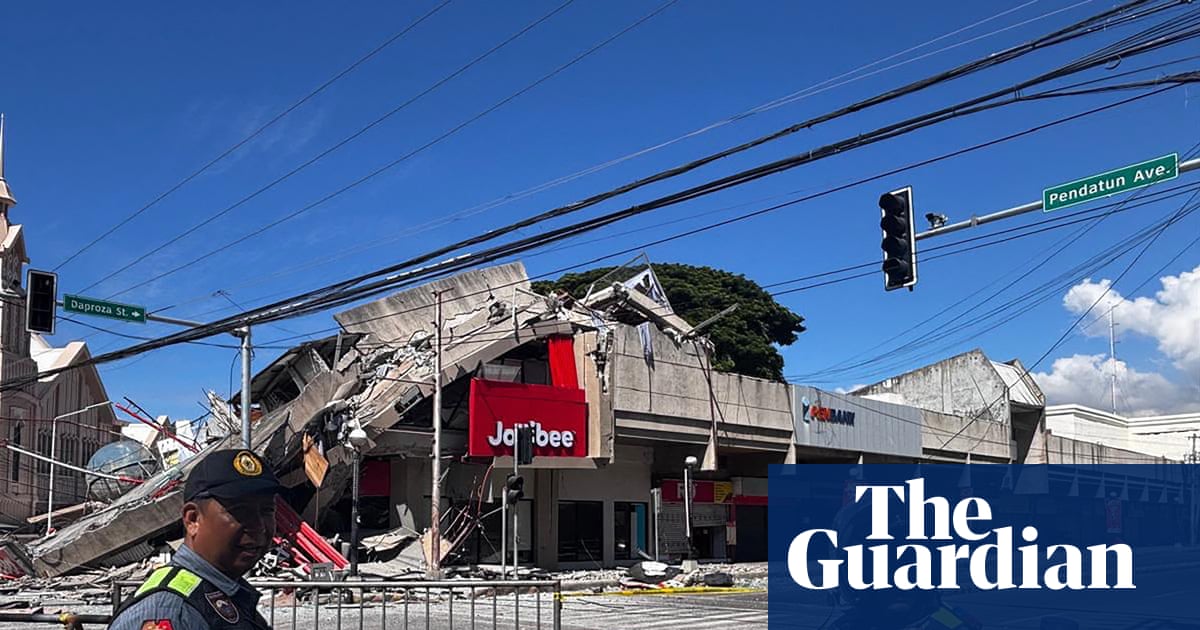
The earthquake caused significant damage in the affected region, with at least one confirmed fatality and multiple building collapses reported. In General Santos City, local police described numerous damaged structures while rescue operations remained ongoing. Power outages were reported across wide areas of the region, complicating communication and damage assessment efforts.
Philippine authorities immediately issued tsunami warnings for at least nine provinces across Mindanao following the quake. The Philippine Institute of Volcanology and Seismology (Phivolcs) urged residents in coastal areas to evacuate immediately to higher ground. The country's president also appealed to citizens to heed evacuation orders and move to safer locations.
The Pacific Tsunami Warning Centre expanded alerts to multiple countries and territories throughout the region. Tsunami waves were deemed possible within three hours of the initial earthquake for the Philippines, Indonesia, Taiwan, Japan, Malaysia, Papua New Guinea, Palau, and Guam. Actual tsunami waves measuring approximately one meter (three feet) in height were subsequently observed reaching coastal areas.
The Philippines' geological position makes it particularly vulnerable to seismic activity. The archipelago sits along the Pacific Ring of Fire, a zone of intense tectonic activity encircling the Pacific Ocean. Mindanao is specifically surrounded by three active subduction trenches, where oceanic plates dive beneath continental plates, potentially generating powerful earthquakes.
Emergency response teams were deployed to affected areas to conduct search and rescue operations. Authorities worked to assess the full extent of damage and identify any additional casualties, though communication with remote areas proved challenging due to widespread power outages. Master Sergeant Robert Dagon of the General Santos City police noted that many buildings were affected but could not provide specific numbers due to ongoing rescue priorities.
Neighboring Indonesia activated its tsunami warning systems and advised coastal residents to stay away from vulnerable areas. Other regional countries closely monitored the situation and prepared for potential impacts. The coordinated response highlighted the interconnected nature of tsunami risks across the Asia-Pacific region.
Seismologists emphasized that aftershocks were likely to continue in the coming days and weeks following the major earthquake. Residents were advised to remain vigilant and await further instructions from authorities. The international community offered assistance with rescue and relief efforts as the situation developed.
The event underscored the ongoing seismic hazards facing the Philippines due to its location at the intersection of multiple tectonic plates. Regular earthquake activity in the region demonstrates the critical importance of effective early warning systems and emergency preparedness measures for protecting vulnerable coastal populations.
As rescue operations continued and damage assessments proceeded, authorities maintained heightened alert levels across the affected region. The earthquake served as a reminder of the natural disaster risks inherent to the tectonically active Asia-Pacific region and the need for continued vigilance and preparedness.
Fast take
A powerful 7.
NOFRAME signal
Medium divergence · 15 Sources · 5 Regions
What remains open
Coverage is not fully split, but it is not identical either. That makes the comparison useful: the fact base shows the common core, while the perspectives show where political, regional, or institutional priorities change the emphasis.
Dossier compass
Which media spaces carry the story and how broad the source base is.
Source mix
Underlit angles
- Detailed geological background
- Specific local rescue operations
- International diplomatic responses
Open originals
Go straight to the linked articles. NOFRAME does not replace those sources.
Why it matters
Coverage is not fully split, but it is not identical either. That makes the comparison useful: the fact base shows the common core, while the perspectives show where political, regional, or institutional priorities change the emphasis.
Timeline
The Guardian · June 8, 2026 at 03:17 AM
Strong earthquake strikes southern Philippines with tsunami warnings issued
Rappler · June 8, 2026 at 03:31 AM
What triggered the powerful magnitude 7.8 earthquake in Mindanao?
NY Times World · June 8, 2026 at 03:46 AM
Strong Earthquake in Philippines Topples Buildings and Prompts Tsunami Warnings
Jakarta Post · June 8, 2026 at 03:51 AM
Major quake off Philippines kills one, triggers tsunami warnings