US President Donald Trump has traveled to Beijing for a high-stakes summit with Chinese President Xi Jinping, taking place against a backdrop of escalating tensions over Taiwan and persistent trade disputes between the world's two largest economies.
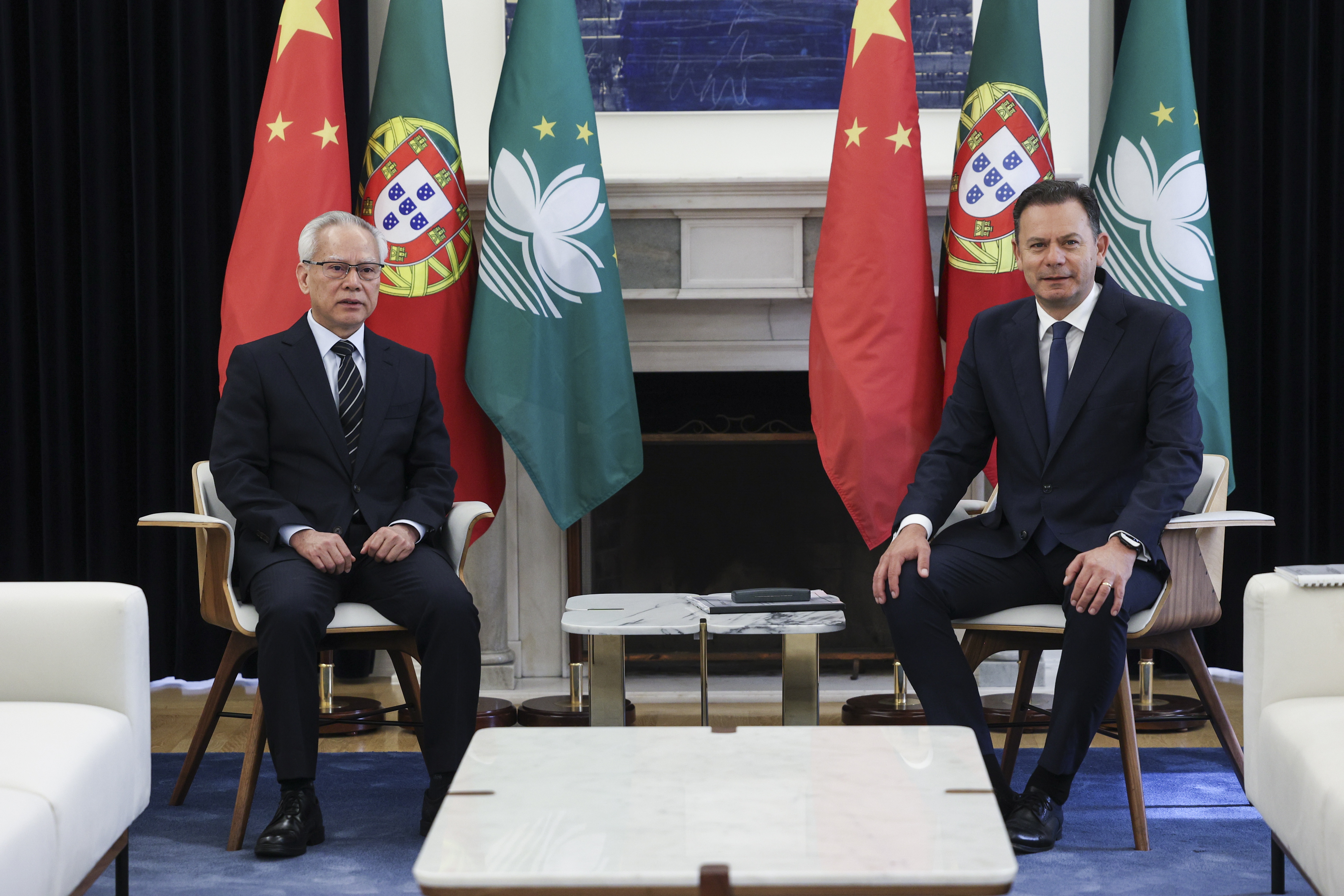
Ahead of Trump's arrival, China significantly escalated its rhetoric regarding Taiwan. On Wednesday, China's Taiwan Affairs Office declared that the country is resolved to oppose independence for Taiwan, stating that its capability to 'crush' separatism is 'unbreakable'. These stark words underscore Beijing's uncompromising stance on the Taiwan issue and set a confrontational tone for the upcoming discussions.
The two-day summit agenda encompasses a range of contentious issues that have the potential to further strain the already tense relationship between Washington and Beijing. Key points of contention include US arms sales to Taiwan, China's export controls on rare earth materials, the state of bilateral trade relations, and the evolving situation in Iran. These topics reflect the complex geopolitical and economic challenges facing both nations.
In preparation for the summit, US Treasury Secretary Scott Bessent conducted preparatory meetings in South Korea, where he met with President Lee Jae Myung to discuss tariffs and the upcoming US-China summit. Simultaneously, Chinese and US trade officials held last-minute talks, potentially paving the way for more constructive discussions.
The Taiwan question remains the most sensitive point in US-China relations. While China views Taiwan as a breakaway province that must be reunified by force if necessary, the United States supports the island through arms sales and diplomatic backing. China's recent sharp statements make clear that Beijing views this support as a direct challenge to its territorial integrity.
On Taiwan itself, people are responding to increasing tensions with practical measures. Reports indicate that Taiwanese civilians are flocking to self-defense courses amid fears that China could one day use force to seize the island. This development illustrates how geopolitical tensions are affecting the daily lives of people on the island.
Despite the tensions, there are also positive developments in cooperation between the two countries. Chinese and US anti-narcotics authorities recently conducted a joint investigation that resulted in the arrest of five suspects and the seizure of drugs. The operations took place in China's Liaoning and Guangdong provinces as well as in Florida and Nevada in the US, demonstrating that practical cooperation in certain areas remains possible despite political differences.
Oil markets are also reacting to the geopolitical developments. Prices are fluctuating amid uncertainty about prospects for an Iran ceasefire and the potential outcomes of the Trump-Xi meeting. These market reactions highlight how closely global economic trends are tied to US-China relations.
The summit comes at a critical juncture as both countries attempt to redefine their relationship after years of trade war and increasing strategic competition. The outcomes of these talks could have far-reaching implications not only for bilateral relations but also for global economic stability and security. Observers will be closely watching whether the two leaders can find ways to bridge their differences or if tensions will continue to escalate.
The meeting represents a test of both leaders' diplomatic skills and their ability to manage one of the world's most important bilateral relationships. With issues ranging from trade and technology to security and human rights on the table, the summit's results could shape the trajectory of US-China relations for years to come. The international community is watching closely, as the relationship between these two superpowers has profound implications for global stability and prosperity.
Fast take
US President Donald Trump has traveled to Beijing for a high-stakes summit with Chinese President Xi Jinping, taking place against a backdrop of escalating tensions over Taiwan and persistent trade disputes between the world's two largest economies.
NOFRAME signal
Stable coverage · 9 Sources · 4 Regions
What remains open
The source picture is relatively consistent. That still makes the details worth reading: small differences in wording, omissions, and source selection can reveal what each region treats as important.
Dossier compass
Which media spaces carry the story and how broad the source base is.
Source mix
Underlit angles
- China's specific threats against Taiwan independence
- Details about trade negotiations and economic aspects
- China's sharp Taiwan rhetoric
Open originals
Go straight to the linked articles. NOFRAME does not replace those sources.
Why it matters
The source picture is relatively consistent. That still makes the details worth reading: small differences in wording, omissions, and source selection can reveal what each region treats as important.
Timeline
RT · May 13, 2026 at 01:50 AM
China reveals four ‘red lines’ ahead of Trump visit
NDTV World · May 13, 2026 at 02:16 AM
Trump China Visit Live Updates: Trump Heads To China For High-Stakes Talks With Xi Over Iran War, Trade
Nikkei Asia · May 13, 2026 at 04:03 AM
China, US trade chiefs to huddle for last-minute talks before Trump visit
Daily Maverick · May 13, 2026 at 04:47 AM
Ahead of Trump summit, China says it is ready to 'crush' any Taiwan independence bid