Two consecutive earthquakes struck the central Andean region of Peru on Saturday night, killing at least six people and injuring more than 20 others. The area most affected is Chupaca province in the Junín region, located roughly 300 kilometers east of the capital, Lima. Authorities have reported significant damage to homes, public buildings and historic structures. The event is significant because it represents one of the strongest quakes to hit this mountainous region in decades, leaving hundreds of people without shelter.
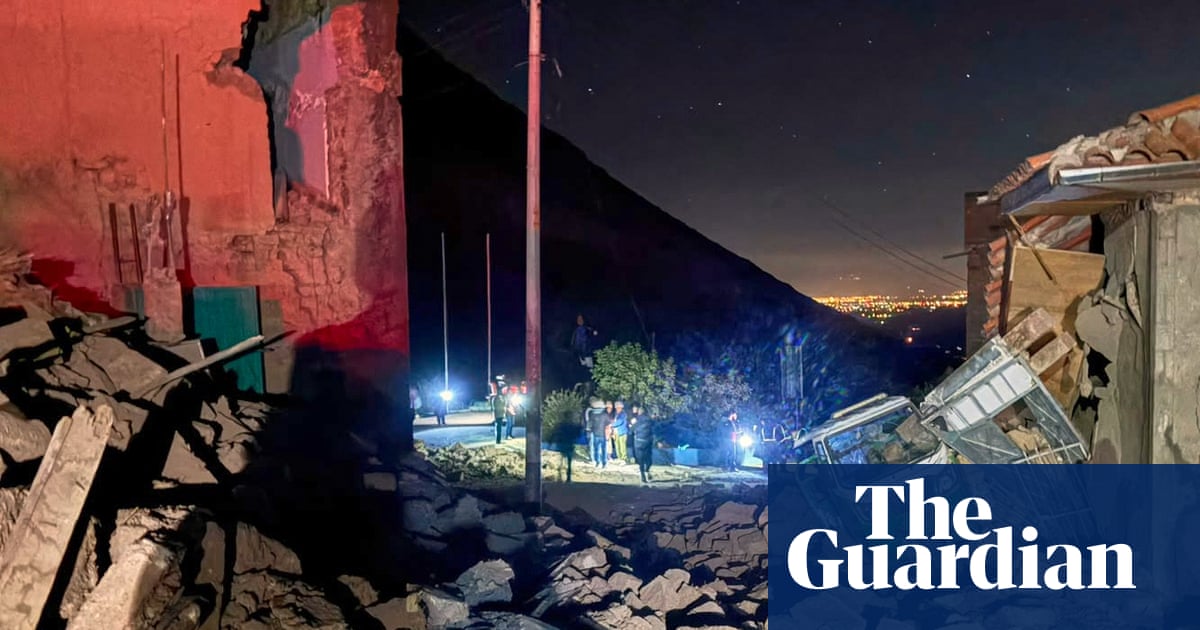
According to Peru's civil defense chief, at least six people were killed and 21 injured in the two earthquakes. Other reports, including one from The Guardian, cite more than 30 injuries and around 300 people displaced. These discrepancies likely reflect the fact that the situation evolved rapidly in the hours following the quake, with different agencies issuing tallies at different times. Peru's National Civil Defense Institute stated that the exact number of missing persons remained unclear.
Reports also differ somewhat on the magnitude of the earthquakes. Peru's National Seismological Center posted on social media that two quakes measuring 5.1 and 3.7 struck at depths of 24 and 18 kilometers, respectively. The US Geological Survey, however, recorded a main quake of magnitude 5.5, with an epicenter about two kilometers west-southwest of the city of Sicaya in Huancayo province, at a depth of 10 kilometers. Some outlets, including Al Jazeera, initially reported a magnitude of 5.6. Such discrepancies are not unusual in earthquake measurement, as different monitoring networks and methodologies can yield slightly different readings.
According to the USGS, the first and stronger quake struck at 9:24 p.m. local time on Saturday, followed shortly after by a second, weaker tremor. The combination of the two events caused already-damaged buildings to collapse further or become structurally destabilized. Russian news agency TASS, citing local authorities, reported that more than 250 houses were damaged and 48 were completely destroyed.
The town of Pumpunya was particularly affected. Footage from Al Jazeera showed firefighters searching through the rubble of a collapsed building for a missing person. Sicaya and other communities in Huancayo province also suffered severe damage. Several sources reported that a local church and a convent were damaged or structurally compromised, a vulnerability often attributed to older buildings in the region that were not constructed to modern earthquake-resistant standards.
The New York Times placed the event in broader context, noting that while Peru is generally prone to frequent earthquakes, Saturday's tremor was the strongest to hit the central highlands in nearly 50 years. This framing underscores the unusual severity of the event for local residents, who are accustomed to occasional tremors but rarely face damage of this scale.
Emergency responders, including firefighters and civil defense units, worked through the hours following the quakes to search for survivors and assess the extent of the damage. The exact number of people still missing had not been confirmed at the time of reporting. Around 300 people were displaced from their homes, according to consistent reports, and had to be temporarily housed in shelters or with relatives.
It remains uncertain how the final death toll and injury count will evolve, as rescue operations in remote mountain areas are often slowed by limited access and difficult terrain. It is also unclear how long reconstruction of the destroyed homes will take and what support the Peruvian government will provide to affected communities. Given the scale of the damage, further updates on aftershocks, casualty figures and relief efforts are expected in the coming days.
Fast take
Two consecutive earthquakes struck the central Andean region of Peru on Saturday night, killing at least six people and injuring more than 20 others.
NOFRAME signal
Stable coverage · 9 Sources · 5 Regions
What remains open
The source picture is relatively consistent. That still makes the details worth reading: small differences in wording, omissions, and source selection can reveal what each region treats as important.
Dossier compass
Which media spaces carry the story and how broad the source base is.
Source mix
Underlit angles
- No notable omissions in the current source comparison.
Open originals
Go straight to the linked articles. NOFRAME does not replace those sources.
Why it matters
The source picture is relatively consistent. That still makes the details worth reading: small differences in wording, omissions, and source selection can reveal what each region treats as important.
Timeline
NDTV World · July 19, 2026 at 08:11 PM
5.5 Magnitude Earthquake Kills At Least 5 In Peru's Andes Region
NY Times World · July 19, 2026 at 08:19 PM
Earthquake in Peru Kills 6 and Displaces Hundreds
India Today · July 19, 2026 at 09:31 PM
6 dead, 21 injured after twin earthquakes in Peru; hundreds displaced
TASS · July 19, 2026 at 09:38 PM
Six die in earthquake in Peru