China conducted a special maritime law enforcement operation in waters east of Taiwan Island following the announcement of planned border delimitation talks between Japan and the Philippines in the same region. The operation was organized by China's Transport Ministry and involved maritime police units from the coastal provinces of Fujian and Guangdong.
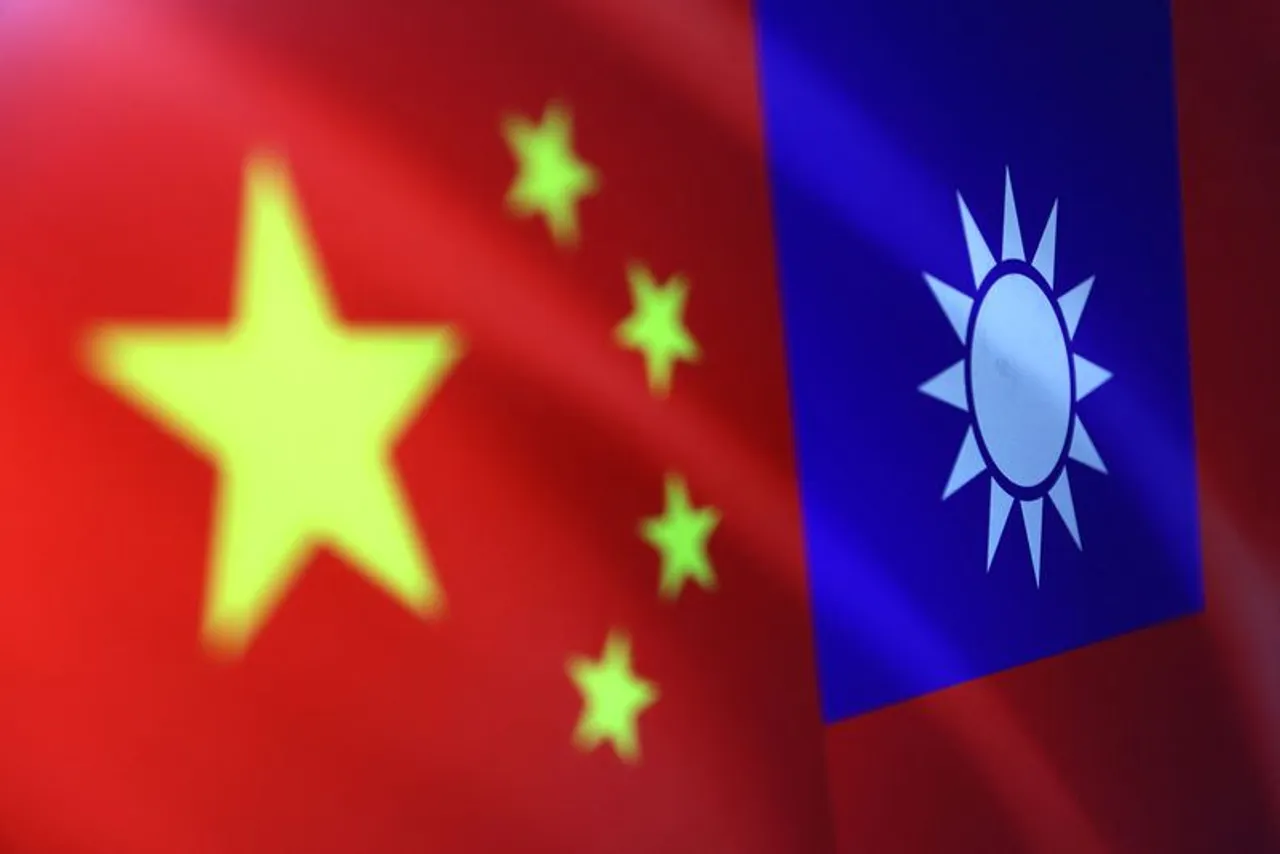
Taiwan responded immediately to the Chinese action by deploying coast guard vessels to the affected area. Taiwan's coast guard confirmed the deployment of ships as a direct response to what China termed a "law enforcement operation." Chinese state media described the operation as a necessary response to what they called a unilateral statement by Japan and the Philippines to begin negotiations on maritime border delimitation east of Taiwan Island.
The tensions arose after Japan and the Philippines announced bilateral talks regarding maritime boundary demarcation in waters that China considers part of its sphere of influence. Taiwan's government had previously expressed concerns, stating that such talks between Japan and the Philippines should not infringe upon Taiwan's maritime rights.
The incident highlights the complex and overlapping territorial claims in the East China Sea and South China Sea regions. Multiple nations assert claims over various waters and islands in the area, regularly leading to diplomatic tensions and maritime incidents. China has been pursuing an increasingly assertive policy to enforce its territorial claims in these waters.
Notably, China employed law enforcement and police vessels rather than military ships for this operation. This tactic is frequently used by Beijing to assert territorial claims without provoking direct military confrontation. The use of coast guard and police forces allows China to demonstrate presence and enforce claims while avoiding escalation to open military conflict.
The timing of events is particularly revealing: China's operation followed immediately after the announcement of Japan-Philippines border talks, suggesting that Beijing views such bilateral discussions as potentially threatening to its own territorial claims in the region.
Taiwan finds itself in a particularly difficult position, as it is not recognized as a sovereign state by China but nonetheless asserts its own maritime claims and rights. The island relies on international support to strengthen its position in regional disputes but has limited options for participating in formal multilateral negotiations due to its contested political status.
This incident joins a series of similar occurrences where China has conducted maritime operations in response to actions by other countries in the region. Experts view this as a pattern of Chinese foreign policy aimed at maintaining or expanding control over strategically important sea lanes and waters.
The affected waters hold considerable strategic and economic significance as they represent important shipping routes for international trade. Additionally, the region is believed to contain significant fishing resources and potential energy reserves, increasing the importance of territorial claims for all involved parties.
The use of what China terms "special operations" rather than routine patrols suggests Beijing wanted to send a clear message about its opposition to the Japan-Philippines talks. This approach allows China to demonstrate its displeasure while maintaining some degree of plausible deniability about aggressive intentions.
Regional security analysts note that such incidents reflect broader geopolitical tensions involving China's growing assertiveness in maritime affairs and other nations' efforts to establish clearer boundaries and strengthen their own territorial positions. The frequency of such incidents has increased in recent years as competition for influence in the Indo-Pacific region has intensified.
The international community continues to monitor these developments closely, as maritime disputes in the region have the potential to affect global trade routes and regional stability. The involvement of multiple parties with competing claims makes resolution of these territorial disputes particularly challenging.
Fast take
China conducted a special maritime law enforcement operation in waters east of Taiwan Island following the announcement of planned border delimitation talks between Japan and the Philippines in the same region.
NOFRAME signal
Stable coverage · 5 Sources · 4 Regions
What remains open
The source picture is relatively consistent. That still makes the details worth reading: small differences in wording, omissions, and source selection can reveal what each region treats as important.
Dossier compass
Which media spaces carry the story and how broad the source base is.
Source mix
Underlit angles
- Details about the composition of Chinese operational forces
- Specific statements from Taiwan's government about maritime rights
- Specific details about number and type of vessels deployed
Open originals
Go straight to the linked articles. NOFRAME does not replace those sources.
Why it matters
The source picture is relatively consistent. That still makes the details worth reading: small differences in wording, omissions, and source selection can reveal what each region treats as important.
Timeline
TASS · June 7, 2026 at 03:15 AM
China conducted special law enforcement operation east of Taiwan
Japan Times · June 7, 2026 at 04:39 AM
Taiwan coast guard says deploys vessels in response to China operation
The Hindu · June 7, 2026 at 05:07 AM
China holds ‘special operation’ near Taiwan after Japan-Philippines sea border talks
TRT World · June 7, 2026 at 07:29 AM
Taiwan dispatches vessels to counter China's 'law enforcement operation'