World Health Organization Director-General Tedros Adhanom Ghebreyesus has visited Uganda to assess the country's response to an Ebola outbreak primarily affecting the neighboring Democratic Republic of Congo. The high-level visit underscores international concern about the spread of the deadly virus in the East African region.
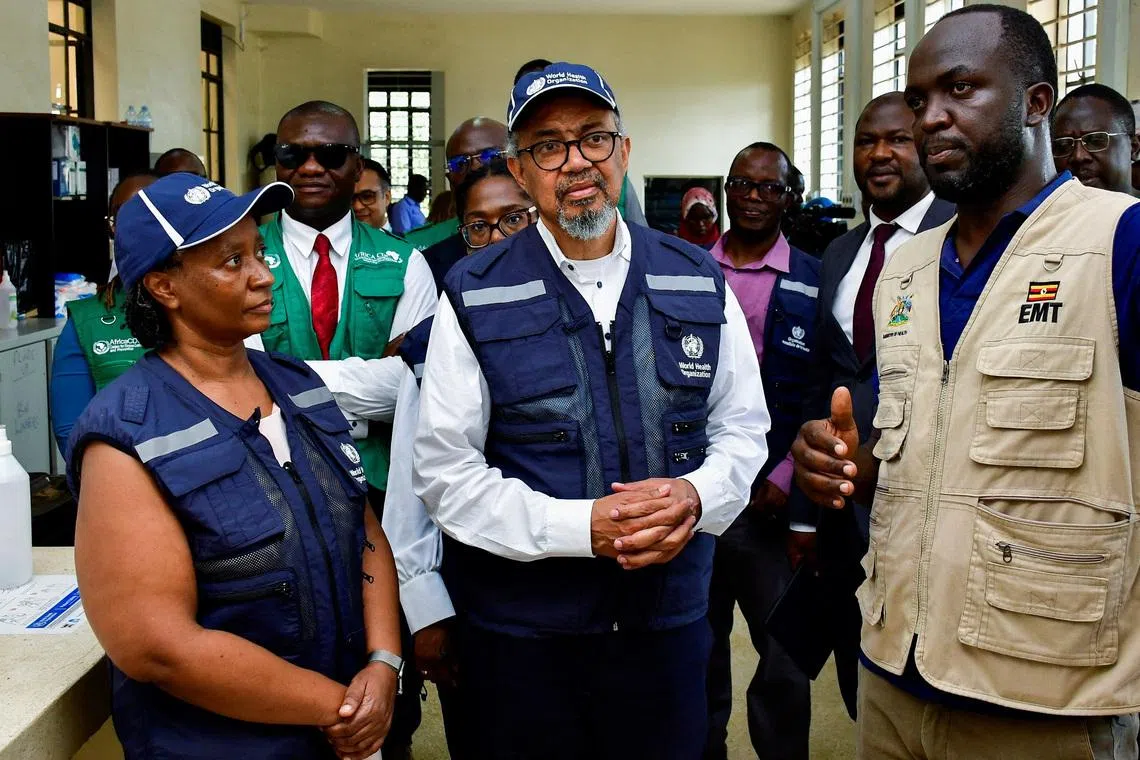
Uganda has recorded 19 confirmed Ebola cases so far, as Tedros announced on social media platform X. Of these cases, 14 involved people who had entered from the Democratic Republic of Congo, while five were Ugandan nationals. These figures indicate that the outbreak in Uganda consists largely of imported cases from across the border.
The WHO Director-General praised Uganda's response to the health emergency, describing it as "prompt and capable." Uganda is considered well-prepared for handling such health crises due to previous experience with Ebola outbreaks. The country has successfully contained several Ebola outbreaks in the past and has established protocols for epidemic control.
Despite praising Uganda's measures, Tedros called on the country to reconsider its decision to close the border with the Democratic Republic of Congo. The border closure had been implemented as a preventive measure to stop further spread of the Ebola virus. The WHO's position reflects the difficult balance between health protection and maintaining important cross-border connections.
The epicenter of the current Ebola outbreak is located in the Ituri province of the Democratic Republic of Congo, which directly borders Uganda. This geographical proximity explains why Uganda is particularly at risk and why most cases in the country occur among people who have entered from the DRC. Ituri province has experienced several Ebola outbreaks in the past.
Ebola is a severe, often fatal disease caused by the Ebola virus. The virus is transmitted through direct contact with bodily fluids of infected persons or animals. Symptoms include fever, severe headaches, muscle pain, and in later stages, internal and external bleeding. The mortality rate can range from 25 to 90 percent depending on the virus strain and available medical care.
The World Health Organization is coordinating the international response to the outbreak and supporting both Uganda and the Democratic Republic of Congo in their containment efforts. This includes providing medical equipment, vaccines, and specialist personnel, as well as monitoring the virus's spread patterns.
The situation is being closely monitored by international health authorities, as Ebola outbreaks have the potential to spread rapidly and become regional or even global health crises. Experiences from previous outbreaks, particularly the major Ebola epidemic in West Africa from 2014-2016, have demonstrated the importance of rapid and coordinated international response.
For affected communities in the border region between Uganda and the DRC, the outbreak means not only a health threat but also economic challenges due to restricted movement and trade activities. The border closure affects the daily lives of many people who traditionally commute between both countries.
The current outbreak highlights ongoing challenges in the region's health infrastructure and the need for sustained international support for epidemic preparedness. Both countries are working with international partners to strengthen surveillance systems and improve rapid response capabilities for future health emergencies.
Fast take
World Health Organization Director-General Tedros Adhanom Ghebreyesus has visited Uganda to assess the country's response to an Ebola outbreak primarily affecting the neighboring Democratic Republic of Congo.
NOFRAME signal
Stable coverage · 5 Sources · 4 Regions
What remains open
The source picture is relatively consistent. That still makes the details worth reading: small differences in wording, omissions, and source selection can reveal what each region treats as important.
Dossier compass
Which media spaces carry the story and how broad the source base is.
Source mix
Underlit angles
- Specific case numbers and their breakdown
- Praise for Uganda's response
- Discussion of border policy
Open originals
Go straight to the linked articles. NOFRAME does not replace those sources.
Why it matters
The source picture is relatively consistent. That still makes the details worth reading: small differences in wording, omissions, and source selection can reveal what each region treats as important.
Timeline
The Hindu · June 8, 2026 at 12:05 PM
WHO chief visits Ebola-hit Uganda
Straits Times · June 8, 2026 at 02:27 PM
WHO's Tedros says Uganda should reconsider Congo border closure over Ebola
DW News · June 8, 2026 at 05:04 PM
Ebola outbreak: WHO's Tedros visits Uganda, bordering the DRC Ituri province epicenter
Al Jazeera · June 8, 2026 at 06:35 PM
WHO chief lauds Uganda’s response to Ebola outbreak