The European Union and the United Kingdom have imposed sanctions on 16 Russian officials and institutions accused of systematically deporting and forcibly relocating Ukrainian children from occupied territories. The punitive measures target individuals and organizations that Western governments say are responsible for removing thousands of minors from Russian-occupied areas of Ukraine and subjecting them to forced adoption, re-education, and military training in Russia. The sanctions represent the latest effort by Western allies to hold Russian officials accountable for what they characterize as war crimes against Ukrainian civilians.
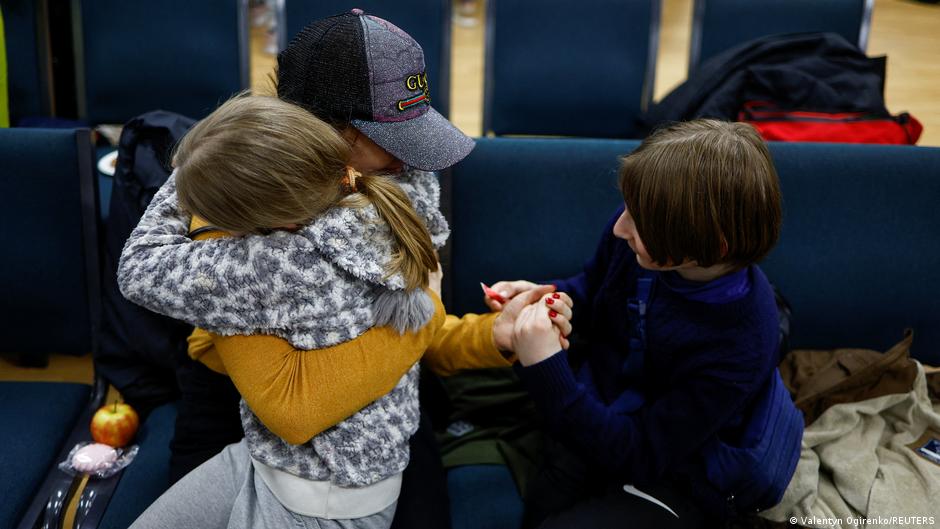
The sanctions were approved on Sunday during a meeting of EU foreign ministers in Brussels, with Latvian Foreign Minister Baiba Braze stating that Russia is attempting to systematically erase the identity of Ukrainian children. The measures include asset freezes and travel bans for the targeted individuals, as well as business prohibitions for the sanctioned institutions. The United Kingdom joined the EU action with parallel sanctions of its own, demonstrating continued Western coordination in response to Russian actions in Ukraine.
According to Ukrainian authorities and international organizations, at least 20,000 Ukrainian children have been taken to Russia since the beginning of the Russian invasion in February 2022. A Ukrainian initiative focused on repatriating abducted children reports that these minors are currently being held by Russian families and authorities across various regions of Russia. However, the exact number of affected children remains disputed, as different sources provide varying figures and independent verification in occupied territories is nearly impossible due to restricted access.
The deportations follow what Western officials describe as a systematic pattern designed to permanently separate Ukrainian children from their homeland and families. Children are initially removed from occupied Ukrainian territories and transported to Russian facilities, where they undergo intensive re-education programs. These programs allegedly aim to suppress their Ukrainian identity and language while replacing them with Russian values and culture. Reports indicate that older children are sometimes subjected to military training to prepare them for potential service in Russian armed forces.
The International Criminal Court (ICC) in The Hague has already issued arrest warrants for Russian President Vladimir Putin and Russian Children's Rights Commissioner Maria Lvova-Belova in connection with the alleged deportation of Ukrainian children. The ICC prosecutors accuse the defendants of organizing and implementing the unlawful deportation and transfer of children from occupied Ukrainian territories to Russia, charges that constitute war crimes under international law. These warrants, issued in March 2023, marked a significant escalation in international legal action against Russian leadership.
The repatriation of deported children presents enormous challenges for Ukrainian authorities and international organizations. Many of the minors have been integrated into Russian families or placed in state institutions where they have received new identities and documentation. The Ukrainian government, working with international partners, has established programs to identify and recover these children, but faces substantial bureaucratic and political obstacles from Russian authorities who often deny the children were taken against their will.
Western governments and human rights organizations characterize the deportations as an attempt at cultural genocide through forced assimilation and indoctrination. The systematic removal and re-education of Ukrainian children is viewed as part of a broader strategy to erase Ukrainian national identity and culture. This practice violates the Geneva Conventions and constitutes a war crime, as the deportation of civilians from occupied territories is prohibited under international humanitarian law.
The new sanctions are part of a broader Western strategy to increase pressure on Russian officials and raise the costs of continuing the war in Ukraine. The EU and its allies have already implemented multiple sanctions packages against Russia covering various sectors from energy and finance to technology and defense. However, the effectiveness of these measures in changing Russian behavior remains a subject of debate among policymakers and analysts.
Documented cases reveal disturbing details about the treatment of Ukrainian children in Russian custody. Reports describe children being told their parents abandoned them, being forced to sing Russian patriotic songs, and receiving pro-Russian political education. Some children have been moved multiple times between different Russian regions, making it even more difficult for Ukrainian authorities to track their whereabouts and facilitate their return.
The long-term impact of these deportations on the affected children and their families remains largely unknown. Mental health experts warn of severe psychological trauma and identity issues among children who have been separated from their families and subjected to forced re-education. Many children may struggle with conflicting loyalties and confused identities, having been told that their Ukrainian heritage is inferior or wrong.
The international community faces the challenge of not only securing the immediate return of these children but also providing long-term support for their rehabilitation and reintegration into Ukrainian society. This includes addressing potential language barriers, as some younger children may have forgotten Ukrainian, as well as providing psychological counseling to help them process their experiences and reconnect with their original identities and families.
Fast take
The European Union and the United Kingdom have imposed sanctions on 16 Russian officials and institutions accused of systematically deporting and forcibly relocating Ukrainian children from occupied territories.
NOFRAME signal
Medium divergence · 4 Sources · 3 Regions
What remains open
Coverage is not fully split, but it is not identical either. That makes the comparison useful: the fact base shows the common core, while the perspectives show where political, regional, or institutional priorities change the emphasis.
Dossier compass
Which media spaces carry the story and how broad the source base is.
Source mix
Underlit angles
- Detailed numbers of affected children
- Specific repatriation efforts
- Scale of deportations
Open originals
Go straight to the linked articles. NOFRAME does not replace those sources.
Why it matters
Coverage is not fully split, but it is not identical either. That makes the comparison useful: the fact base shows the common core, while the perspectives show where political, regional, or institutional priorities change the emphasis.
Timeline
PBS NewsHour · May 11, 2026 at 07:37 PM
EU targets Russians with sanctions over the abduction of thousands of Ukrainian children
Al Jazeera · May 11, 2026 at 08:56 PM
EU, UK sanction Russians over deportations of Ukrainian children
DW News · May 11, 2026 at 10:07 PM
Ukrainian children held in Russia: militarized, 'reeducated'
The Hindu · May 11, 2026 at 10:09 PM
EU sanctions officials over deportation of Ukrainian children