Germany has suffered an unprecedented diplomatic defeat, failing to secure a non-permanent seat on the UN Security Council for the first time in its history. In a vote by the UN General Assembly, the Federal Republic lost to competitors Austria and Portugal, who secured the available seats for the Western European regional group. The loss marks a significant setback for Europe's largest economy.
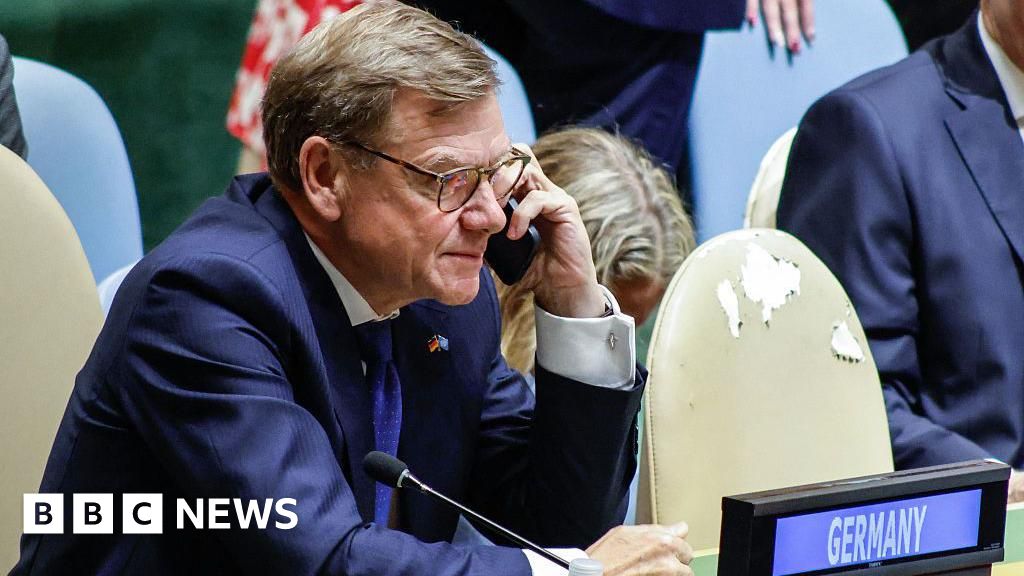
Germany had applied for one of the non-permanent seats on the 15-member UN Security Council, which are awarded for two-year terms. The country had previously held such a seat six times and was considered a strong candidate due to its economic significance and international engagement. Elections are conducted by the 193 member states of the UN General Assembly, requiring a two-thirds majority.
German parliamentarian Johann Wadephul attributed the defeat to Russian interference. He stated it was "no secret" that Russia had stirred up sentiment against Germany, particularly due to German support for Ukraine in the ongoing conflict. This explanation points to geopolitical tensions that are reflected even within UN bodies.
Parallel to Germany's defeat, Zimbabwe secured a Security Council seat. The African nation reportedly received overwhelming support from member states, illustrating the different regional dynamics in seat allocation. The elections demonstrate how power balances and alliances within the United Nations are shifting.
The UN Security Council consists of 15 members: five permanent members with veto power (USA, Russia, China, France, United Kingdom) and ten non-permanent members elected for two-year terms each. Non-permanent seats are distributed according to regional groups, with the Western European group traditionally wielding strong influence.
The significance of a Security Council seat extends far beyond symbolic aspects. Members can participate in decisions on major international crises, help shape resolutions, and advance their foreign policy priorities on a global level. For Germany, a seat would have meant the opportunity to play a more direct role in current conflicts such as the Ukraine war.
The defeat raises questions about Germany's diplomatic strategy and international positioning. Despite its economic strength and role as a major contributor to UN organizations, the country apparently could not mobilize sufficient support. This may indicate changing global power structures and new alliance patterns.
For the future, Germany may need to realign its UN diplomacy. Competition for international positions is intensifying, and traditional claims are increasingly being challenged. The successful candidates Austria and Portugal demonstrate that smaller European states can succeed with skillful diplomacy.
The implications of this defeat could extend beyond the UN and affect Germany's ambitions for Security Council reform. The country had long advocated for a permanent seat, but the current loss significantly weakens this position. The outcome reflects broader shifts in international relations and the growing influence of non-Western nations in global governance structures.
The election results also highlight the complex dynamics within regional groups, where traditional powerhouses can no longer take support for granted. Germany's failure suggests that diplomatic relationships and coalition-building have become more crucial than economic or political weight alone.
Fast take
Germany has suffered an unprecedented diplomatic defeat, failing to secure a non-permanent seat on the UN Security Council for the first time in its history.
NOFRAME signal
Medium divergence · 4 Sources · 4 Regions
What remains open
Coverage is not fully split, but it is not identical either. That makes the comparison useful: the fact base shows the common core, while the perspectives show where political, regional, or institutional priorities change the emphasis.
Dossier compass
Which media spaces carry the story and how broad the source base is.
Source mix
Underlit angles
- Russian interference as reason for defeat
- Connection to Germany's Ukraine support
- German allegations of Russian interference
Open originals
Go straight to the linked articles. NOFRAME does not replace those sources.
Why it matters
Coverage is not fully split, but it is not identical either. That makes the comparison useful: the fact base shows the common core, while the perspectives show where political, regional, or institutional priorities change the emphasis.
Timeline
RT · June 3, 2026 at 11:19 PM
Germany fails to win UN Security Council seat for first time ever
BBC World · June 4, 2026 at 01:02 AM
Germany blames Russia for 'bitter defeat' in UN Security Council bid
Japan Times · June 4, 2026 at 01:35 AM
Germany fails to gain seat on U.N. Security Council
AllAfrica · June 4, 2026 at 03:51 AM
Zimbabwe: Zimbabwe Secures Powerful UN Security Council Seat