Lebanon's embassy in Washington announced Monday that Hezbollah has accepted a US proposal for a mutual cessation of hostilities with Israel, marking a potentially significant diplomatic breakthrough in the ongoing conflict between Israel and the Iran-backed Shiite militant group.
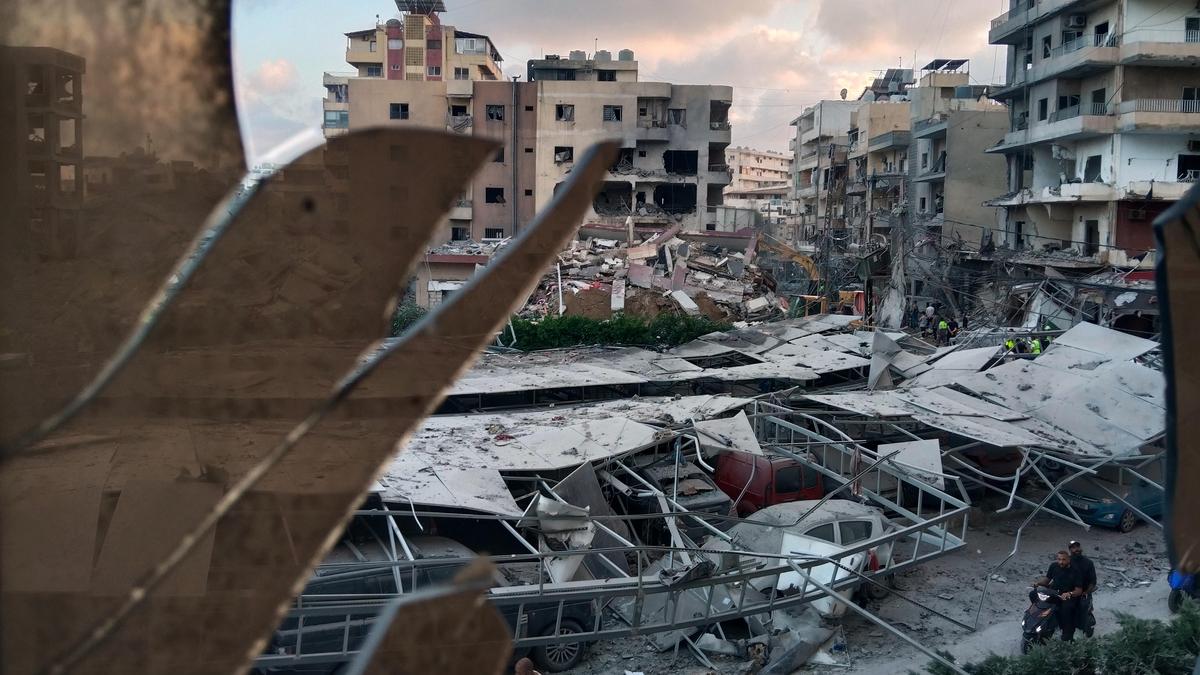
According to the Lebanese embassy statement, the arrangement would see Israel refrain from conducting airstrikes on Dahiyeh, Beirut's southern suburbs, in exchange for Hezbollah halting its rocket and drone attacks against Israeli territory. The announcement was shared through Lebanese President Joseph Aoun's office on social media platform X.
The proposal comes at a critical juncture, following Israeli threats on Monday to attack Beirut's densely populated southern suburbs. Dahiyeh serves as a Hezbollah stronghold, housing both the organization's military infrastructure and hundreds of thousands of civilians. The threat of Israeli strikes on this area had significantly escalated tensions between the two sides.
The embassy statement indicated that the ceasefire arrangement could potentially extend to encompass all Lebanese territory. This would mean not only the immediate cessation of combat operations between Israel and Hezbollah, but also other military activities in the border region.
Hezbollah, which operates both as a political party and armed militia, has intensified its attacks on Israeli targets in recent months. The organization possesses an extensive rocket arsenal and is considered one of the most powerful non-state military forces in the Middle East. Its close ties to Iran make it a key player in regional power struggles.
Despite the announcement of the ceasefire agreement, international media reports indicate that attacks between both sides have continued. This raises questions about practical implementation and the willingness of both conflict parties to adhere to the arrangement.
The US government has undertaken intensive diplomatic efforts in recent weeks to prevent an escalation of the conflict. Washington fears that further deterioration of the situation could lead to a regional war that might directly involve other actors such as Iran.
The Lebanese state finds itself in a difficult position, as it exercises only limited control over Hezbollah's activities. The organization operates largely autonomously and makes its military decisions independently of the official Lebanese government. Nevertheless, Beirut often serves as a mediator in diplomatic efforts.
Experts warn that previous ceasefire agreements between Israel and Hezbollah have often been short-lived. Implementation of such accords regularly proves difficult, as both sides maintain different interpretations of the agreements and conduct retaliatory strikes for perceived violations.
The international community is watching developments with great attention. Successful de-escalation could pave the way for more comprehensive peace efforts in the region, while failure of the agreement could lead to further deterioration of the already tense situation.
The timing of this diplomatic initiative reflects broader US concerns about regional stability. American officials have been working to prevent the conflict from expanding beyond its current scope, particularly given the complex web of alliances and proxy relationships that characterize Middle Eastern geopolitics.
Questions remain about the specific mechanisms for monitoring and enforcing any ceasefire arrangement. Previous agreements have often foundered on disagreements over verification procedures and the definition of violations. The success of this latest initiative will likely depend on the establishment of clear protocols and the commitment of both parties to meaningful de-escalation.
Fast take
Lebanon's embassy in Washington announced Monday that Hezbollah has accepted a US proposal for a mutual cessation of hostilities with Israel, marking a potentially significant diplomatic breakthrough in the ongoing conflict between Israel and the Iran-backed Shiite militant group.
NOFRAME signal
Medium divergence · 5 Sources · 3 Regions
What remains open
Coverage is not fully split, but it is not identical either. That makes the comparison useful: the fact base shows the common core, while the perspectives show where political, regional, or institutional priorities change the emphasis.
Dossier compass
Which media spaces carry the story and how broad the source base is.
Source mix
Underlit angles
- Continued attacks despite announcement
- Doubts about practical implementation
- Optimistic assessment of diplomatic success prospects
Open originals
Go straight to the linked articles. NOFRAME does not replace those sources.
Why it matters
Coverage is not fully split, but it is not identical either. That makes the comparison useful: the fact base shows the common core, while the perspectives show where political, regional, or institutional priorities change the emphasis.
Timeline
The Hindu · June 1, 2026 at 07:59 PM
Lebanon's U.S. Embassy says Hezbollah accepted U.S. proposal on 'mutual cessation of attacks'
Al-Monitor · June 1, 2026 at 08:01 PM
Hezbollah accepts U.S. proposal for mutual halt to attacks with Israel
NDTV World · June 1, 2026 at 08:13 PM
Hezbollah Accepts US Proposal For Mutual Halt To Attacks With Israel: Lebanon
Japan Times · June 1, 2026 at 10:15 PM
Lebanon announces partial ceasefire between Israel, Hezbollah but attacks continue