A direct confrontation between Iran and the United Arab Emirates erupted during a BRICS foreign ministers' meeting in New Delhi on Thursday, as Iran's Foreign Minister Abbas Araghchi accused the UAE of direct involvement in military operations against his country. Araghchi labeled the Emirates as an "active partner" in what he described as the US-Israeli war against Iran, marking a significant escalation in tensions between the two Gulf nations during the high-profile international gathering.
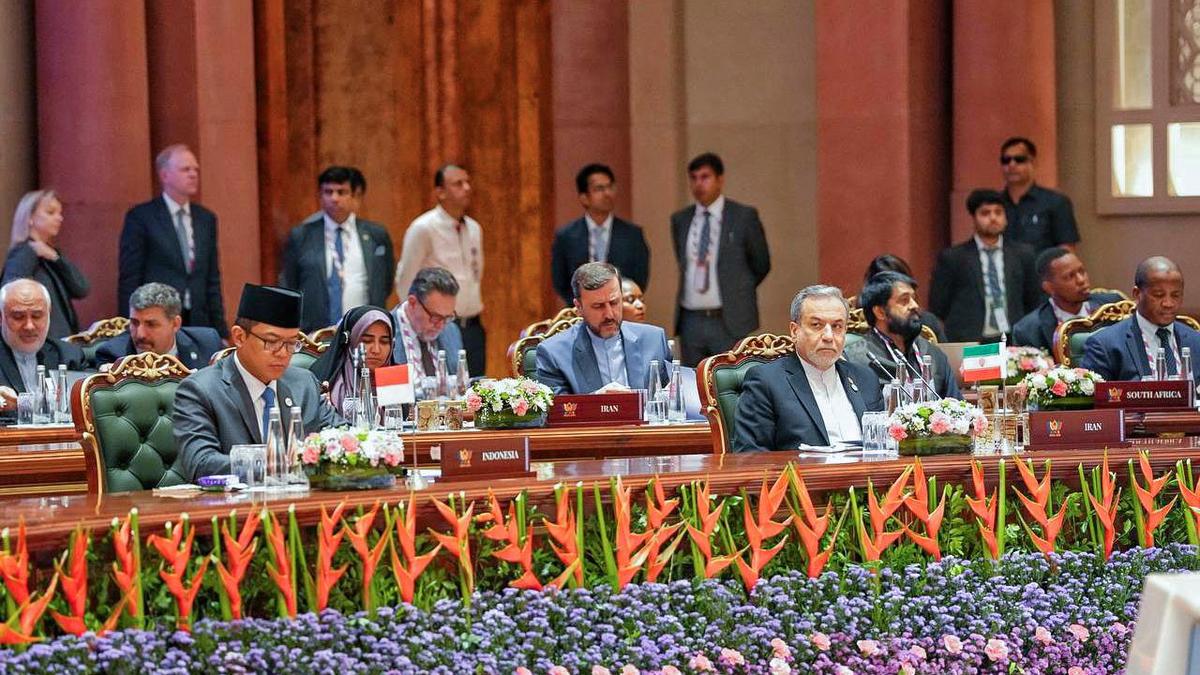
The dispute intensified following claims by Israeli Prime Minister Benjamin Netanyahu that he had secretly visited the UAE during the Iran war. Netanyahu's office announced on Wednesday that the Prime Minister had undertaken a covert visit to the Gulf state during the military confrontations with Iran. However, the UAE immediately denied this account, firmly rejecting any suggestion that such a secret visit had taken place.
Araghchi responded to these developments with sharp criticism of the UAE, questioning the alleged meetings with Netanyahu during the BRICS session. The Iranian Foreign Minister argued that neither US military bases nor an alliance with Israel could provide the UAE with genuine security. He called on the Emirates to reconsider their policy toward Iran and warned of consequences for continued collaboration with Israel.
The Iranian leadership had previously announced that those collaborating with Israel to sow divisions would be held accountable. Araghchi reinforced this position, emphasizing that there was no military solution to issues involving Iran. Tehran would not surrender to pressure or threats, the Foreign Minister declared according to Iranian state media reports.
The UAE has significantly strengthened its relationships with both the United States and Israel in recent years. This rapprochement occurred partly in response to Iranian attacks on the Gulf nation and the perceived threat from Tehran's regional policies. The Abraham Accords of 2020 had already initiated a formal normalization of relations between the UAE and Israel, fundamentally altering regional diplomatic dynamics.
The BRICS foreign ministers' meeting in New Delhi, which brought together representatives from Brazil, Russia, India, China, and South Africa along with other member countries, was overshadowed by the Iranian-Emirati confrontation. India, as the host nation, found itself in a difficult position, given the country's traditionally good relations with Iran, the UAE, and Israel.
Reports differ regarding how India responded to the tensions. While some sources indicate that New Delhi avoided condemning the United States and Israel, it remains unclear what concrete diplomatic steps were taken to defuse the situation. The Indian government has not yet publicly commented on the accusations between Iran and the UAE.
The confrontation highlights the ongoing regional tensions in the Middle East and the complex alliances that have formed during recent military conflicts. The UAE finds itself in a strategically difficult position between its traditional role as a regional trade hub and the security challenges posed by Iran's regional activities.
The public nature of the dispute at an international forum like BRICS represents a significant diplomatic development. Iran's decision to voice these accusations in a multilateral setting suggests Tehran may be seeking international support for its position against the UAE's alleged collaboration with Israel and the United States.
The timing of the confrontation is particularly significant, occurring during a period of heightened tensions in the Gulf region. The UAE's denial of Netanyahu's claimed visit adds another layer of complexity to the diplomatic dispute, raising questions about the accuracy of various official statements and the true nature of regional diplomatic contacts.
Analysts view the public confrontation at an international forum as a sign of escalating regional tensions. The fact that Iran brought its accusations to a multilateral framework could indicate that Tehran is seeking international support for its position. Simultaneously, the dispute underscores the challenges facing organizations like BRICS when member countries become embroiled in bilateral conflicts.
The broader implications of this diplomatic clash extend beyond the immediate Iran-UAE relationship. The confrontation reflects the complex web of alliances and rivalries that have emerged in the Middle East, particularly following the normalization agreements between several Arab states and Israel.
Fast take
A direct confrontation between Iran and the United Arab Emirates erupted during a BRICS foreign ministers' meeting in New Delhi on Thursday, as Iran's Foreign Minister Abbas Araghchi accused the UAE of direct involvement in military operations against his country.
NOFRAME signal
Medium divergence · 8 Sources · 4 Regions
What remains open
Coverage is not fully split, but it is not identical either. That makes the comparison useful: the fact base shows the common core, while the perspectives show where political, regional, or institutional priorities change the emphasis.
Dossier compass
Which media spaces carry the story and how broad the source base is.
Source mix
Underlit angles
- India's role as BRICS host
- Broader geopolitical implications
- Details about Netanyahu's visit
Open originals
Go straight to the linked articles. NOFRAME does not replace those sources.
Why it matters
Coverage is not fully split, but it is not identical either. That makes the comparison useful: the fact base shows the common core, while the perspectives show where political, regional, or institutional priorities change the emphasis.
Timeline
Straits Times · May 14, 2026 at 10:47 AM
Iran and UAE clash at BRICS foreign ministers’ meeting
Al-Monitor · May 14, 2026 at 11:01 AM
Iran and UAE clash at BRICS foreign ministers' meeting
The Hindu · May 14, 2026 at 11:30 AM
Iran and UAE clash at BRICS foreign ministers' meeting
Geo News · May 14, 2026 at 11:51 AM
Iran says UAE 'active partner' in US-Israeli war