Diplomatic tensions overshadowed the BRICS foreign ministers meeting in New Delhi after Iran's Foreign Minister Abbas Araghchi accused the United Arab Emirates of direct involvement in military operations against his country. The accusations were made on Thursday during the two-day conference and mark a new low in the already strained relationship between the two Gulf nations.
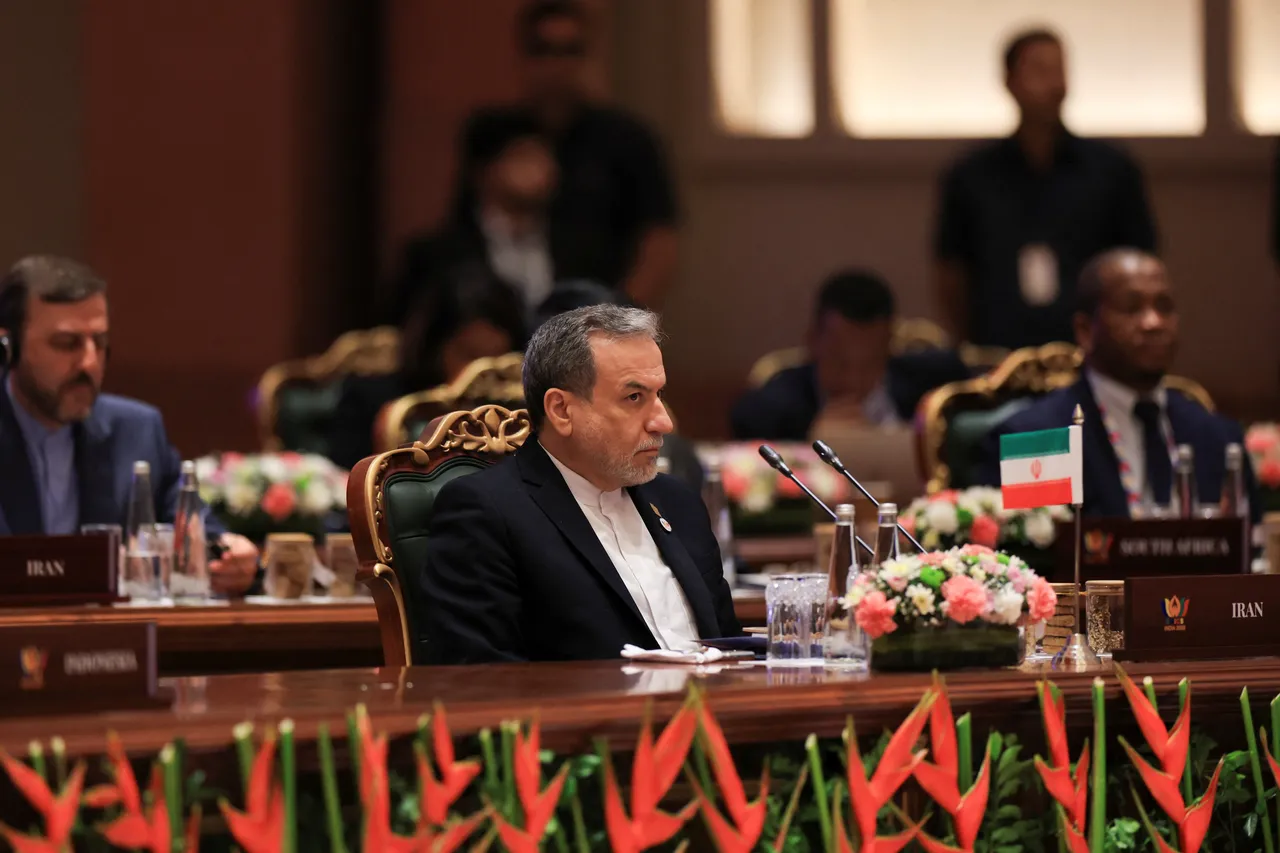
Araghchi told Iranian state media that he had initially refrained from naming the UAE in his official statement to preserve unity within the BRICS bloc. "I didn't name the UAE in my statement for the sake of unity. But the truth is that the UAE was directly involved in the aggression against my country. When the attacks started, they didn't even issue a condemnation," the Iranian foreign minister was quoted as saying by the semi-official Mehr news agency.
The diplomatic clash is directly linked to recent developments in the Iran-Israel conflict. A day earlier, the UAE had denied claims by Israeli Prime Minister Benjamin Netanyahu that he had visited the Gulf country during the war with Iran. Netanyahu had spoken of a "secret" meeting with UAE President Mohammed bin Zayed Al Nahyan, which Abu Dhabi categorically denied.
The BRICS meeting in New Delhi was originally intended to strengthen cooperation between member states and develop common positions on global challenges. Instead, it exposed deep regional tensions and differing geopolitical orientations among members. The bloc includes both Iran and countries that maintain close relationships with the UAE and other Gulf states.
Iran also used the platform to launch sharp criticism against the United States and Israel. Araghchi described the US as an "empire in decline" and called on BRICS members to condemn what Iran characterizes as "unlawful aggression" by the US and Israel against Tehran. This rhetoric reflects Iran's efforts to mobilize support for its position in the regional conflict within the BRICS framework.
India, as the host of the meeting, attempted to maintain group unity and focused on broader global issues. Foreign Minister Subrahmanyam Jaishankar called for UN reforms and a ceasefire in Gaza, describing a deteriorating global landscape marked by conflicts, climate events, and the Covid pandemic.
Tensions between Iran and the UAE have a longer history and are rooted in differing views on regional security, relations with Israel, and the role of external powers in the region. The UAE has normalized relations with Israel in recent years and is considered an important partner of Western countries in the region, while Iran views these developments as a threat to its security interests.
The public confrontation during the BRICS meeting highlights the challenges facing the bloc as it attempts to present a coherent alternative to the Western-dominated international order. The differing regional interests and alliances of member states make it difficult to find common positions on controversial issues.
The incident also underscores broader questions about the effectiveness of multilateral organizations that include countries with conflicting regional interests. BRICS, which originally comprised Brazil, Russia, India, China, and South Africa, has expanded to include Iran, the UAE, Egypt, and Ethiopia, among others, making consensus-building increasingly complex.
Analysts see the incident as an example of the growing difficulties faced by multilateral organizations in managing internal conflicts while simultaneously trying to demonstrate their global relevance and unity. How BRICS handles such tensions could be crucial for the future development and credibility of the bloc.
The meeting was also attended by representatives from other BRICS nations, including Russia and China, both of which maintain complex relationships with both Iran and the UAE. The response of these major powers to the diplomatic clash could influence the bloc's ability to manage future disagreements and maintain its cohesion as a geopolitical alternative to Western-led institutions.
Fast take
Diplomatic tensions overshadowed the BRICS foreign ministers meeting in New Delhi after Iran's Foreign Minister Abbas Araghchi accused the United Arab Emirates of direct involvement in military operations against his country.
NOFRAME signal
Medium divergence · 8 Sources · 3 Regions
What remains open
Coverage is not fully split, but it is not identical either. That makes the comparison useful: the fact base shows the common core, while the perspectives show where political, regional, or institutional priorities change the emphasis.
Dossier compass
Which media spaces carry the story and how broad the source base is.
Source mix
Underlit angles
- Detailed presentation of UAE position
- Broader BRICS context beyond Iran-UAE conflict
- Specific details of Iran-UAE accusations
Open originals
Go straight to the linked articles. NOFRAME does not replace those sources.
Why it matters
Coverage is not fully split, but it is not identical either. That makes the comparison useful: the fact base shows the common core, while the perspectives show where political, regional, or institutional priorities change the emphasis.
Timeline
NDTV World · May 14, 2026 at 12:16 PM
"UAE Directly Involved In Act Of Aggression Against Iran": Abbas Araghchi
TRT World · May 14, 2026 at 12:16 PM
Iran and UAE clash at BRICS foreign ministers' meeting in New Delhi
Dawn · May 14, 2026 at 01:29 PM
Iran and UAE clash at Brics foreign ministers' meeting
Al Jazeera · May 14, 2026 at 01:45 PM
BRICS meeting overshadowed by war on Iran