Iranian drone and missile attacks struck Kuwait International Airport in the early hours of Wednesday morning, injuring several people and causing severe damage to airport infrastructure. The attacks forced Kuwaiti authorities to suspend all flight operations and divert incoming aircraft to alternative airports. Simultaneously, Iranian forces also targeted Bahrain, where US and Bahraini forces successfully intercepted three missiles aimed at civilian infrastructure.
The attacks on Kuwait specifically targeted the airport's T1 passenger terminal building. According to Kuwait's General Civil Aviation Authority, the drone and missile strikes caused severe damage to several airport facilities. Authorities immediately activated the airport's emergency response plan and suspended all flights until further notice. While injuries were reported, officials provided no detailed information about the number of casualties or the full extent of the damage to airport infrastructure.
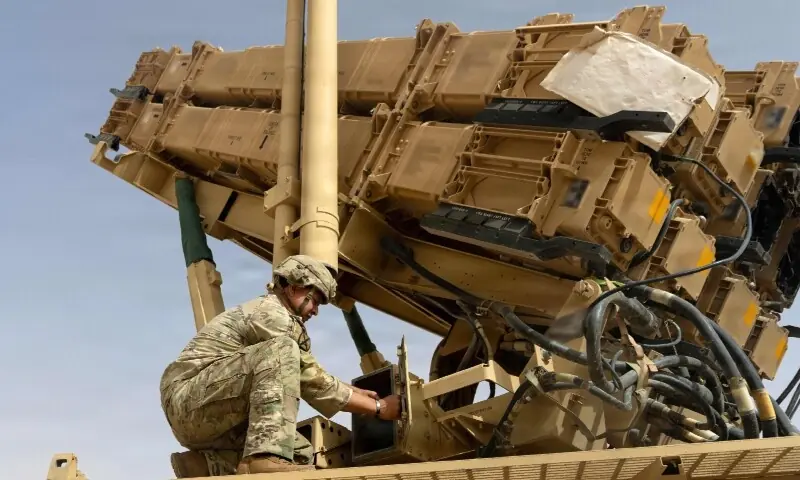
Parallel to the Kuwait attacks, Iran also fired missiles at Bahrain. US Central Command reported that American and Bahraini forces successfully intercepted three Iranian missiles targeting civilian infrastructure in Bahrain. Additionally, Iranian drones attempted to attack US forces stationed in Kuwait but failed to reach their intended targets. The US military stated that two other Iranian ballistic missiles fired at Kuwait either fell short of their targets or broke apart during flight.
The Kuwaiti government strongly condemned the attacks as criminal Iranian aggression. Brigadier General Saud, spokesperson for Kuwait's Ministry of Defense, characterized the strikes as a violation of international law. Bahrain similarly accused Iran of systematic aggression, emphasizing that the attacks deliberately targeted civilian infrastructure. Kuwait's armed forces declared they would monitor the situation in coordination with relevant agencies and take all necessary measures to maintain national security.
The escalation occurs against the backdrop of an ongoing conflict between Iran and a US-led coalition that has lasted more than three months. The conflict began with initial US and Israeli strikes on Iran and has since settled into an unstable ceasefire. The Strait of Hormuz, one of the world's most important shipping routes for global oil trade, remains largely closed, amplifying the economic impact of the conflict.
The latest attacks had immediate effects on international markets. Oil prices rose by more than one percent as investors reacted to the renewed escalation in the strategically vital Gulf region. The disruption of air traffic in Kuwait, an important hub for flights between Europe, Asia, and the Middle East, is likely to have broader implications for international aviation.
Diplomatic efforts to resolve the conflict have shown little progress so far. Reports of stalled negotiations between Washington and Tehran highlight the difficulties in finding a peaceful solution. However, US President Donald Trump contradicted reports of completely suspended talks, stating via social media that diplomatic contacts continue. He dismissed contrary reports as fake news and maintained that communication channels remain open.
The attacks represent a significant escalation in the regional conflict and raise questions about the security of civilian infrastructure throughout the Gulf region. Both Kuwait and Bahrain are important US allies in the region and host American military bases. The targeted attacks on civilian facilities like Kuwait's airport could represent a new dimension in the conduct of this conflict.
The targeting of civilian infrastructure marks a concerning development in the conflict's evolution. Kuwait International Airport serves as a crucial transportation hub connecting multiple continents, and its closure disrupts not only regional travel but also international connectivity. The fact that Iran chose to strike civilian rather than purely military targets suggests a potential shift in strategy that could have broader implications for how the conflict unfolds.
The international community is watching developments with growing concern, as further escalation could threaten the stability of the entire region. The Gulf states are not only major oil producers but also central nodes for international trade and transportation. An expansion of hostilities could have far-reaching consequences for the global economy and further strain already tense relationships between regional powers.
The timing of these attacks, occurring amid stalled diplomatic talks, suggests that military action may be increasingly viewed as a means to gain leverage in negotiations. However, the targeting of civilian infrastructure and the resulting disruption to international travel and commerce may also serve to internationalize the conflict further, potentially drawing in additional actors who have interests in maintaining regional stability and keeping critical transportation routes open.
Fast take
Iranian drone and missile attacks struck Kuwait International Airport in the early hours of Wednesday morning, injuring several people and causing severe damage to airport infrastructure.
NOFRAME signal
Medium divergence · 10 Sources · 5 Regions
What remains open
Coverage is not fully split, but it is not identical either. That makes the comparison useful: the fact base shows the common core, while the perspectives show where political, regional, or institutional priorities change the emphasis.
Dossier compass
Which media spaces carry the story and how broad the source base is.
Source mix
Underlit angles
- Detailed background of the three-month conflict
- Original US-Israeli strikes on Iran
- Political assessments of the attacks
Open originals
Go straight to the linked articles. NOFRAME does not replace those sources.
Why it matters
Coverage is not fully split, but it is not identical either. That makes the comparison useful: the fact base shows the common core, while the perspectives show where political, regional, or institutional priorities change the emphasis.
Timeline
TRT World · June 3, 2026 at 07:07 AM
Iranian drone strike damages Kuwait International Airport, injuring several and grounding flights
Middle East Eye · June 3, 2026 at 07:15 AM
Kuwait and Bahrain accuse Iran of attacks on civilian infrastructure
Dawn · June 3, 2026 at 07:58 AM
Hostilities flare in Gulf as US-Iran talks at a stalemate
The Independent · June 3, 2026 at 07:59 AM
Iran-US war latest: Kuwait Airport closed and multiple people injured after Tehran launches drone attack