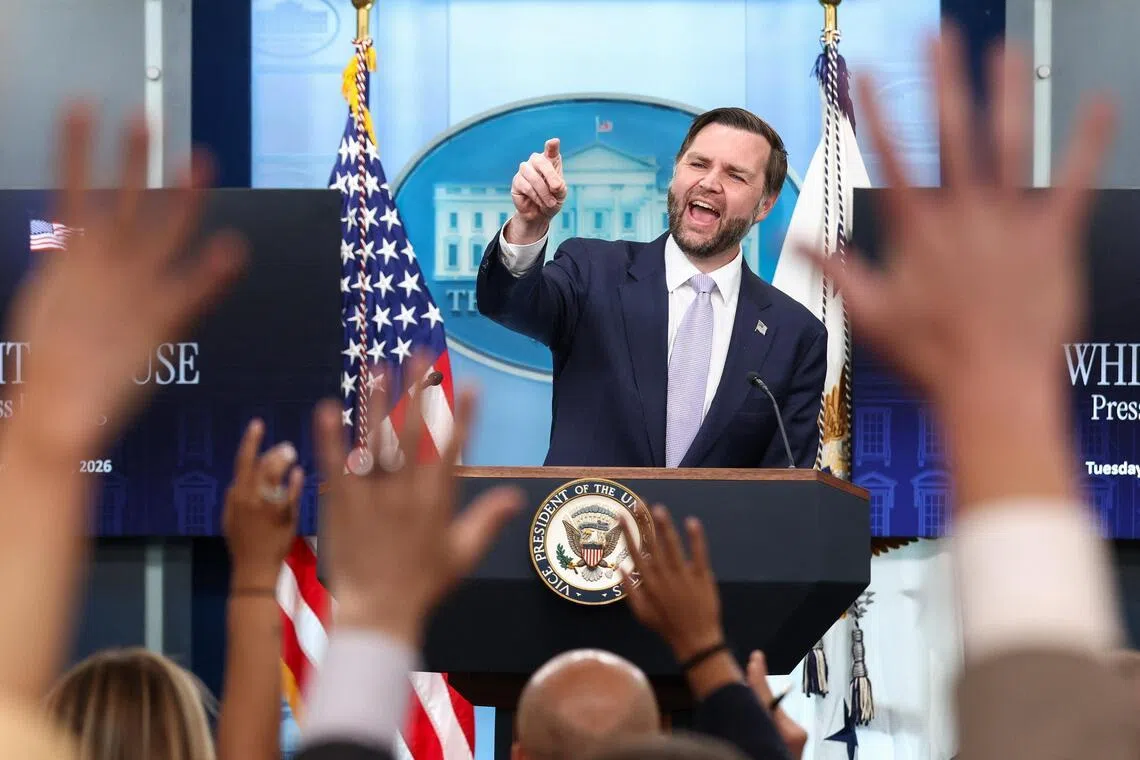
Diplomatic talks between the United States and Iran are showing good progress according to US Vice President JD Vance, but Washington maintains its military option as negotiations continue under intense pressure. Vance told a White House briefing on Tuesday that "a lot of good progress is being made," while emphasizing that the US remains "locked and loaded" to restart military operations if no agreement is reached. The ongoing negotiations are taking place against a backdrop of heightened tensions that have already sent shockwaves through global energy markets.
President Donald Trump had earlier escalated pressure on Tehran by setting an ultimatum of "two or three days" for reaching an agreement. Trump revealed that he had come within an hour of ordering fresh strikes against Iran and warned that the military could launch "another big hit" on Tehran if peace talks fail. These statements underscore the delicate balance between diplomatic efforts and military threats that characterizes the current crisis, with both options remaining actively on the table.
The tensions have already produced concrete economic consequences in global markets. Brent crude oil prices rose to $111.4 per barrel on Tuesday, up from $110 on Monday, despite the ongoing peace negotiations. This increase demonstrates market nervousness about the uncertain situation in the Middle East, with energy traders closely monitoring developments. Oil markets traditionally react sensitively to geopolitical tensions in the oil-rich region, and the current crisis has proven no exception to this pattern.
Vance's comments reflected both optimism about diplomatic progress and readiness for military action. "We're just going to keep on working at it, and eventually we'll either hit a deal or we won't," the Vice President stated, acknowledging the uncertainty surrounding the negotiations' outcome. This formulation makes clear that both scenarios – a diplomatic breakthrough or further escalation – remain viable possibilities as talks continue.
The current discussions appear to be part of broader peace negotiations initiated following recent military escalations between the two nations. However, the specific content of the talks and the particular points of contention remain largely unclear to outside observers. Details about what concrete progress has been achieved or what potential compromises might be under discussion have not been disclosed by either side.
Trump's ultimatum adds significant urgency to the negotiation process. The two-to-three-day timeframe suggests that Washington expects rapid results and is not prepared to engage in prolonged negotiations without visible progress. This approach could serve to pressure Iran while also forcing negotiating partners to make quick decisions, though it also risks limiting the time needed for complex diplomatic solutions.
The international community is watching developments closely, as further escalation between the US and Iran could have far-reaching consequences for Middle Eastern stability. The region already faces multiple ongoing conflicts, and an intensification of American-Iranian tensions could exacerbate existing problems while creating new sources of uncertainty for regional and global security.
For global energy markets, the situation remains a critical uncertainty factor. Iran is a significant oil producer, and any military action could disrupt oil supplies and lead to further price increases. The price rises already observed could intensify if diplomatic efforts fail and military escalation occurs, potentially affecting global economic conditions and energy security.
The role of intermediaries and the specific mechanisms of the current talks remain unclear. It is not known whether third-party nations or international organizations are facilitating the discussions, or whether the talks are proceeding through direct channels. This lack of transparency about the negotiation process makes it difficult to assess the likelihood of success or the potential obstacles that might emerge.
Vance's characterization of "significant progress" provides some cause for optimism, but the absence of specific details about what has been achieved leaves room for uncertainty. The Vice President's simultaneous emphasis on military readiness suggests that Washington views the diplomatic track as promising but not guaranteed, maintaining pressure through the threat of force.
The coming days will be crucial for determining the crisis's trajectory. While Vance speaks of good progress, it remains unclear whether these advances will be sufficient to reach an agreement within Trump's specified timeframe. The combination of diplomatic efforts and military threats illustrates the complex nature of the current crisis and the challenges involved in finding a peaceful resolution that satisfies both parties' core interests and concerns.
Fast take
Diplomatic talks between the United States and Iran are showing good progress according to US Vice President JD Vance, but Washington maintains its military option as negotiations continue under intense pressure.
NOFRAME signal
Medium divergence · 4 Sources · 4 Regions
What remains open
Coverage is not fully split, but it is not identical either. That makes the comparison useful: the fact base shows the common core, while the perspectives show where political, regional, or institutional priorities change the emphasis.
Dossier compass
Which media spaces carry the story and how broad the source base is.
Source mix
Underlit angles
- Oil price impacts not mentioned
- Economic consequences of the crisis missing
- Military threats less emphasized
Open originals
Go straight to the linked articles. NOFRAME does not replace those sources.
Why it matters
Coverage is not fully split, but it is not identical either. That makes the comparison useful: the fact base shows the common core, while the perspectives show where political, regional, or institutional priorities change the emphasis.
Timeline
Straits Times · May 19, 2026 at 06:13 PM
Iran talks making ‘good progress’, says US V-P Vance, but Washington ‘locked and loaded’
Al-Monitor · May 19, 2026 at 07:00 PM
Iran talks making 'good progress': US VP Vance
The Independent · May 19, 2026 at 07:31 PM
Iran-US war latest: Vice president Vance warns US ‘locked and loaded’ to restart strikes if peace talks fail
Punch Nigeria · May 19, 2026 at 08:58 PM
US-Iran war: Oil hits $111 despite ongoing peace talks