Lebanese President Joseph Aoun has delivered his strongest criticism yet of Iran and its Lebanese ally Hezbollah, accusing Tehran of using Lebanon as a bargaining chip in its ongoing negotiations with the United States. In a CNN interview on Friday, Aoun stated that "the people of Lebanon are paying the price... for the sake" of Iran's interests and declared that Lebanese citizens are "fed up" with the war between Israel and Hezbollah.
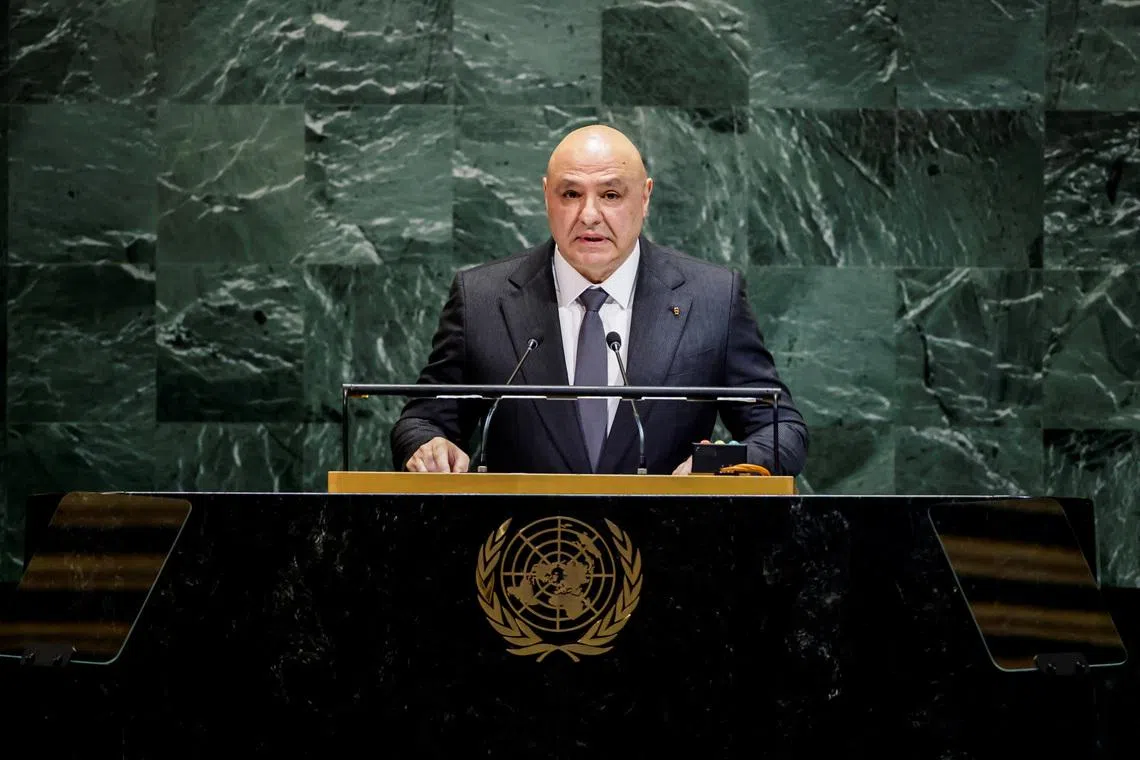
The Lebanese president's remarks represent an unusually sharp rebuke of Iran's influence in Lebanese affairs and highlight the deep divisions that run along Lebanon's confessional and political fault lines. Lebanon's complex political system, designed to represent various religious communities, has long struggled with the competing influences of regional powers, particularly Iran's support for Hezbollah.
Aoun's criticism comes as Iran has made its position clear in negotiations with Washington. Tehran has declared that a ceasefire between Israel and Hezbollah is a prerequisite for any peace deal with the United States aimed at resolving the broader regional conflict. Iranian Foreign Minister Araghchi emphasized this stance by stating that "the war will only end when it ends in Lebanon," effectively linking the Lebanese conflict to Iran's broader regional strategy.
The Israel-Hezbollah conflict, now in its fourth month, has had devastating consequences for Lebanese civilians caught in the crossfire. Hezbollah, which operates both as a political party within Lebanon's government and as an armed militia, maintains close ties with Iran and receives significant financial and military support from Tehran. This relationship has made Lebanon a key battleground in the larger geopolitical struggle between Iran and its regional adversaries.
Iran has also connected the Lebanese situation to other regional issues, particularly shipping through the strategically vital Strait of Hormuz. This waterway serves as a critical passage for global oil trade, and Iran has previously threatened to disrupt shipping there when feeling threatened by international pressure or sanctions.
The complexity of the current situation reflects the intricate web of alliances and proxy relationships that characterize Middle Eastern geopolitics. Iran's influence extends beyond Lebanon through various allied groups across the region, while the United States and its partners seek to counter this influence through diplomatic and economic means.
International actors are closely monitoring these developments as they search for diplomatic solutions. The United States, European nations, and regional partners are all engaged in efforts to de-escalate tensions and find pathways to peace. However, the interconnected nature of these conflicts, as demonstrated by Iran's linking of Lebanese and broader regional issues, complicates negotiation efforts.
For Lebanon itself, the ongoing crisis represents another burden for a country already grappling with severe economic and political challenges. The nation has been experiencing one of the worst economic crises in its modern history, with currency devaluation, banking sector collapse, and widespread poverty affecting millions of citizens. The current conflict adds another layer of hardship to an already struggling population.
President Aoun's public criticism of Iran may represent an attempt to establish a more independent position for Lebanon and distance the country from Iranian influence. However, given Hezbollah's significant role in Lebanese politics and its armed capabilities, any shift away from Iran's orbit would likely face considerable internal resistance.
The international community continues to seek ways to support Lebanese sovereignty while addressing the broader regional dynamics that fuel ongoing conflicts. Various diplomatic initiatives are underway, though their success depends on the willingness of all parties to make compromises and prioritize regional stability over narrow strategic interests.
As negotiations continue, the situation remains fluid and unpredictable. Iran's strategy of linking multiple regional issues may complicate immediate solutions but could also provide opportunities for more comprehensive peace agreements that address several conflict zones simultaneously. The coming weeks and months will be crucial in determining whether diplomatic efforts can break the current deadlock and provide relief for the Lebanese people caught in this regional power struggle.
Fast take
Lebanese President Joseph Aoun has delivered his strongest criticism yet of Iran and its Lebanese ally Hezbollah, accusing Tehran of using Lebanon as a bargaining chip in its ongoing negotiations with the United States.
NOFRAME signal
Stable coverage · 4 Sources · 3 Regions
What remains open
The source picture is relatively consistent. That still makes the details worth reading: small differences in wording, omissions, and source selection can reveal what each region treats as important.
Dossier compass
Which media spaces carry the story and how broad the source base is.
Source mix
Underlit angles
- Details about Iranian negotiation conditions
- Connection to Strait of Hormuz
- Emotional aspects of Lebanese criticism
Open originals
Go straight to the linked articles. NOFRAME does not replace those sources.
Why it matters
The source picture is relatively consistent. That still makes the details worth reading: small differences in wording, omissions, and source selection can reveal what each region treats as important.
Timeline
NDTV World · June 5, 2026 at 01:56 PM
"War Will End Only When It Ends In Lebanon": Iran's Araghchi Amid US Talks
Straits Times · June 5, 2026 at 02:31 PM
What issues do the US and Iran need to resolve for any peace deal?
Straits Times · June 5, 2026 at 03:06 PM
Iran using Lebanon as bargaining chip in US talks, Lebanese president says
Al-Monitor · June 5, 2026 at 03:36 PM
Iran using Lebanon as bargaining chip in US talks, Lebanese president says