Israel and Lebanon have agreed to extend their ceasefire by an additional 45 days following two days of US-mediated negotiations in Washington that concluded with positive results. The extension was announced Friday by the US State Department and prevents the expiration of the original ceasefire brokered by President Trump, which was set to end this coming Sunday. The decision came despite ongoing violence in the region, underscoring the fragility of the agreement.
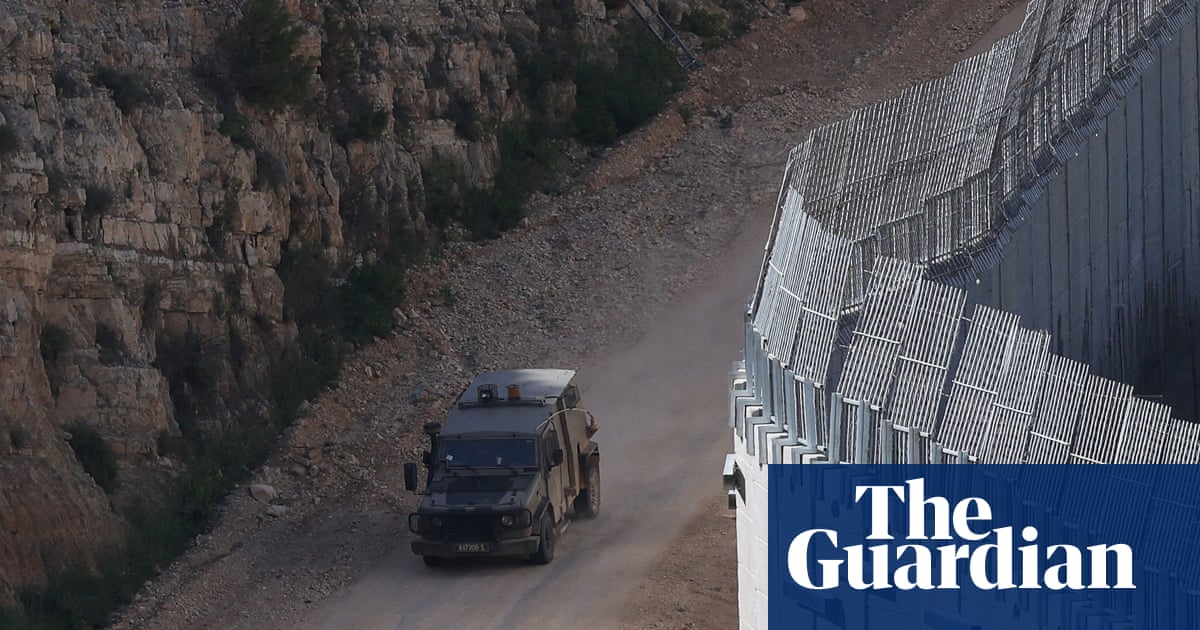
The talks took place on May 14 and 15, 2026, in Washington and were described as "highly productive" by US State Department spokesperson Tommy Pigott. The negotiations included delegations from both the Israeli government and the Lebanese government. Hezbollah, the Iranian-backed Shiite militia that plays a central role in the conflict, was not directly involved in the diplomatic talks. This reflects the complex situation in Lebanon, where the government struggles to control the powerful militia.
Despite diplomatic progress, violence continues in the region. During the Washington talks, Israel conducted new attacks in Lebanon that reportedly killed seven people. Israel argues that these attacks do not fall under the ceasefire conditions. These ongoing military actions highlight the challenges in implementing and monitoring the ceasefire between Israel and Hezbollah.
The conflict between Israel and Hezbollah has intensified in recent months. Israel has conducted both airstrikes on Lebanon and deployed ground forces to southern Lebanon in response to Hezbollah attacks. The Iranian-backed militia possesses significant military capabilities and operates largely independently of the Lebanese government, complicating diplomatic efforts toward a lasting solution.
The United States has positioned itself as the central mediating power in the conflict and has announced additional rounds of negotiations. According to Pigott, political talks will resume on June 2 and 3. In parallel, separate security discussions are planned, with Israeli and Lebanese military delegations set to meet at the Pentagon on May 29. This dual-track approach aims to address both political and military aspects of the conflict.
The Lebanese government has raised demands during the talks for an end to Israeli attacks and the termination of the occupation of Lebanese territory. These demands reflect Beirut's position that Israel is violating international borders and disregarding Lebanon's sovereignty. At the same time, Lebanese authorities face the difficult task of asserting their authority over the entire national territory, particularly in areas controlled by Hezbollah.
The ceasefire extension is being viewed internationally as a necessary but uncertain step. While diplomatic progress raises hopes for de-escalation, ongoing violence demonstrates the limitations of the current agreement. The fragility of the ceasefire is underscored by the fact that both sides continue to conduct military actions that they consider to be outside the ceasefire conditions.
US mediation aims to achieve a lasting peace solution between Israel and Lebanon that includes full recognition of mutual sovereignty and territorial integrity, as well as genuine security along their shared border. The upcoming negotiation rounds will show whether diplomatic efforts can lead to substantial progress or whether the conflict will continue to be characterized by military actions and mutual accusations.
The regional dimension of the conflict, particularly Iran's role as a supporter of Hezbollah, remains a complicating factor for all peace efforts. The next 45 days will be crucial in determining whether the parties can use the time to develop viable solutions to the underlying conflicts, or whether the extension merely represents a postponement of further escalation. The success of these diplomatic efforts will largely depend on the ability of all parties to maintain restraint while working toward more comprehensive agreements that address the root causes of the conflict.
Fast take
Israel and Lebanon have agreed to extend their ceasefire by an additional 45 days following two days of US-mediated negotiations in Washington that concluded with positive results.
NOFRAME signal
Medium divergence · 13 Sources · 5 Regions
What remains open
Coverage is not fully split, but it is not identical either. That makes the comparison useful: the fact base shows the common core, while the perspectives show where political, regional, or institutional priorities change the emphasis.
Dossier compass
Which media spaces carry the story and how broad the source base is.
Source mix
Underlit angles
- Details about Hezbollah attacks on Israel
- Israeli security concerns
- Details about ongoing violence
Open originals
Go straight to the linked articles. NOFRAME does not replace those sources.
Why it matters
Coverage is not fully split, but it is not identical either. That makes the comparison useful: the fact base shows the common core, while the perspectives show where political, regional, or institutional priorities change the emphasis.
Timeline
NDTV World · May 15, 2026 at 07:23 PM
Lebanon, Israel Ceasefire Extended By 45 Days: US
BBC World · May 15, 2026 at 07:30 PM
Israel and Lebanon agree to extend ceasefire, US state department says
Channel News Asia · May 15, 2026 at 07:35 PM
Lebanon, Israel ceasefire extended by 45 days: US
The Hindu · May 15, 2026 at 07:53 PM
Israel, Lebanon agree to 45-day extension of ceasefire, says U.S.