Israel deported two activists from the Gaza-bound Global Sumud Flotilla on Sunday after holding them for approximately one week following their detention in international waters. Saif Abu Keshek, a Spanish national, and Brazilian Thiago Avila were removed to Greece after Israeli authorities completed their investigation into the activists' participation in the humanitarian mission.
The two men were detained when Israeli forces intercepted the Global Sumud Flotilla on April 29 in international waters. Their detention was extended twice by the Israeli judiciary before their eventual release and deportation. The incident has drawn international attention to ongoing tensions surrounding Gaza aid deliveries and Israel's enforcement of its maritime blockade.
Israel's Foreign Ministry described the activists as 'professional provocateurs' and leveled specific allegations against both men. Abu Keshek was suspected of affiliation with a terrorist organization, while Avila faced suspicions of illegal activity. Both activists vehemently denied all charges brought against them during their detention.
The Global Sumud Flotilla launched from Spain on April 12 with the stated mission of breaking Israel's blockade of Gaza and delivering humanitarian aid to the enclave. The initiative represents part of broader international efforts to circumvent the maritime blockade that Israel has maintained since 2007 to control the flow of goods into Gaza.
During the activists' detention, concerns were raised about their treatment in Israeli custody. Family members and advocacy groups expressed worry about their conditions, with reports emerging of alleged abuse while imprisoned. Amnesty International welcomed news of their impending release and had previously voiced concerns about their detention conditions.
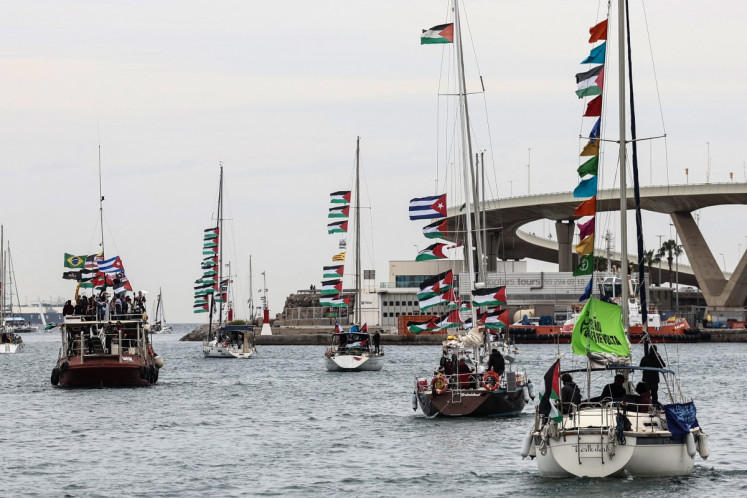
Despite the setback of the arrests, the flotilla mission continues its operations. More than 30 vessels from the Global Sumud Flotilla have gathered off the Turkish coast near Marmaris, preparing for the next stage of their journey toward Gaza. Videos shared on social media showed ships and smaller boats assembled in open waters while Turkish officials, activists, and supporters welcomed the flotilla.
Turkish coast guard vessels and local flotilla fleet members sailed out to greet the activists near their planned anchorage off the coast. Turkey has positioned itself as a key supporter of Gaza aid efforts, providing logistical support for the mission and allowing the flotilla to use Turkish waters for staging.
Concurrently with events off the Turkish coast, four additional vessels are sailing through Greek territorial waters, while more than 30 ships wait off Crete. Additional vessels in Turkey are preparing to join the Gaza-bound convoy, highlighting the scale and international character of the mission.
The deportation of the two activists occurs against the backdrop of ongoing tensions over Gaza aid deliveries and Israel's enforcement of its maritime blockade. Israel justifies the blockade on security grounds, citing the need to prevent weapons smuggling into the Hamas-controlled Gaza Strip while allowing legitimate humanitarian supplies through official channels.
The incident reflects broader challenges facing international humanitarian efforts in the region. While supporters view flotilla missions as legitimate humanitarian actions aimed at alleviating suffering in Gaza, critics argue they represent political provocations that could escalate existing tensions rather than provide meaningful aid.
International reaction to the detention and deportation has been mixed, with human rights organizations calling for respect for international law regarding humanitarian missions, while others have supported Israel's right to enforce its blockade. The European Union and various member states have previously expressed positions supporting both humanitarian access to Gaza and Israel's security concerns.
The release of the activists removes a potential diplomatic irritant, but fundamental questions about Gaza aid deliveries and the blockade remain unresolved. The Global Sumud Flotilla's continued operations suggest that international activists remain committed to challenging the blockade despite the risks of detention and legal consequences.
Fast take
Israel deported two activists from the Gaza-bound Global Sumud Flotilla on Sunday after holding them for approximately one week following their detention in international waters.
NOFRAME signal
High divergence · 7 Sources · 2 Regions
What remains open
This matters because the event itself is only part of the story. 2 media regions frame it with noticeably different priorities. Details that remain stable across those boundaries are more robust; details that appear in only one region need context.
Dossier compass
Which media spaces carry the story and how broad the source base is.
Source mix
Underlit angles
- Israel's security justifications for the blockade
- Details about specific charges against the activists
- Legal basis for arrest in international waters
Open originals
Go straight to the linked articles. NOFRAME does not replace those sources.
Why it matters
This matters because the event itself is only part of the story. 2 media regions frame it with noticeably different priorities. Details that remain stable across those boundaries are more robust; details that appear in only one region need context.
Timeline
Anadolu EN · May 10, 2026 at 06:59 AM
2 activists of Gaza-bound aid flotilla released after extended detention by Israel
Al Jazeera · May 10, 2026 at 07:13 AM
Israel deports two Gaza aid flotilla activists
Al Jazeera · May 10, 2026 at 07:46 AM
Flotilla activist gives defiant message after Israel deports him to Greece
Al Jazeera · May 10, 2026 at 07:56 AM
Flotilla activists arrive in Turkiye before setting sail to Gaza