Israel's ruling coalition has submitted a bill to dissolve the Knesset, paving the way for early elections in what represents a significant political crisis for Prime Minister Benjamin Netanyahu's government. The initiative, spearheaded by Netanyahu's right-wing Likud party, comes as the multi-party coalition appears to be teetering on the brink of collapse amid mounting internal pressures and disagreements over key policy issues.
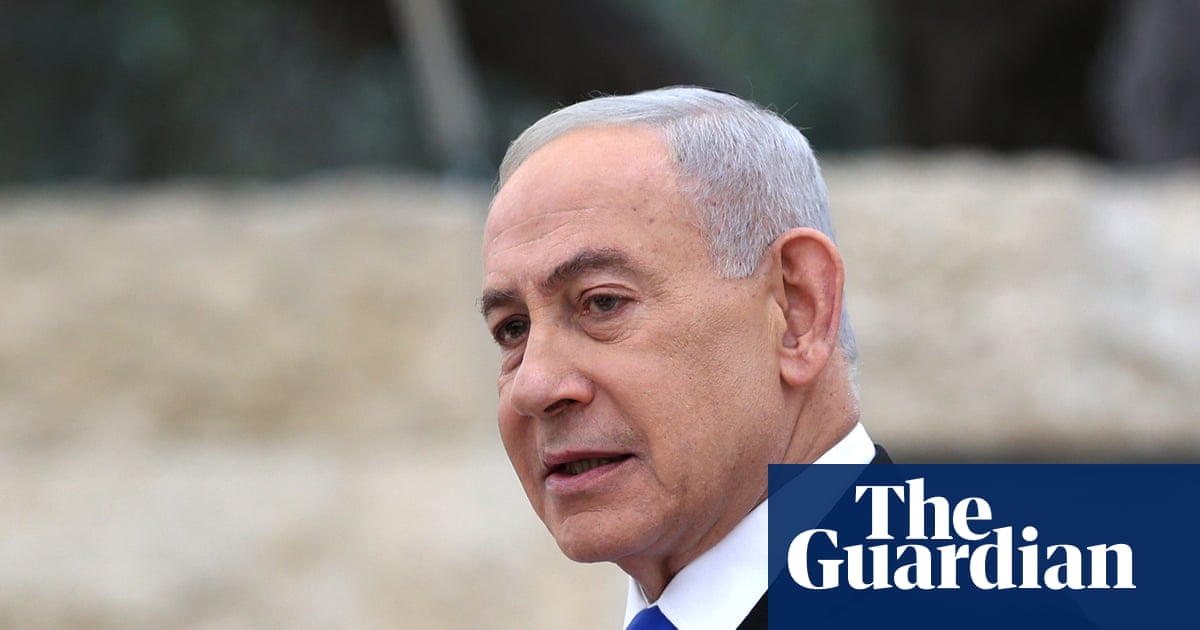
The primary catalyst for the current governmental crisis stems from escalating tensions with ultra-Orthodox parties within the coalition. These religious parties have expressed growing anger and frustration over Netanyahu's failure to secure military service exemptions for their constituents. The issue of military conscription for ultra-Orthodox Jews has been a contentious topic in Israeli politics for decades, representing a fundamental tension between religious obligations and civic duties in Israeli society.
The submitted legislation stipulates that elections must be held no less than 90 days after the bill's approval, a provision that grants Netanyahu considerable strategic flexibility in timing the electoral process. This timeframe allows the Prime Minister to choose a date when he believes his chances of electoral success are optimized, potentially giving him time to address coalition concerns or wait for more favorable political circumstances to emerge.
According to Israeli media reports, the dissolution bill could be put to a vote as early as May 20, marking a crucial moment for the government's survival. Should the legislation pass, the specific election date would be determined through discussions in a Knesset committee, providing additional procedural steps that could influence the timing and conduct of the electoral process. This mechanism ensures that the ruling coalition maintains some control over the electoral timeline while adhering to democratic procedures.
Netanyahu's current coalition comprises various parties with often divergent interests and priorities, making governance increasingly challenging. Beyond the ultra-Orthodox parties, the coalition includes other right-wing and religious groups, each with their own policy demands and red lines. Maintaining unity among these diverse political forces has proven particularly difficult when addressing controversial issues such as military service obligations and religious exemptions.
The military service exemption issue extends far beyond religious considerations, touching on fundamental questions of equality and civic responsibility in Israeli society. Many secular Israelis view these exemptions as fundamentally unfair, arguing that their children must serve in often dangerous military roles while ultra-Orthodox families are exempt from this national obligation. This perception of inequality has created broader social tensions that extend beyond the immediate political crisis.
Conversely, ultra-Orthodox communities maintain that religious study is equally vital to Israel's national security and spiritual well-being as military service. They argue that their dedication to Torah study provides essential spiritual protection for the nation and should be recognized as a legitimate form of national service. This theological perspective clashes with more secular views of citizenship and national obligation, creating an ongoing source of political and social friction.
Netanyahu finds himself caught between competing demands from different segments of Israeli society and his own coalition partners. His inability to broker a satisfactory compromise on the military service issue has exacerbated tensions within the coalition and contributed to the current political impasse. The ultra-Orthodox parties have made clear that their continued support for the government depends on securing meaningful concessions on this issue, while other coalition members and the broader public may oppose such exemptions.
The prospect of early elections introduces significant uncertainty into Israeli politics at a time when the country faces numerous domestic and international challenges. Israel has experienced several electoral cycles in recent years that resulted in either unstable governments or prolonged coalition negotiations, highlighting the difficulties of forming stable governing majorities in the country's fragmented political landscape.
Should parliament be dissolved and early elections called, the campaign period would likely focus heavily on the military service issue and broader questions about the role of religion in Israeli society. Netanyahu would need to defend his handling of coalition management while potentially facing challenges from both within his own political camp and from opposition parties seeking to capitalize on the government's instability.
The implications of a potential parliamentary dissolution extend beyond immediate domestic political concerns. Israel confronts various regional security challenges and international diplomatic issues that require consistent governmental leadership and decision-making capacity. Early elections could limit the government's ability to respond effectively to emerging crises or implement important policy initiatives during a critical period.
The coming weeks will prove decisive in determining whether Netanyahu can salvage his coalition through last-minute compromises or whether Israel will indeed proceed toward another round of elections. The outcome will have significant implications not only for Netanyahu's political future but also for the broader stability and governance of Israeli democracy during a period of ongoing regional and international challenges.
Fast take
Israel's ruling coalition has submitted a bill to dissolve the Knesset, paving the way for early elections in what represents a significant political crisis for Prime Minister Benjamin Netanyahu's government.
NOFRAME signal
Medium divergence · 5 Sources · 4 Regions
What remains open
Coverage is not fully split, but it is not identical either. That makes the comparison useful: the fact base shows the common core, while the perspectives show where political, regional, or institutional priorities change the emphasis.
Dossier compass
Which media spaces carry the story and how broad the source base is.
Source mix
Underlit angles
- Detailed analysis of ultra-Orthodox tensions
- Background on military service exemptions
- Political background and coalition tensions
Open originals
Go straight to the linked articles. NOFRAME does not replace those sources.
Why it matters
Coverage is not fully split, but it is not identical either. That makes the comparison useful: the fact base shows the common core, while the perspectives show where political, regional, or institutional priorities change the emphasis.
Timeline
NDTV World · May 13, 2026 at 08:33 PM
Netanyahu's Coalition Submits Bill To Dissolve Parliament, Trigger Fresh Polls
Daily Sabah · May 13, 2026 at 08:41 PM
Netanyahu's coalition pushes bill for early elections in Israel
Straits Times · May 13, 2026 at 09:11 PM
Israel ruling coalition proposes dissolving Parliament for early elections: PM's party
The Guardian · May 13, 2026 at 10:48 PM
Israel’s ruling coalition proposes early elections amid ultra-Orthodox anger at Netanyahu