Despite a partial agreement announced by US President Donald Trump to de-escalate hostilities between Israel and Hezbollah, Israeli forces continued airstrikes in southern Lebanon on Tuesday, killing at least eight to twelve people according to various reports. Simultaneously, the fourth round of formal ceasefire negotiations between Lebanon and Israel began at the US State Department headquarters in Washington.
Trump claimed on Monday that he had prevented an imminent Israeli attack on Beirut and that both sides had agreed to stop shooting. According to Lebanese officials, the agreement reportedly involves Israel refraining from attacking Beirut's southern suburbs in exchange for Hezbollah not attacking Israeli territory. However, the reality on the ground tells a different story.
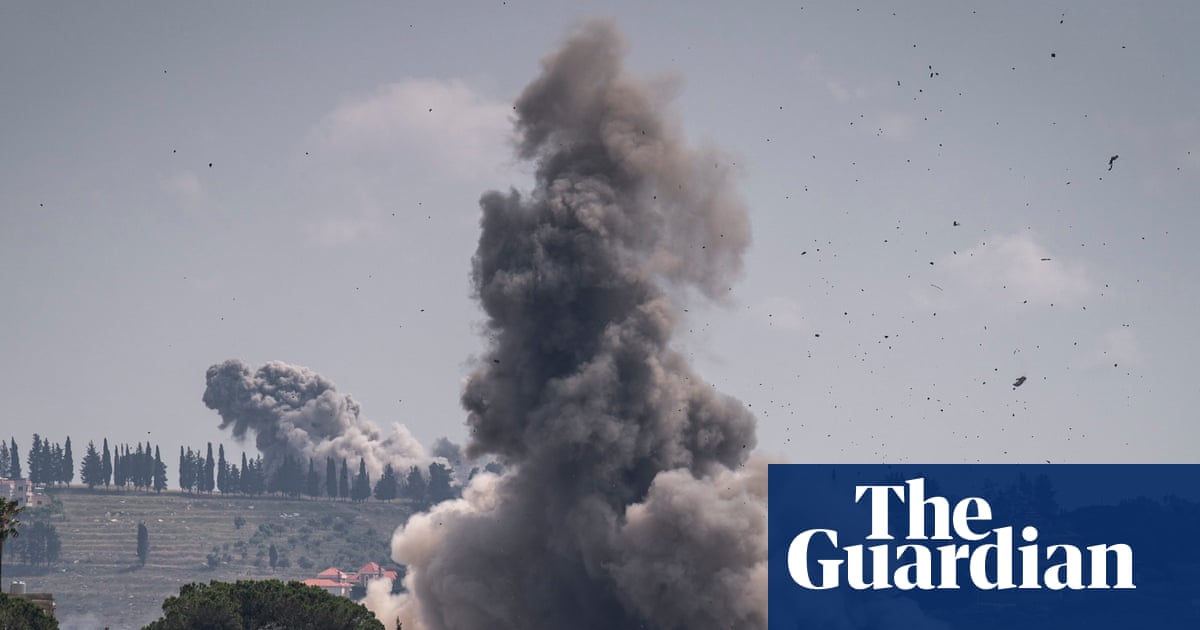
Israeli fighter jets conducted dozens of strikes across southern Lebanon on Tuesday, particularly targeting the Nabatiyeh and Tyre districts. The Israeli military also issued evacuation warnings for the city of Nabatiyeh. The continued bombardment contradicts Trump's announcement of de-escalation and raises questions about the effectiveness of the supposed agreement.
Hezbollah responded with continued rocket fire into northern Israel. However, reports suggest the organization stopped attacking Israeli cities farther from the border that it had recently been targeting. A senior Hezbollah official, Mahmud Qomati, categorically rejected any "partial ceasefire" agreement in a written statement on Tuesday. He also warned that any aggression against the suburbs could lead to a "deeper and stronger response" from the group.
Trump's announcement on Monday had initially raised hopes for a de-escalation of the situation. Israel had previously threatened to strike Beirut's southern suburbs, causing panic in the Lebanese capital as thousands fled to safer areas before the supposed agreement was announced. However, the continued fighting shows that sustainable de-escalation has not yet been achieved.
Parallel to the ongoing hostilities, diplomatic efforts for a comprehensive solution to the conflict are underway in Washington. The fourth round of negotiations between Lebanese and Israeli representatives is seen as crucial. Lebanon hopes these talks can prevent an Israeli invasion, while Israel maintains its security concerns given the continued threat from Hezbollah.
A particular aspect of the current conflict is Hezbollah's increased use of drones. The organization has actively deployed so-called FPV drones that operate even over territories captured by Israel. This technological development has, according to observers, influenced Israel's strategy in Lebanon and led to a kind of stalemate where Hezbollah appears more capable than it did at the beginning of the conflict.
The current developments highlight the complexity of the situation in the Middle East and the difficulties in mediating between the conflicting parties. While Trump emphasizes his role as mediator, the continued fighting shows that a lasting solution remains elusive. The Washington negotiations will need to demonstrate whether a comprehensive ceasefire can be achieved that goes beyond the limited concessions of the current partial agreement.
The international community is watching developments with concern, as further escalation of the conflict could have regional implications. Reports of differing casualty figures and contradictory accounts from various actors make it difficult to assess the situation accurately. What is clear, however, is that despite diplomatic efforts, violence continues and a sustainable solution to the conflict between Israel and Hezbollah remains a major challenge.
The ongoing situation also raises questions about the effectiveness of US mediation efforts in the region. Trump's announcement of a deal appears to have had limited impact on the ground, where military operations continue largely unchanged. The contrast between diplomatic statements and military reality underscores the deep-rooted nature of the conflict and the challenges facing negotiators in Washington as they attempt to broker a more comprehensive and lasting ceasefire agreement.
Fast take
Despite a partial agreement announced by US President Donald Trump to de-escalate hostilities between Israel and Hezbollah, Israeli forces continued airstrikes in southern Lebanon on Tuesday, killing at least eight to twelve people according to various reports.
NOFRAME signal
Medium divergence · 10 Sources · 5 Regions
What remains open
Coverage is not fully split, but it is not identical either. That makes the comparison useful: the fact base shows the common core, while the perspectives show where political, regional, or institutional priorities change the emphasis.
Dossier compass
Which media spaces carry the story and how broad the source base is.
Source mix
Underlit angles
- Details about Israeli security concerns
- Strategic challenges from Hezbollah drones
- Details about Trump's mediation role
Open originals
Go straight to the linked articles. NOFRAME does not replace those sources.
Why it matters
Coverage is not fully split, but it is not identical either. That makes the comparison useful: the fact base shows the common core, while the perspectives show where political, regional, or institutional priorities change the emphasis.
Timeline
The Guardian · June 2, 2026 at 06:11 PM
Israel strikes southern Lebanon despite Trump’s effort to shore up ceasefire
RT · June 2, 2026 at 06:31 PM
Hezbollah’s drones soar above medieval fortress captured by Israel (VIDEO)
Al Jazeera · June 2, 2026 at 07:24 PM
Lebanon hopes crunch talks in Washington will halt an Israeli invasion
Taipei Times · June 3, 2026 at 12:00 AM
Israel, Hezbollah clash ahead of talks