Israel and Lebanon have extended their fragile ceasefire for an additional 45 days following US-mediated talks in Washington that resulted in an agreement between the parties. Despite this diplomatic development, Israeli forces continue their military operations in southern Lebanon, striking multiple villages and coastal areas near the city of Tyre the day after the extension was announced. The attacks highlight the ongoing fragility of the ceasefire and raise questions about the sustainability of the current arrangement.
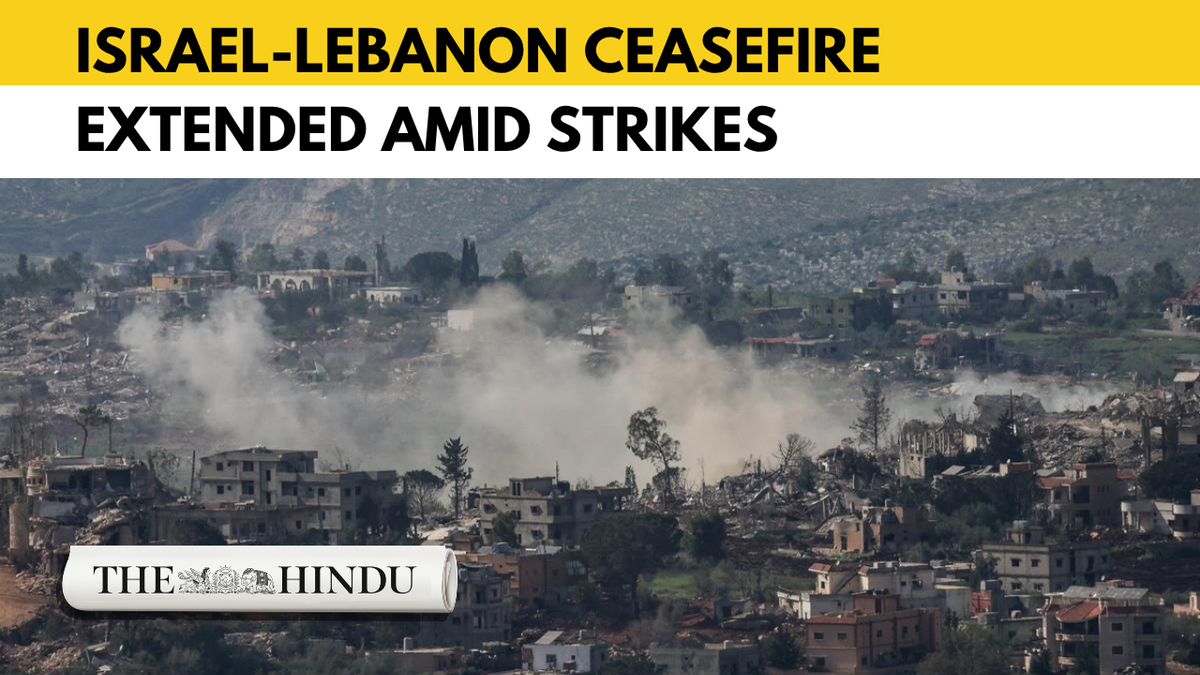
The Israeli airstrikes focused on the coastal region around Tyre, particularly targeting the town of Mansouri in the Tyre district. Reports indicate that Israeli warplanes specifically hit coastal areas, while separate strikes on the city of Tyre itself caused casualties. The exact number of dead and wounded remained unclear initially. Overall, attacks were reported on at least five villages in southern Lebanon, demonstrating the scope of continued military activities in the region.
The Israeli military justified the attacks by citing operations against Hezbollah infrastructure. In official statements, the Israeli army announced a new series of strikes on Hezbollah targets in southern Lebanon, describing the targets as "Hezbollah infrastructure sites." This justification reflects Israel's stated goal of weakening Hezbollah's military capabilities and reducing the organization's influence in the border region.
The ceasefire extension came about after intensive diplomatic efforts by the United States, which served as mediator between the conflicting parties. The original ceasefire agreement was approaching its expiration date, making an extension or new agreement necessary. The US government is pushing for a long-term solution to the conflict and views the 45-day extension as an opportunity for further negotiations toward a permanent peace arrangement.
A notable development was Lebanon's participation in the Washington talks despite Hezbollah's objections to these diplomatic efforts. This discrepancy between the official Lebanese position and Hezbollah's stance underscores the complex internal political tensions within Lebanon. Hezbollah, which is considered a powerful political and military force in the country, remains skeptical of the negotiations and may prefer a different approach to the conflict.
Israel's long-term strategy apparently includes the disarmament of Hezbollah as a central component of any lasting agreement. However, this goal presents a significant challenge, as Hezbollah possesses considerable military capabilities and is deeply rooted in Lebanese society and politics. The demand for disarmament is likely to encounter substantial resistance and could represent a major obstacle to any long-term peace solution.
The timing of events raises questions about the effectiveness of the ceasefire. While diplomatic efforts in Washington led to an extension, military operations continued virtually without interruption. This discrepancy between diplomatic agreements and the reality on the ground illustrates the difficulties in implementing ceasefire agreements in such a complex conflict.
The continued attacks despite the ceasefire extension raise fundamental questions about the definition and interpretation of the agreement. While Israel justifies its actions as legitimate operations against military targets, the other side might view these as violations of the ceasefire. These differing interpretations could complicate efforts toward a lasting solution and undermine trust between the parties.
The situation also reveals the challenges facing international mediators in managing conflicts where the parties have fundamentally different security concerns and political objectives. The United States, as the primary mediator, must balance Israel's security demands with Lebanon's sovereignty concerns while addressing Hezbollah's role as both a political party and armed group within the Lebanese system.
The developments have broader regional implications, as other actors in the Middle East closely monitor the situation. The stability of the Israeli-Lebanese border is of strategic importance to the entire region, and an escalation could have far-reaching consequences. The international community, particularly the US as mediator, faces the challenge of moving both sides toward a sustainable solution that goes beyond short-term ceasefires and addresses the underlying causes of the conflict.
The fragility of the current arrangement is evident in the contradiction between diplomatic progress and continued military action. While the 45-day extension provides breathing room for further negotiations, the ongoing strikes suggest that fundamental disagreements about security arrangements and the role of armed groups in Lebanon remain unresolved. The success of future diplomatic efforts may depend on finding mechanisms to address these core issues while maintaining the current pause in large-scale hostilities.
Looking ahead, the extended ceasefire period will test whether the parties can move beyond tactical agreements toward strategic solutions. The international community's ability to facilitate meaningful dialogue and provide security guarantees may prove crucial in determining whether this extension leads to lasting peace or merely postpones a return to more intensive conflict.
Fast take
Israel and Lebanon have extended their fragile ceasefire for an additional 45 days following US-mediated talks in Washington that resulted in an agreement between the parties.
NOFRAME signal
High divergence · 6 Sources · 4 Regions
What remains open
This matters because the event itself is only part of the story. 4 media regions frame it with noticeably different priorities. Details that remain stable across those boundaries are more robust; details that appear in only one region need context.
Dossier compass
Which media spaces carry the story and how broad the source base is.
Source mix
Underlit angles
- Details about Hezbollah activities
- Israeli security concerns
- Hezbollah resistance to talks
Open originals
Go straight to the linked articles. NOFRAME does not replace those sources.
Why it matters
This matters because the event itself is only part of the story. 4 media regions frame it with noticeably different priorities. Details that remain stable across those boundaries are more robust; details that appear in only one region need context.
Timeline
Straits Times · May 16, 2026 at 09:21 AM
Israel strikes south Lebanon day after ceasefire extension
The Hindu · May 16, 2026 at 09:41 AM
Israel-Lebanon ceasefire extended by 45 days, but fresh strikes raise concerns
Al Jazeera · May 16, 2026 at 10:34 AM
Israeli strikes on southern Lebanon continue despite ‘ceasefire’ extension
TASS · May 16, 2026 at 11:07 AM
Israeli army announces new series of strikes on Hezbollah targets in southern Lebanon