Thousands of Israeli nationalists marched through Jerusalem's Old City on Thursday, chanting anti-Palestinian slogans during the annual Jerusalem Day parade. The march, also known as the Flag March, commemorates Israel's capture of East Jerusalem during the 1967 Arab-Israeli War. Participants shouted slogans including "Death to Arabs" and "May your villages burn" as they proceeded through the Muslim Quarter. The event led to significant tensions and heightened security measures throughout the historic Old City.
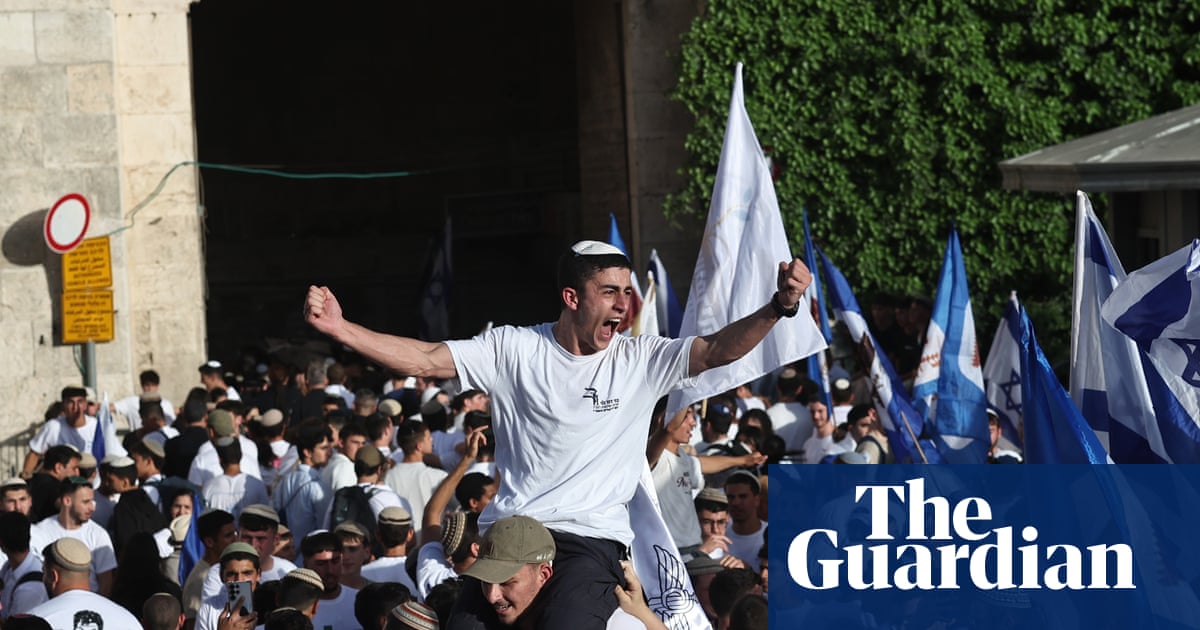
Palestinian residents largely remained barricaded inside their homes during the march, while shops in what is normally a bustling marketplace stayed closed throughout the day. The streets were largely emptied of Palestinians, creating an atmosphere of fear and intimidation. Churches in the Old City also closed their doors due to concerns about potential violence. Israeli security forces deployed thousands of officers and blocked major roads to secure the event.
Jerusalem Day is observed annually to celebrate what Israeli authorities describe as the "reunification" of Jerusalem. Following the capture of East Jerusalem in 1967, Israel annexed the territory, a move that remains unrecognized by the international community. For many Israelis, the day symbolizes the return of Jewish control over the entire city, including its holy sites. The march traditionally proceeds through the Muslim Quarter of the Old City to the Western Wall.
From the Palestinian perspective, the march represents a provocation and a demonstration of Jewish dominance over East Jerusalem. Palestinians view East Jerusalem as the capital of a future Palestinian state and see the annual parade as a deliberate humiliation. The anti-Palestinian chants and aggressive behavior of many participants significantly reinforce this perception among Palestinian residents.
The event has become increasingly controversial in recent years. Critics accuse organizers of stoking ultranationalist sentiments and deliberately provoking confrontations. Many participants are teenagers and young adults who often move through the narrow alleys of the Old City in groups. Reports indicate that violent attacks against Palestinian residents also occurred, with even a journalist from the Israeli newspaper Haaretz being assaulted during the march.
Israeli police reported 16 arrests during the event. Authorities had implemented massive security preparations beforehand and temporarily blocked Palestinian Muslims' access to the Al-Aqsa Mosque to accommodate the nationalist march. Israel's National Security Minister Itamar Ben-Gvir reportedly unfurled an Israeli flag in front of the Al-Aqsa Mosque, Islam's third holiest site, marking a particularly provocative moment.
The march takes place against the backdrop of ongoing tensions in the Israeli-Palestinian conflict. Jerusalem remains one of the most contentious aspects of the conflict, with both sides claiming the city. The international community does not recognize Israel's annexation of East Jerusalem and considers it occupied territory. The annual parade regularly intensifies tensions and often leads to violent confrontations between different communities.
Experts warn that such events could further deteriorate prospects for a peaceful resolution of the conflict. The racist slogans and aggressive rhetoric contribute to radicalization on both sides. At the same time, many Israeli participants view the march as a legitimate expression of their religious and national identity, as well as their claim to Jerusalem as Israel's undivided capital.
The events of Thursday highlight the deep divisions between communities in Jerusalem. While Israeli nationalists demonstrated their control over the entire city, Palestinian residents felt threatened and intimidated in their own neighborhoods. The heavy police presence and road closures effectively transformed parts of the Old City into a militarized zone for the duration of the march.
International attention to such events remains high, as they are viewed as a barometer for regional tensions. The combination of religious significance, political symbolism, and ethnic tensions makes Jerusalem Day a particularly sensitive flashpoint. The march's route through Palestinian areas is seen by critics as unnecessarily provocative, while supporters argue it represents legitimate celebration of Israeli sovereignty over the unified city.
Fast take
Thousands of Israeli nationalists marched through Jerusalem's Old City on Thursday, chanting anti-Palestinian slogans during the annual Jerusalem Day parade.
NOFRAME signal
High divergence · 8 Sources · 3 Regions
What remains open
This matters because the event itself is only part of the story. 3 media regions frame it with noticeably different priorities. Details that remain stable across those boundaries are more robust; details that appear in only one region need context.
Dossier compass
Which media spaces carry the story and how broad the source base is.
Source mix
Underlit angles
- Israeli security concerns
- Religious significance for Jewish participants
- Official Israeli justification of the event
Open originals
Go straight to the linked articles. NOFRAME does not replace those sources.
Why it matters
This matters because the event itself is only part of the story. 3 media regions frame it with noticeably different priorities. Details that remain stable across those boundaries are more robust; details that appear in only one region need context.
Timeline
Al Jazeera · May 14, 2026 at 05:50 PM
‘May your village burn’: Israeli Flag March returns to East Jerusalem
Al Jazeera · May 14, 2026 at 06:41 PM
Israeli ultranationalists chant racist slogans during Jerusalem Day march
The Guardian · May 14, 2026 at 06:51 PM
‘God gave us this city’: Israeli nationalists join Jerusalem Day protest to mark city’s capture
PBS NewsHour · May 14, 2026 at 06:58 PM
Ultranationalist Jews recite racist slogans during march into Jerusalem's Old City