Kenyan police deployed tear gas against protesters in the town of Nanyuki on Thursday as demonstrations erupted over a planned US-backed Ebola quarantine facility. The protests led to running battles between demonstrators and security forces in the central Kenyan town, while businesses and shops shut down operations to join the demonstrations.
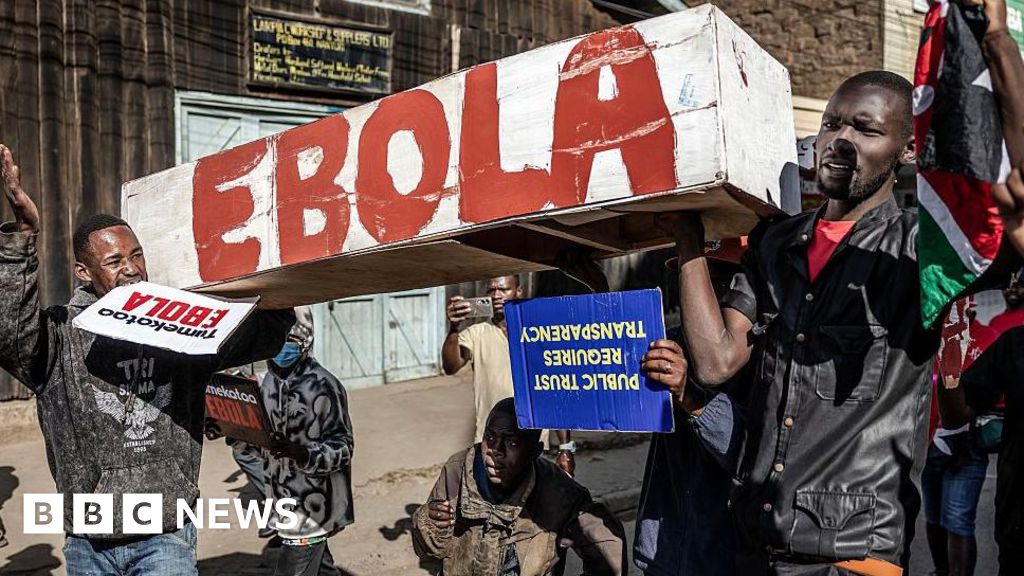
The controversial facility is planned for construction at Laikipia Air Base and would serve as a 50-bed treatment center for Americans who have been exposed to the Ebola virus but remain asymptomatic. The quarantine center plans have sparked significant concern among the local population, who have expressed fears about potential cross-border infection risks.
Protesters have accused the Kenyan government of lacking transparency in the planning and implementation of the project. Many locals feel inadequately informed about the safety measures and operational procedures of the proposed facility. Concerns about potential health risks to the local community have become central to the protests.
The Laikipia Air Base, where the center is planned to be built, is located in a strategically important area of central Kenya. The selection of this location for an international health facility raises questions about coordination between US and Kenyan authorities. Details about the exact operational procedures and security protocols of the facility remain limited in public disclosure.
The protests reflect broader tensions between international health security arrangements and local community interests. While the US appears to be making preparations for handling Ebola exposure cases, local communities find themselves facing potential risks and impacts without being adequately included in the planning processes.
The police use of tear gas demonstrates the intensity of local opposition to the project. Security forces faced sustained protests that significantly disrupted public life in Nanyuki. Businesses remained closed as residents joined the demonstrations, showing the breadth of community opposition.
Ebola quarantine facilities are highly sensitive health infrastructure requiring strict security and isolation measures. The local population's concerns about potential risks are understandable given the history of Ebola outbreaks in Africa, even though modern quarantine facilities typically maintain high safety standards.
The facility appears to be part of broader US preparedness efforts for handling potential Ebola exposure cases involving American personnel. However, the lack of detailed public information about the facility's operations has contributed to community anxiety and opposition. Questions remain about how the facility would operate, what safety protocols would be in place, and how risks to the local population would be managed.
The protests highlight the challenges of implementing international health security measures at the local level. While such facilities may be important for pandemic preparedness from a global perspective, the concerns and rights of affected communities must be adequately addressed. The current situation suggests a significant gap in community consultation and transparency.
The future of the project remains uncertain as the Kenyan government now faces substantial local resistance. The protests could delay implementation of the plans or lead to changes in project design. Improved communication and inclusion of local communities may be necessary to find a resolution to the conflict.
The events in Nanyuki also raise broader questions about how international health partnerships should be structured to ensure both effective disease preparedness and community acceptance. The balance between global health security needs and local community concerns represents a ongoing challenge in international health cooperation.
As the situation develops, attention will likely focus on how Kenyan authorities respond to the protests and whether additional consultation with local communities will be undertaken. The resolution of this conflict could set important precedents for future international health facility projects in Kenya and other countries.
Fast take
Kenyan police deployed tear gas against protesters in the town of Nanyuki on Thursday as demonstrations erupted over a planned US-backed Ebola quarantine facility.
NOFRAME signal
Stable coverage · 4 Sources · 3 Regions
What remains open
The source picture is relatively consistent. That still makes the details worth reading: small differences in wording, omissions, and source selection can reveal what each region treats as important.
Dossier compass
Which media spaces carry the story and how broad the source base is.
Source mix
Underlit angles
- Specific details about safety measures
- Government position on the protests
- International diplomatic aspects
Open originals
Go straight to the linked articles. NOFRAME does not replace those sources.
Why it matters
The source picture is relatively consistent. That still makes the details worth reading: small differences in wording, omissions, and source selection can reveal what each region treats as important.
Timeline
Nation Africa · June 9, 2026 at 08:51 AM
Protestors in Nanyuki engage police in running battles over Ebola facility
The Hindu · June 9, 2026 at 09:21 AM
Kenyan police crack down on protest against U.S. Ebola quarantine facility
BBC World · June 9, 2026 at 10:09 AM
Kenyan police fire tear gas at protest against US Ebola quarantine centre plan
TRT World · June 9, 2026 at 11:48 AM
Kenyan protesters clash with police over controversial US-backed Ebola quarantine centre