Iran launched missile and drone attacks on Kuwait and Bahrain on Wednesday, killing one person and wounding dozens in an escalation that tests a fragile ceasefire in the Gulf region. The strikes represent the latest chapter in ongoing tensions between Iran and the United States, with both countries engaging in tit-for-tat attacks.
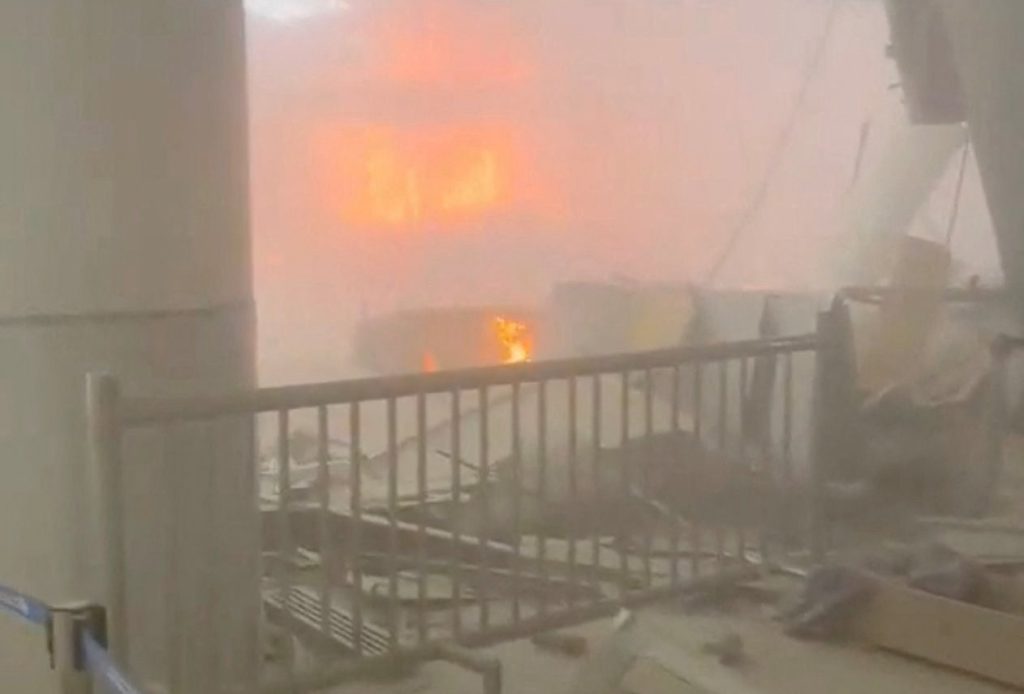
Kuwaiti authorities reported detecting 30 ballistic missiles and drones launched in what they described as 'heinous Iranian aggression' since dawn. According to Kuwait's defense ministry, 13 hostile ballistic missiles were intercepted within Kuwaiti airspace, with debris falling over several residential areas. An additional 17 hostile drones were detected and engaged by air defense systems. The attacks targeted civilian and vital facilities across the country.
Kuwait's main international airport bore the brunt of the Iranian assault, with drones heavily damaging a passenger terminal. The airport was temporarily shut down following the attack, which killed one person and wounded dozens more. The damage to the terminal caused significant disruptions to air traffic at one of the region's key transportation hubs, highlighting the strategic nature of the targets chosen.
Bahrain also came under attack, with its military reporting the interception of three missiles and several drones targeting civilian infrastructure. The Bahraini Defense Force accused Iran of continuing its 'hostile approach' through missile and drone attacks aimed at civilian facilities. The attacks on Bahrain demonstrate the broader scope of Iran's retaliatory strikes beyond Kuwait.
Iranian Foreign Minister Abbas Araghchi defended the attacks as 'self-defense strikes' in a post on social media platform X. He claimed that Iranian forces had targeted sites that US forces 'use to attack civilian shipping and violate the ceasefire.' This justification suggests the attacks were framed as retaliation for previous US actions, though the specific incidents referenced were not detailed.
Kuwait denied allegations that its airspace had been used to launch strikes on Iran, emphasizing that the country had not participated in attacks on Iranian territory. Both Kuwait and Bahrain host US military forces, making them strategic targets in the broader conflict between Iran and the United States. The presence of American military assets in these countries appears to be a key factor in Iran's targeting decisions.
The attacks occurred against the backdrop of what reports describe as day 96 of an ongoing Iran war, suggesting a prolonged period of tensions and military exchanges between Iran and the US. The cyclical nature of attacks and counter-attacks indicates that both sides remain engaged in a broader strategic confrontation that extends beyond immediate tactical objectives.
Iranian media also reported explosions on Iran's Qeshm Island, with blasts near coastal areas and possible projectile impacts. These reports suggest that Iran may have also been targeted in related strikes, though details remain unclear. The simultaneous nature of attacks and counter-attacks demonstrates the rapid escalation potential in the current conflict.
The international community is closely monitoring developments in the Gulf, as the region serves as a critical waterway for global oil trade. Any escalation in tensions threatens the stability of one of the world's most important energy corridors, with potential ramifications for global energy markets and economic stability.
The attacks also raise serious questions about the viability of the ceasefire that was apparently in place. The fact that both sides continue to engage in military actions suggests that underlying tensions remain unresolved and that any peace agreements may be fragile. The targeting of civilian infrastructure, including airports, adds another layer of concern about the potential for further escalation and the protection of non-combatants in the conflict.
Fast take
Iran launched missile and drone attacks on Kuwait and Bahrain on Wednesday, killing one person and wounding dozens in an escalation that tests a fragile ceasefire in the Gulf region.
NOFRAME signal
High divergence · 5 Sources · 3 Regions
What remains open
This matters because the event itself is only part of the story. 3 media regions frame it with noticeably different priorities. Details that remain stable across those boundaries are more robust; details that appear in only one region need context.
Dossier compass
Which media spaces carry the story and how broad the source base is.
Source mix
Underlit angles
- Details about previous US strikes on Iran
- Clarification of US military presence in Gulf states
- Broader context of ongoing Iran-US conflict
Open originals
Go straight to the linked articles. NOFRAME does not replace those sources.
Why it matters
This matters because the event itself is only part of the story. 3 media regions frame it with noticeably different priorities. Details that remain stable across those boundaries are more robust; details that appear in only one region need context.
Timeline
Middle East Eye · June 3, 2026 at 05:27 PM
Latest developments in Iran's attacks on Kuwait and Bahrain
PBS NewsHour · June 3, 2026 at 05:47 PM
Iran strikes Kuwait's main airport and kills 1 as ceasefire is tested again
Middle East Eye · June 3, 2026 at 06:10 PM
Iran defends attacks on Kuwait and Bahrain as 'self-defence'
Taipei Times · June 4, 2026 at 12:00 AM
Main Kuwait airport shut down after Iranian strike