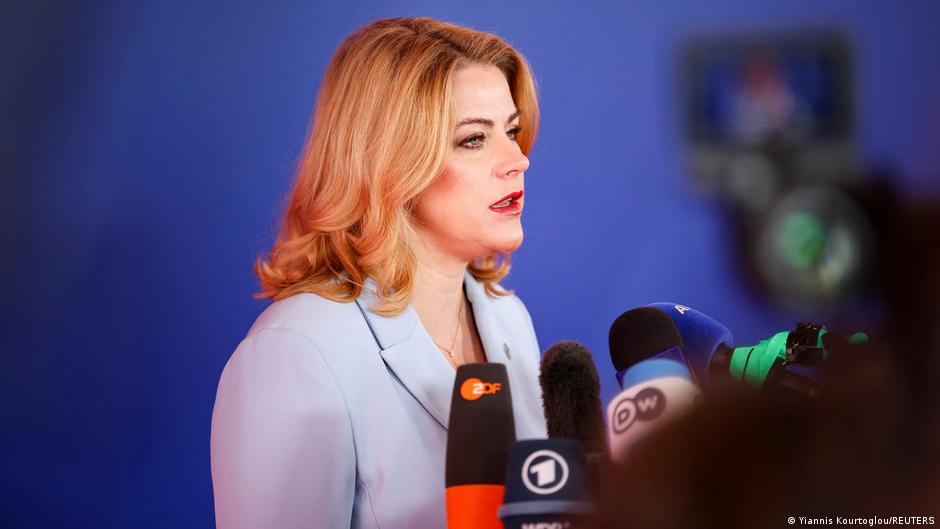
Latvian Prime Minister Evika Silina resigned on Thursday after her coalition government collapsed over the handling of Ukrainian drone incidents, triggering a political crisis just months before scheduled parliamentary elections in October.
The crisis began on May 10 when several Ukrainian drones crashed near the Latvian city of Rezekne after crossing from Russian territory. The drones, reportedly bound for targets in Russia, veered off course and entered Latvian airspace before crashing into empty fuel storage tanks at an oil depot. While no injuries occurred, the incident sparked intense political debate about the government's security preparedness and crisis response capabilities.
Defense Minister Andris Spruds announced his resignation three days after the incident, becoming the first high-profile casualty of the political fallout. Opposition parties and coalition partners criticized the government for failing to deploy anti-drone systems quickly enough and for inadequate public communication during the crisis. Spruds' departure signaled the beginning of a broader governmental crisis that would ultimately bring down the entire coalition.
The decisive blow came when the left-wing Progressives party announced on Wednesday that it was withdrawing support from Silina's center-right coalition. This move stripped the Prime Minister of her parliamentary majority, making her position untenable and forcing her resignation announcement the following day. The Progressives cited fundamental disagreements over security policy and crisis management as reasons for their withdrawal.
Ukrainian Foreign Minister Andrii Sybiha attributed the drone incidents to Russian electronic warfare interference. In a phone conversation with his Latvian counterpart Baiba Braže, Sybiha explained that Russian jamming systems had disrupted the navigation of Ukrainian drones. This explanation highlights the complex security environment in the region, where the effects of the Ukraine war extend beyond the immediate conflict zone to neighboring NATO states.
Latvia, which shares a 214-kilometer border with Russia, has positioned itself as one of Ukraine's strongest supporters since the war began. The country has provided substantial military and humanitarian aid and has been among the most vocal critics of Russian aggression. However, the recent events underscore the challenges facing smaller NATO members on the alliance's eastern flank as they navigate the spillover effects of the conflict.
The political crisis comes at an inopportune time for Latvia, with parliamentary elections scheduled for October. The government instability could significantly impact the electoral campaign, as Silina's party, which has been in power since the last elections, must now work to rebuild voter confidence while simultaneously forming a new government. The incident has transformed what began as a security matter into a question of political competence and public trust.
The drone incidents also raise broader questions about airspace security in the region. NATO members along the Russian border have repeatedly reported violations of their airspace by drones and other aircraft in recent months. These incidents present alliance partners with the challenge of responding appropriately to such violations without risking further escalation of tensions.
The timing of the crisis, occurring just five months before elections, has amplified its political impact. What might have been handled as a routine security incident in normal times has instead become a defining moment for the government's credibility. The opposition has seized on the incident to question the coalition's ability to protect national security and manage crisis situations effectively.
For the coming weeks, Latvia faces the task of forming a transitional government to lead the country until the October elections. The political uncertainty could also affect Latvia's role in international forums, where the country has been a reliable partner in supporting Ukraine. The events demonstrate how regional security crises can quickly evolve into domestic political challenges, even in stable democratic systems.
The resignation marks the end of Silina's tenure as Prime Minister and raises questions about the stability of Latvia's political landscape as it approaches crucial elections. The incident serves as a reminder of the complex security challenges facing NATO's eastern members and the delicate balance required to maintain both national security and political stability in an increasingly volatile regional environment.
Fast take
Latvian Prime Minister Evika Silina resigned on Thursday after her coalition government collapsed over the handling of Ukrainian drone incidents, triggering a political crisis just months before scheduled parliamentary elections in October.
NOFRAME signal
Stable coverage · 9 Sources · 3 Regions
What remains open
The source picture is relatively consistent. That still makes the details worth reading: small differences in wording, omissions, and source selection can reveal what each region treats as important.
Dossier compass
Which media spaces carry the story and how broad the source base is.
Source mix
Underlit angles
- Detailed analysis of NATO security implications
- Russian electronic warfare as cause
- Criticism of inadequate Latvian air defense
Open originals
Go straight to the linked articles. NOFRAME does not replace those sources.
Why it matters
The source picture is relatively consistent. That still makes the details worth reading: small differences in wording, omissions, and source selection can reveal what each region treats as important.
Timeline
Hungary Today · May 14, 2026 at 09:36 AM
Foreign Minister summons Russian Ambassador over brutal Transcarpathia drone assault
DW News · May 14, 2026 at 09:51 AM
Latvia: Prime Minister Evika Silina resigns over handling of drone incidents after coalition ally's withdrawal
ABC News · May 14, 2026 at 10:10 AM
Latvian prime minister resigns after controversy over stray Ukrainian drones
BBC World · May 14, 2026 at 10:53 AM
Latvian PM resigns after row over stray Ukrainian drones