Israel and Lebanon have agreed to a new ceasefire framework following US-mediated talks in Washington, raising hopes for progress in resolving the broader regional conflict involving Iran. However, the agreement's implementation faced immediate challenges as violations occurred within hours of its announcement.
The Trump administration brokered the talks that led to the ceasefire agreement. Notably, Hezbollah, the Iranian-backed armed group that plays a central role in the conflict, was not included in the negotiations. This absence raises significant questions about the practical enforceability of the agreement, as Hezbollah operates independently in southern Lebanon and maintains substantial military capabilities.
The Iranian dimension adds crucial complexity to this development. Tehran has explicitly made a ceasefire in Lebanon a precondition for any peace negotiations with Washington. In recent days, Iran has suggested it could intervene directly in support of Hezbollah if Israel continues or escalates its attacks in Lebanon. This linkage between the Lebanese conflict and broader US-Iranian tensions makes the ceasefire a potentially critical building block for regional stability.
Israel's Defense Minister Israel Katz clarified that military operations in southern Lebanon would continue despite the ceasefire announcement. He stated that the truce is conditional on Hezbollah completely halting its attacks and withdrawing all operatives from the area between the Lebanese border and the Litani River. The Israeli Defense Forces would not withdraw from southern Lebanon and would not permit the return of the population until these conditions are met.
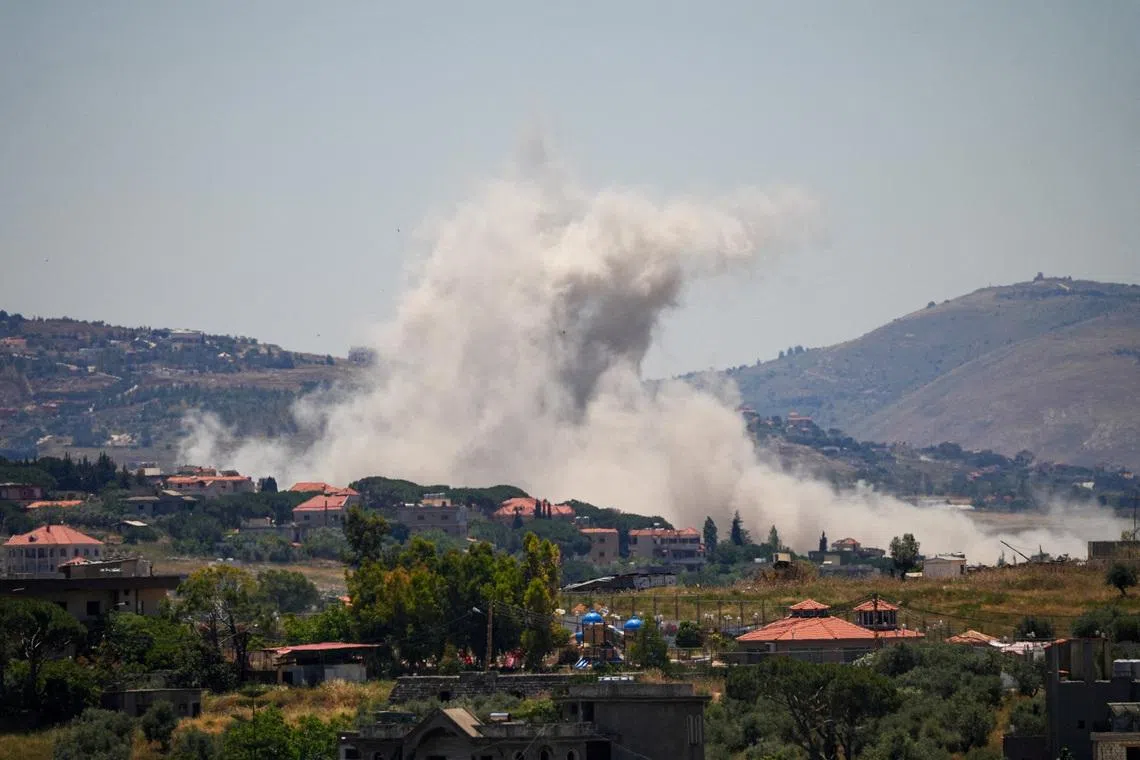
The fragility of the agreement became apparent within hours of its announcement. Hezbollah fired a rocket salvo at Israeli troop positions in northern Israel, marking the first cross-border missile attack the group had publicly announced since Monday. In response, Israel conducted airstrikes in southern Lebanon, injuring three family members according to reports. These immediate violations highlight the challenges facing implementation.
The commander of Iran's Quds Force, the foreign operations arm of the Islamic Revolutionary Guards, stated that Hezbollah demands Israel retreat to positions held before the war began, according to Iranian media reports. He emphasized that supporting the resistance in Lebanon remains a duty and that removing Israel from the region continues to be the objective.
Concurrently with developments in Lebanon, Iran reported no tangible progress in talks with the United States. This occurred as the situation in Lebanon continued to deteriorate despite the announced ceasefire. US lawmakers showed reluctance toward President Trump's efforts, underscoring the diplomatic challenges involved in resolving these interconnected conflicts.
The establishment of what officials termed 'pilot security zones' represents one concrete element of the ceasefire framework. However, the practical implementation of these zones remains unclear, particularly given the ongoing military activities by both sides. The conditional nature of the ceasefire, dependent on Hezbollah's compliance with withdrawal demands, creates additional uncertainty about its sustainability.
International observers are closely monitoring these developments, as a successful Lebanese ceasefire could serve as a stepping stone for broader regional peace efforts. The connection between the Lebanese conflict and US-Iranian relations makes this agreement a test case for the Trump administration's ability to navigate complex regional conflicts involving multiple proxy relationships.
The coming days will be crucial in determining whether the ceasefire agreement can hold. The fact that both Hezbollah and Israel have already committed violations suggests significant implementation challenges ahead. The absence of Hezbollah from the negotiating table may prove to be a critical weakness, as the group maintains operational independence and has shown willingness to act contrary to Lebanese government positions.
Despite these immediate challenges, the ceasefire represents a potential opening for broader diplomatic progress. If successfully implemented and sustained, it could create space for the more comprehensive US-Iran negotiations that both sides have indicated interest in pursuing, albeit under different conditions and timelines.
Fast take
Israel and Lebanon have agreed to a new ceasefire framework following US-mediated talks in Washington, raising hopes for progress in resolving the broader regional conflict involving Iran.
NOFRAME signal
Medium divergence · 11 Sources · 3 Regions
What remains open
Coverage is not fully split, but it is not identical either. That makes the comparison useful: the fact base shows the common core, while the perspectives show where political, regional, or institutional priorities change the emphasis.
Dossier compass
Which media spaces carry the story and how broad the source base is.
Source mix
Underlit angles
- Limited coverage of Israeli military conditions
- Less focus on practical implementation problems
- Less emphasis on regional diplomatic hopes
Open originals
Go straight to the linked articles. NOFRAME does not replace those sources.
Why it matters
Coverage is not fully split, but it is not identical either. That makes the comparison useful: the fact base shows the common core, while the perspectives show where political, regional, or institutional priorities change the emphasis.
Timeline
Straits Times · June 4, 2026 at 11:46 AM
Lebanon ceasefire raises hopes of progress for Iran deal
CBS News · June 4, 2026 at 11:47 AM
Iran says "no tangible progress" made in talks as Israel, Lebanon renew truce
NY Times World · June 4, 2026 at 11:52 AM
Iran War Live Updates: Israel Says It Targeted Hezbollah After New Cease-Fire With Lebanon
Al-Monitor · June 4, 2026 at 12:02 PM
Lebanon ceasefire raises hopes of progress for Iran deal