As the final months of 2026 approach, international diplomacy is shaping up around several separate high-level meetings rather than a single grand summit bringing together the world's most powerful leaders. At the center of attention is the question of whether and when US President Donald Trump, Russian President Vladimir Putin, and Chinese leader Xi Jinping will meet in person. For many middle powers — from India to other G20 members — this uncertainty has direct implications for their own scheduling and diplomatic strategy.
According to a report by the Straits Times, Putin plans to attend the APEC summit in person, which is set to be hosted by China in Shenzhen in November. This would mark Putin's first personal participation in an APEC meeting since 2017. At the same time, Putin is reportedly planning to skip the G20 summit in the United States, where Trump is expected to serve as host. This split suggests that Moscow and Washington may for now prefer separate diplomatic stages rather than a shared major gathering.
Russian outlet TASS added that Trump himself believes he may meet Putin soon — though probably not at the US-hosted G20 summit. That summit is scheduled for December 14-15 in Doral, near Miami. This suggests that, from the American side, a Trump-Putin meeting is considered plausible, but likely to take place at a different time and location than the G20 gathering itself.
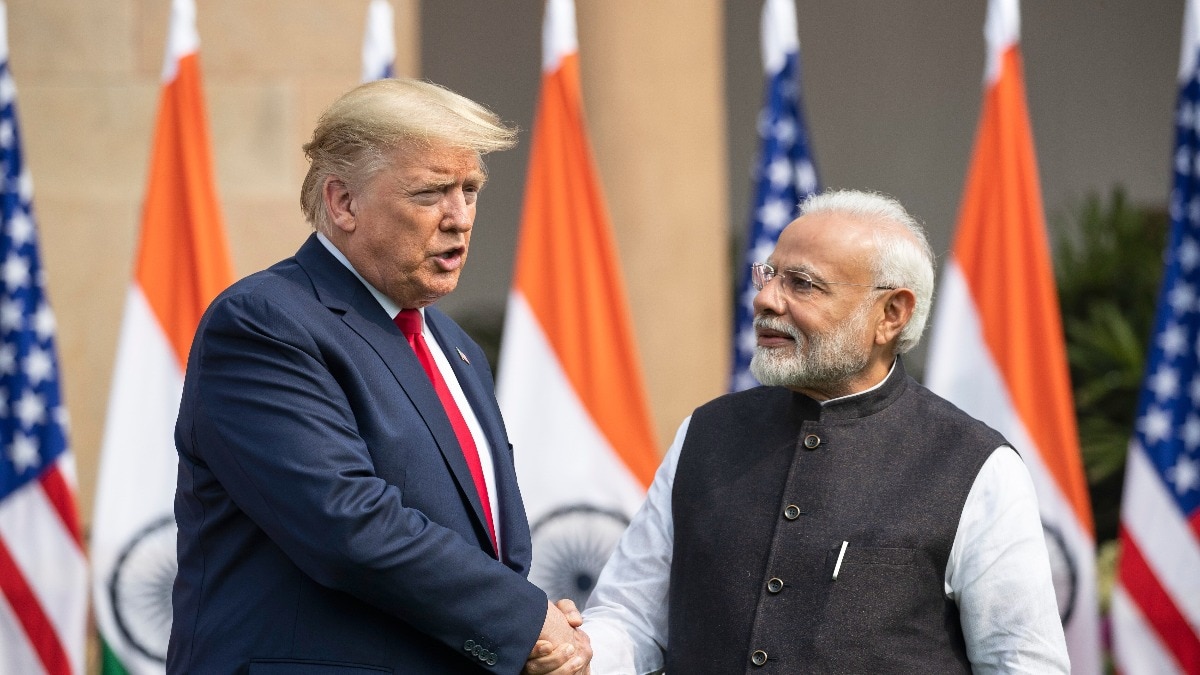
Meanwhile, Indian outlets NDTV World and India Today report that Prime Minister Narendra Modi may travel to the United States in December to attend the G20 summit and possibly hold a bilateral meeting with Trump. According to these reports, the trip could begin with a stop in Berlin, where Modi may take part in the India-Germany Inter-Governmental Consultations (IGC). India Today further notes that after the US visit, Modi might head to Canada. These reports describe plans as likely rather than confirmed, and details remain subject to change.
Against this backdrop, the South China Morning Post published a commentary noting that the prospect of Trump, Xi, and Putin meeting at the APEC summit in Shenzhen in November has revived comparisons to the 1945 Yalta conference, where the era's major powers helped shape the postwar order. Speculation about a modern "Trump-Xi-Putin summit" reportedly first emerged during Trump's first term and resurfaced last year around the 80th anniversary of the Second World War's end. So far, no such joint three-way summit has taken place.
Instead, the article suggests that Xi has hosted the two presidents separately, though specific details of these individual meetings are not elaborated in the available material. The commentary's central argument is that middle powers do not need to wait for the three major powers to sit down together. Instead, these countries can pursue their own diplomatic initiatives and manage their relationships with each major power independently, rather than waiting on a symbolic summit whose occurrence remains uncertain.
Several questions remain open in the available reporting. It is unclear whether an actual meeting between Trump and Xi will take place at the APEC summit, and whether Putin might meet Trump on that occasion despite his stated plan to skip the US-hosted G20 summit. The exact timing and location of any possible Trump-Putin meeting outside the G20 framework is also not specified in current reports. Similarly, Modi's travel plans — spanning Berlin, Washington, and possibly Canada — have not been finally confirmed according to the sources reviewed.
For the international order heading into late 2026, this situation points to one clear pattern: the major summit dates — APEC in Shenzhen in November and G20 in Doral in December — are running in parallel rather than converging into a single event bringing all key actors together. Countries such as India appear to be using the moment to combine bilateral meetings with the US and other partners, while Russia and the United States seem to be choosing separate stages for their respective engagements. How these parallel processes might eventually lead to direct talks between Trump, Putin, and Xi remains an open question that current sources do not resolve, and clarity is likely to emerge only in the coming weeks as the summit dates approach.
Fast take
As the final months of 2026 approach, international diplomacy is shaping up around several separate high-level meetings rather than a single grand summit bringing together the world's most powerful leaders.
NOFRAME signal
Stable coverage · 5 Sources · 3 Regions
What remains open
The source picture is relatively consistent. That still makes the details worth reading: small differences in wording, omissions, and source selection can reveal what each region treats as important.
Dossier compass
Which media spaces carry the story and how broad the source base is.
Source mix
Underlit angles
- No notable omissions in the current source comparison.
Open originals
Go straight to the linked articles. NOFRAME does not replace those sources.
Why it matters
The source picture is relatively consistent. That still makes the details worth reading: small differences in wording, omissions, and source selection can reveal what each region treats as important.
Timeline
Straits Times · September 21, 2026 at 06:34 PM
Putin plans to attend Xi’s APEC summit and skip G-20 with Trump
TASS · September 22, 2026 at 08:44 PM
Trump thinks he, Putin may meet soon, but unlikely at US G20 summit
India Today · September 23, 2026 at 03:33 AM
PM likely to visit US for G20 Summit in December, hold bilateral with Trump
NDTV World · September 23, 2026 at 07:41 AM
PM Modi May Visit US For G20 Summit, Bilateral With Trump On Cards