NASA has announced the crew for its Artemis III mission, marking a significant milestone in the agency's ambitious plan to return humans to the Moon. The four-person crew consists of American astronauts Randy Bresnik, Frank Rubio, and Andre Douglas, along with Italian ESA astronaut Luca Parmitano, who will serve as pilot.
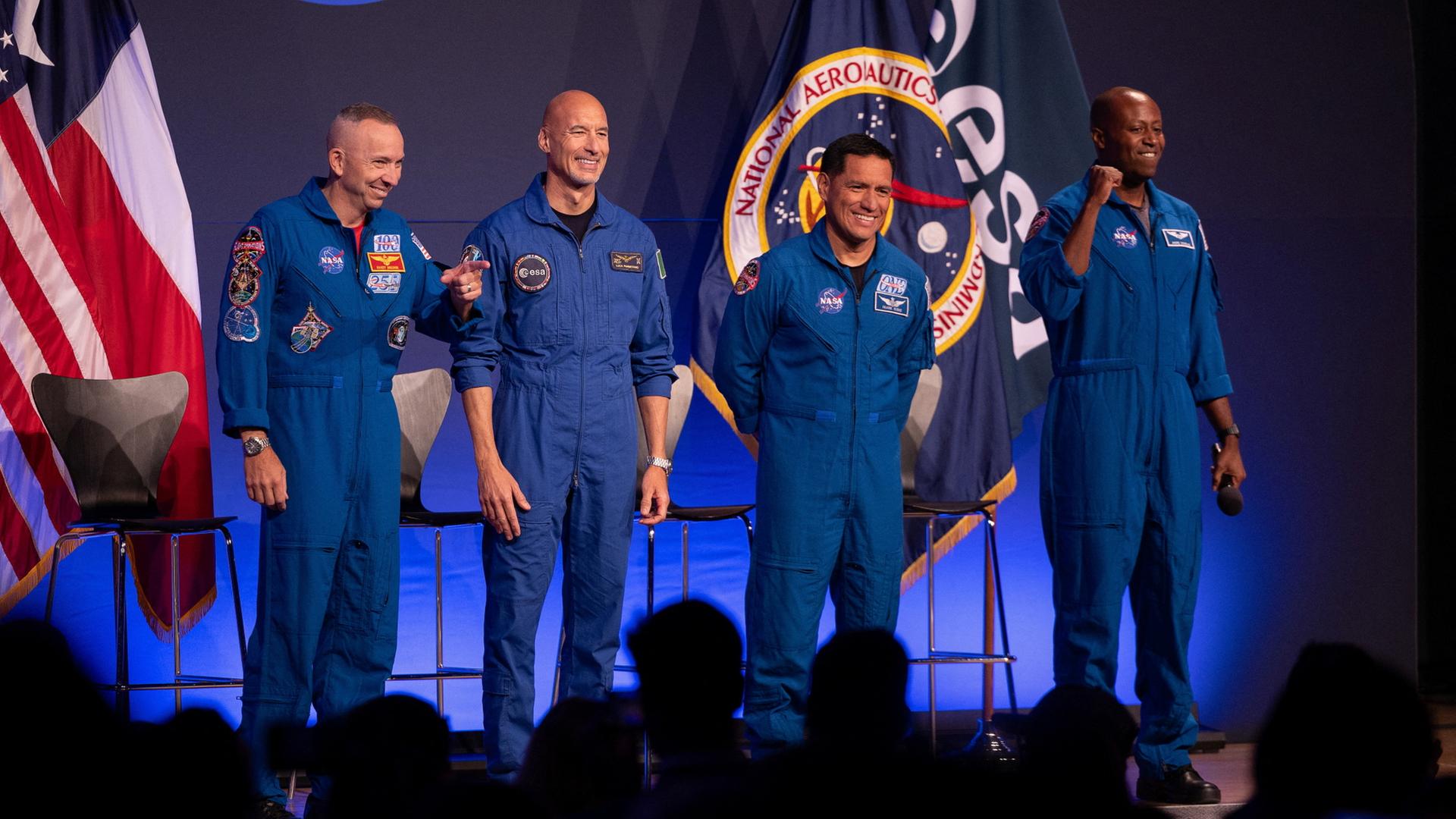
Scheduled for 2027, the Artemis III mission will not travel to or approach the Moon but will operate in lower Earth orbit. Its primary purpose is to test lunar landers developed by private companies SpaceX and Blue Origin, which will be crucial for future Moon landing missions. NASA Administrator Jared Isaacman hailed the project as creating "Earth's first starfleet" during the announcement.
The crew selection has generated notable attention, particularly regarding the absence of German astronauts. Initial expectations suggested that a German crew member might participate in the mission. Instead, Luca Parmitano was chosen as the sole European representative, following a strategic shift by the European Space Agency (ESA).
Artemis III is a critical component of NASA's broader Artemis program, which aims to establish a sustainable human presence on the Moon. The mission serves as an essential test run before Artemis IV, planned for 2028, which will attempt the first crewed lunar landing since the Apollo missions of the 1970s. The two-week mission will evaluate critical systems and procedures necessary for future Moon landings.
The involvement of private companies like SpaceX and Blue Origin represents a significant evolution in space exploration. These firms are developing the lunar landers that NASA will use for its Artemis missions. This collaboration between government space agencies and private enterprises is designed to reduce costs and accelerate innovation in space technology.
However, uncertainties remain regarding the mission timeline. The recent explosion of a Blue Origin New Glenn rocket has raised questions about potential impacts on the Artemis III schedule. It remains unclear whether and how this incident might affect the planned testing of lunar landers that are central to the mission's objectives.
The international composition of the crew highlights the collaborative nature of the Artemis program. With Luca Parmitano, an experienced ESA astronaut, a European will participate in an Artemis mission for the first time. This reflects the partnerships NASA has forged with international space organizations to achieve its lunar exploration goals.
The Artemis program encompasses ambitious objectives beyond lunar landing missions. Long-term plans include establishing a permanent presence on the Moon, which could serve as a stepping stone for future Mars missions. The successful execution of Artemis III is therefore viewed as crucial for the future of human space exploration.
Despite current planning for a 2027 launch, questions about the precise timeline persist. Space missions are inherently complex and often subject to technical challenges and unforeseen circumstances. NASA and its partners continue working to thoroughly test all systems before the astronauts embark on their historic journey.
The mission represents a new chapter in human space exploration, combining international cooperation with private sector innovation. As preparations continue, the space community watches closely to see how this ambitious program will unfold and whether it will successfully pave the way for humanity's return to the lunar surface.
Fast take
NASA has announced the crew for its Artemis III mission, marking a significant milestone in the agency's ambitious plan to return humans to the Moon.
NOFRAME signal
Medium divergence · 10 Sources · 4 Regions
What remains open
Coverage is not fully split, but it is not identical either. That makes the comparison useful: the fact base shows the common core, while the perspectives show where political, regional, or institutional priorities change the emphasis.
Dossier compass
Which media spaces carry the story and how broad the source base is.
Source mix
Underlit angles
- Details about crew composition
- Significance as test mission
- German astronaut controversy
Open originals
Go straight to the linked articles. NOFRAME does not replace those sources.
Why it matters
Coverage is not fully split, but it is not identical either. That makes the comparison useful: the fact base shows the common core, while the perspectives show where political, regional, or institutional priorities change the emphasis.
Timeline
Globe and Mail · June 9, 2026 at 06:30 PM
NASA names crew for Artemis III mission
Al Jazeera · June 9, 2026 at 06:35 PM
NASA announces astronauts for Artemis III spaceflight, scheduled for 2027
Tagesschau · June 9, 2026 at 07:23 PM
NASA und ESA: Artemis-3-Mission ohne deutschen Astronauten geplant
ZDF heute · June 9, 2026 at 07:46 PM
"Artemis 3": Crew steht kein Deutscher an Bord