US President Donald Trump has publicly confirmed that he called Israeli Prime Minister Benjamin Netanyahu 'fucking crazy' during a phone conversation about Israel's military operations in Lebanon. The admission came in an interview released Wednesday, marking a rare public acknowledgment of tensions between the close allies.
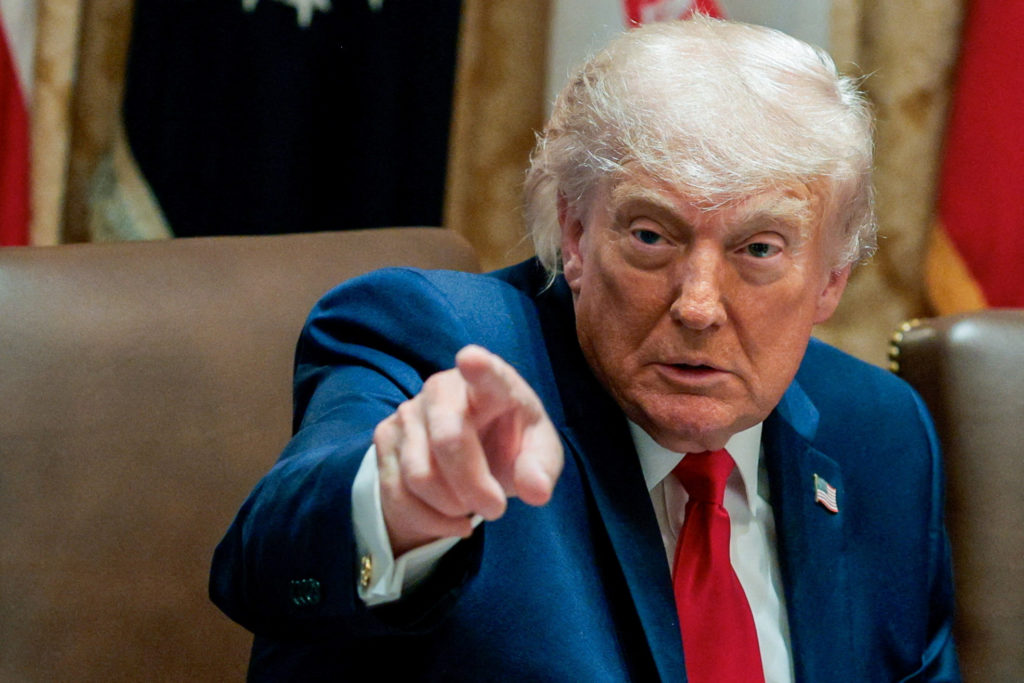
Trump revealed that he cursed at Netanyahu during the heated call and specifically told him not to bomb the Lebanese capital Beirut. The US president expressed concerns that Israel's military actions in Lebanon were complicating his administration's potential peace negotiations with Iran. Despite the harsh words, Trump insisted that he still 'likes' Netanyahu and that their relationship remains fundamentally solid.
Netanyahu responded to the revelations by downplaying the disagreement and attempting to minimize any perception of a rift between the two nations. In a CNBC interview, the Israeli prime minister characterized the differences as 'tactical disagreements' while emphasizing that he and Trump 'agree on the main things.' He specifically cited shared goals regarding Iran policy and expanding regional peace agreements.
The exchange highlights the complex dynamics within the US-Israel relationship, particularly regarding military strategy in Lebanon. While the United States maintains strong support for Israel, there are evidently differing views on the appropriate approach to dealing with Hezbollah and other militant groups in the region.
Trump characterized both himself and Netanyahu as 'wartime leaders,' suggesting that this shared experience creates a bond between them. However, he made clear that he views Israel's actions as potentially counterproductive to his diplomatic efforts with Iran. The president's frustration appears to stem from concerns that Israeli military operations could derail broader regional peace initiatives.
In his response, Netanyahu emphasized strategic alignment with the United States, particularly on disarming Hezbollah and containing Iranian influence in the region. He pointed to Iran's control of the Strait of Hormuz and its continued refusal to surrender enriched uranium as ongoing challenges requiring coordinated action.
The domestic political reaction in Israel has been particularly noteworthy. Rather than criticizing Netanyahu for being too aggressive toward Lebanon, his political opponents have attacked him from the right, portraying him as a weak leader who capitulated to American pressure. This dynamic suggests that a potential change in Israeli leadership might not necessarily lead to a less militaristic approach to regional conflicts.
The revelation of the heated exchange raises questions about coordination between the allies on regional strategy. While both sides emphasize the importance of their alliance, the different priorities - American diplomatic initiatives versus Israeli security concerns - highlight the challenges of policy coordination.
Trump's acknowledgment of the tensions comes at a time when his administration is reportedly exploring diplomatic openings with Iran. The president's frustration with Netanyahu appears to reflect broader concerns that military actions could undermine these potential diplomatic breakthroughs.
The incident also underscores the personal nature of international diplomacy, where relationships between leaders can significantly impact policy coordination. Despite the harsh words, both Trump and Netanyahu have emphasized their continued cooperation and mutual respect.
The situation reflects broader geopolitical tensions in the Middle East, where military actions and diplomatic initiatives often come into conflict. The challenge for both leaders will be balancing their domestic political pressures with the need for coordinated regional strategy.
Fast take
US President Donald Trump has publicly confirmed that he called Israeli Prime Minister Benjamin Netanyahu 'fucking crazy' during a phone conversation about Israel's military operations in Lebanon.
NOFRAME signal
Medium divergence · 8 Sources · 4 Regions
What remains open
Coverage is not fully split, but it is not identical either. That makes the comparison useful: the fact base shows the common core, while the perspectives show where political, regional, or institutional priorities change the emphasis.
Dossier compass
Which media spaces carry the story and how broad the source base is.
Source mix
Underlit angles
- Details about Trump's diplomatic efforts with Iran
- Broader regional implications of US-Israel tensions
- Details of heated exchange
Open originals
Go straight to the linked articles. NOFRAME does not replace those sources.
Why it matters
Coverage is not fully split, but it is not identical either. That makes the comparison useful: the fact base shows the common core, while the perspectives show where political, regional, or institutional priorities change the emphasis.
Timeline
PBS NewsHour · June 3, 2026 at 06:13 PM
Trump acknowledges calling Netanyahu 'crazy,' says Israel is complicating peace talks with Iran
NPR World · June 3, 2026 at 06:39 PM
Trump confirms calling Netanyahu 'crazy,' says they still get along
India Today · June 3, 2026 at 07:24 PM
Netanyahu asked about Trump calling him 'f***ing crazy' over Lebanon. What he said
Channel News Asia · June 3, 2026 at 07:32 PM
Netanyahu downplays row with Trump, says both agree on disarming Hezbollah