The Solomon Islands' new Prime Minister Jeremiah Manele has announced plans to review the country's controversial security agreement with China while simultaneously pursuing a comprehensive strategic treaty with Australia. This announcement marks a potentially significant shift in the Pacific nation's foreign policy approach under new leadership.
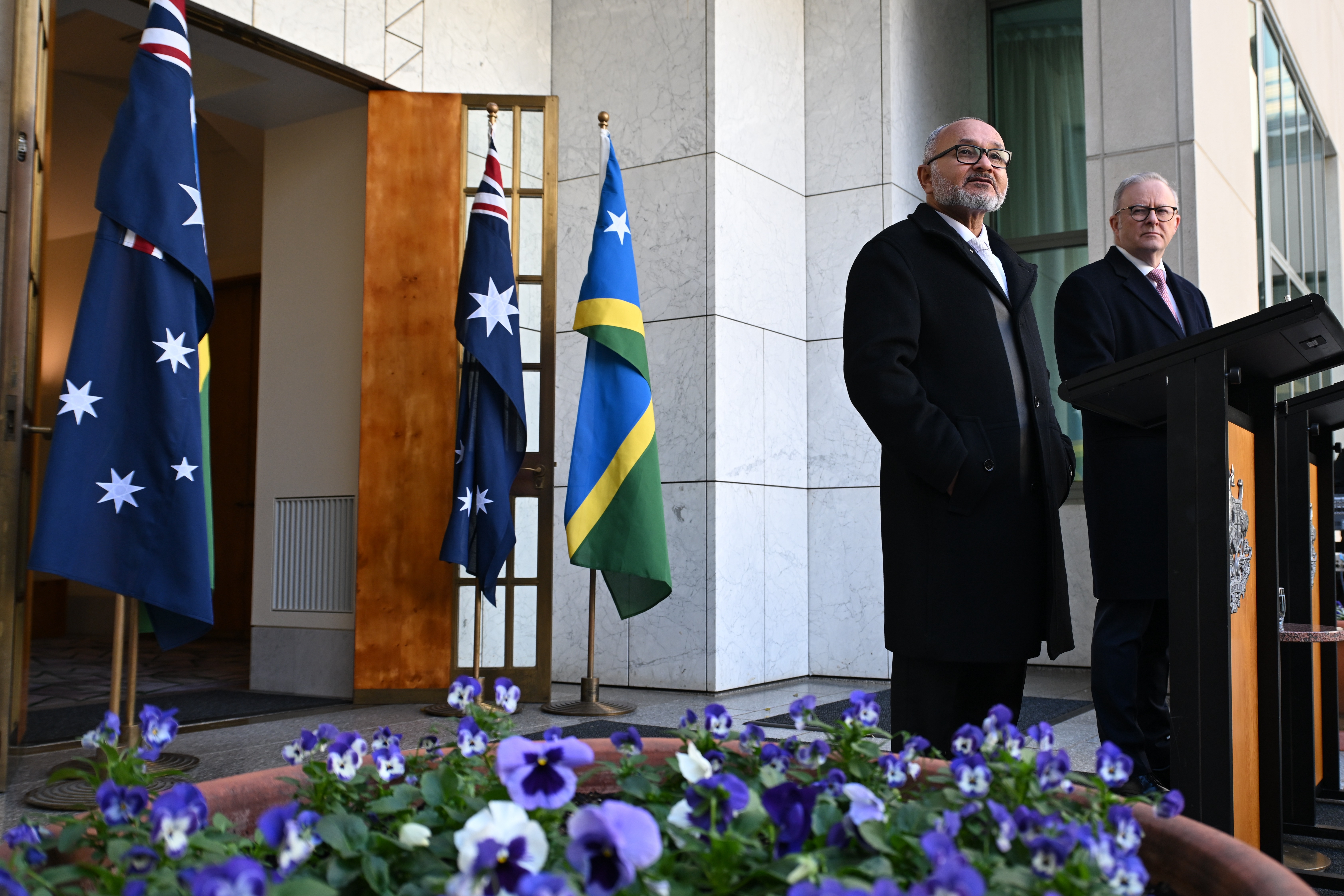
The security pact between the Solomon Islands and China was signed in 2022 under the previous government and has remained largely classified. The agreement theoretically allows China to deploy security forces and military equipment to the islands, raising substantial concerns among Western allies about potential Chinese military presence in the strategically important Pacific region.
The Solomon Islands, a nation of approximately 700,000 people comprising nearly 1,000 islands, has become a central theater in the geopolitical competition between China and Western powers in the Pacific over recent years. The country is strategically positioned between Australia and the United States and controls important sea lanes in the region.
Manele's announcement to pursue a strategic treaty with Australia could significantly strengthen ties with Canberra. Australia has historically been a major aid provider and security partner for the Solomon Islands, having provided military and police assistance during various crises in the past. The Australian government has repeatedly expressed concerns about China's growing influence in the Pacific region.
The decision to review the China agreement comes at a time of heightened regional tensions. Western nations, particularly the United States and Australia, view China's Pacific expansion as part of a broader strategic challenge to the regional security architecture that has been dominated by Western powers since World War II.
China has significantly expanded its Pacific presence in recent years through infrastructure investments, trade initiatives, and diplomatic efforts. Beijing argues that its activities in the region are based on mutual benefit and economic development, while critics fear that China seeks strategic advantages and military access.
For the Solomon Islands, balancing relationships with various international partners presents a complex challenge. The country relies on foreign aid and investment to advance its economic development and address internal security challenges. At the same time, it must consider the geopolitical implications of its foreign policy decisions.
The security agreement with China was signed during a period of internal unrest in the Solomon Islands, when the government faced significant domestic challenges. The pact was seen by some as a way to diversify security partnerships beyond traditional Western allies, while others viewed it as a concerning shift toward Beijing's sphere of influence.
Australia and other Western nations have been working to strengthen their own relationships with Pacific island nations through increased aid, investment, and diplomatic engagement. The proposed strategic treaty between Australia and the Solomon Islands would formalize and expand this cooperation across multiple sectors.
The review of the China agreement and negotiations with Australia will likely be closely watched by the international community. The outcome could set important precedents for other Pacific states facing similar decisions about their security partnerships and foreign policy alignments.
Regional experts emphasize that developments in the Solomon Islands are part of a larger pattern of regional realignments in the Pacific, as smaller island states attempt to maintain their sovereignty while benefiting from great power competition. The challenge for these nations is to maximize economic and development benefits while avoiding becoming pawns in larger geopolitical struggles.
The timing of Manele's announcement is particularly significant as it comes amid broader discussions about Pacific security architecture and the role of various external powers in the region. The United States has also been increasing its engagement with Pacific island nations as part of its broader strategy to counter China's influence.
Fast take
The Solomon Islands' new Prime Minister Jeremiah Manele has announced plans to review the country's controversial security agreement with China while simultaneously pursuing a comprehensive strategic treaty with Australia.
NOFRAME signal
Stable coverage · 4 Sources · 3 Regions
What remains open
The source picture is relatively consistent. That still makes the details worth reading: small differences in wording, omissions, and source selection can reveal what each region treats as important.
Dossier compass
Which media spaces carry the story and how broad the source base is.
Source mix
Underlit angles
- Specific contents of the secret China agreement
- Concrete timelines for the review process
- Detailed background on regional geopolitics
Open originals
Go straight to the linked articles. NOFRAME does not replace those sources.
Why it matters
The source picture is relatively consistent. That still makes the details worth reading: small differences in wording, omissions, and source selection can reveal what each region treats as important.
Timeline
Nikkei Asia · June 3, 2026 at 08:03 AM
Australia and Solomon Islands agree to boost ties with strategic treaty
Channel News Asia · June 3, 2026 at 08:45 AM
Solomon Islands' PM says to review secretive security pact with China
ABC News · June 3, 2026 at 10:19 AM
New prime minister says Solomon Islands will review its secretive security treaty with China
Daily Maverick · June 3, 2026 at 12:01 PM
New Solomon Islands leader reviews security pact with China, seeks treaty with Australia