Chinese President Xi Jinping concluded a three-day state visit to Washington on Friday that was marked by elaborate ceremony but yielded few substantive policy results. On the central disputes between the world's two largest economies — including tariffs, rare earths, agricultural imports, the Taiwan question and export controls on advanced semiconductors — no significant agreement was reached. The visit matters because it illustrates that, despite ongoing tensions, both the United States and China are seeking to stabilize their relationship, even as the underlying points of conflict remain largely unresolved.
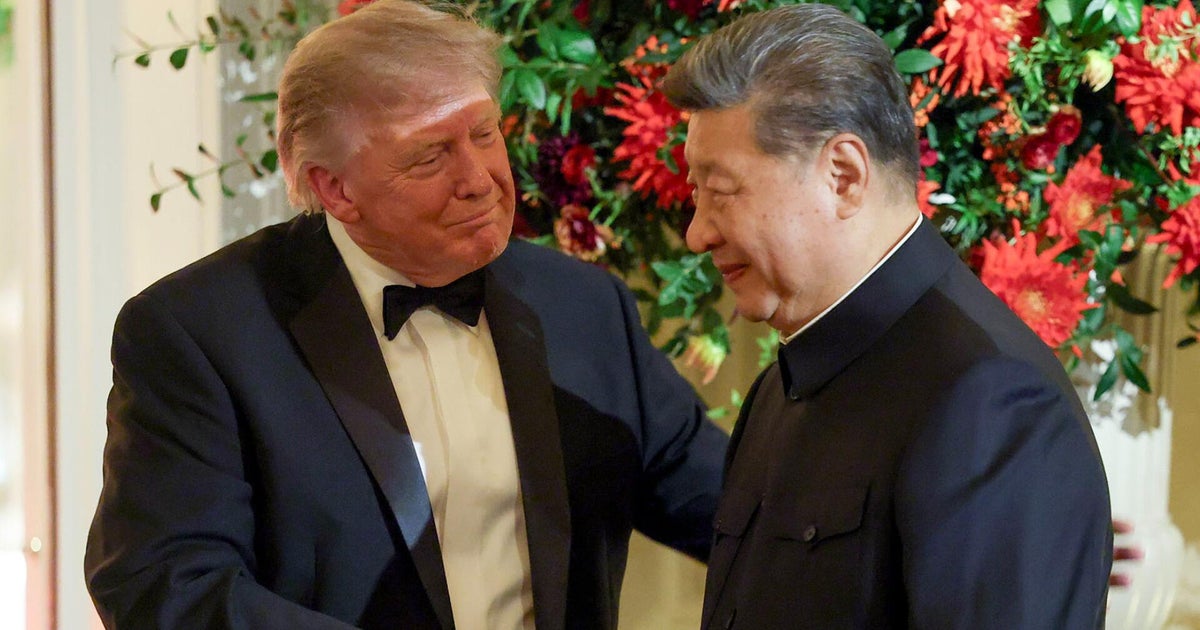
Ahead of the actual meeting, both sides had already agreed to a two-month extension of the existing trade truce. This extension was therefore not a product of the direct talks between Trump and Xi but had been settled beforehand. It gives both governments additional time without resolving the fundamental disagreements in their trade dispute. Multiple international reports confirm that no breakthrough was achieved on the core economic and geopolitical issues — tariffs, rare earths, agricultural purchases, Taiwan and chip export restrictions.
No agreement was reached in the field of artificial intelligence either, an area of growing strategic importance for both countries. This was highlighted particularly by American media outlets, since AI is considered one of the central battlegrounds in the technological competition between Washington and Beijing. The absence of a deal in this area underscores that fundamental questions about technological rivalry remain unresolved.
Despite the lack of substantive progress, Trump and Xi announced they would meet two more times before the end of the year. This announcement suggests that both sides remain interested in continuing dialogue, even though concrete results have so far been lacking. Whether the upcoming meetings will produce tangible progress on trade and technology issues remains an open question.
The ceremonial framework of the visit was considerable: upon Xi's arrival, a 21-gun salute was fired in his honor at the airport — one of the highest ceremonial honors that can be extended to a foreign head of state. President Trump also took Xi to the National Archives, where the founding documents of the United States, including the Constitution and the Bill of Rights, are kept. British media described this as a symbolically charged moment, in which Trump presented the leader of the world's most powerful communist state with the core texts of American democracy.
Media assessments of the visit differ depending on their origin. American and British outlets consistently described the visit as an event heavy on ceremony but light on political substance. Several reports used language along the lines of the visit being 'heavy on pomp and light on substance.' This assessment rests in particular on the absence of an AI agreement as well as on the unresolved core issues in the trade dispute.
By contrast, Chinese state television portrayed the visit as a diplomatic success, emphasizing in particular the military honors such as the 21-gun salute. Reports drawing on Chinese state media give little attention to the unresolved substantive issues around tariffs, Taiwan and chip exports, focusing instead on the ceremonial recognition given to Xi. Other reports with ties to Chinese sources remained largely descriptive, noting simply that Xi departed Washington after the three-day visit without offering a deeper assessment of the political outcomes.
The visit took place at a time when both Trump and Xi face domestic political and economic pressures. Observers suggest this may explain why both sides were interested in a visible gesture of rapprochement, even without making substantial concessions on the central disputed issues. The additional meetings announced for later this year may reveal whether the symbolically charged visit will translate into concrete political progress or whether the fundamental differences between the two powers will persist.
Fast take
Chinese President Xi Jinping concluded a three-day state visit to Washington on Friday that was marked by elaborate ceremony but yielded few substantive policy results.
NOFRAME signal
Medium divergence · 7 Sources · 4 Regions
What remains open
Coverage is not fully split, but it is not identical either. That makes the comparison useful: the fact base shows the common core, while the perspectives show where political, regional, or institutional priorities change the emphasis.
Dossier compass
Which media spaces carry the story and how broad the source base is.
Source mix
Underlit angles
- Lack of substantive assessment of the failed agreements
- Lack of agreement on tariffs, Taiwan, and chip exports
- Ceremonial aspects of the visit are barely addressed
Open originals
Go straight to the linked articles. NOFRAME does not replace those sources.
Why it matters
Coverage is not fully split, but it is not identical either. That makes the comparison useful: the fact base shows the common core, while the perspectives show where political, regional, or institutional priorities change the emphasis.
Timeline
TASS · September 25, 2026 at 10:22 PM
Xi’s state visit to US ends in success — Chinese state TV
PBS NewsHour · September 26, 2026 at 12:45 AM
News Wrap: Xi wraps up 3-day state visit with Trump
CBS News · September 26, 2026 at 01:33 AM
Trump and Xi to meet two more times before end of year as they wrap state visit
Nikkei Asia · September 26, 2026 at 02:03 AM
Trump-Xi summit live: Xi departs Washington after three-day state visit