Pakistan's army chief Asim Munir arrived in Tehran on Friday evening as part of ongoing mediation efforts aimed at resolving the conflict between the United States and Iran. The high-ranking military official was warmly welcomed upon arrival by Iran's Interior Minister Eskandar Momeni, according to Pakistan's military media wing.
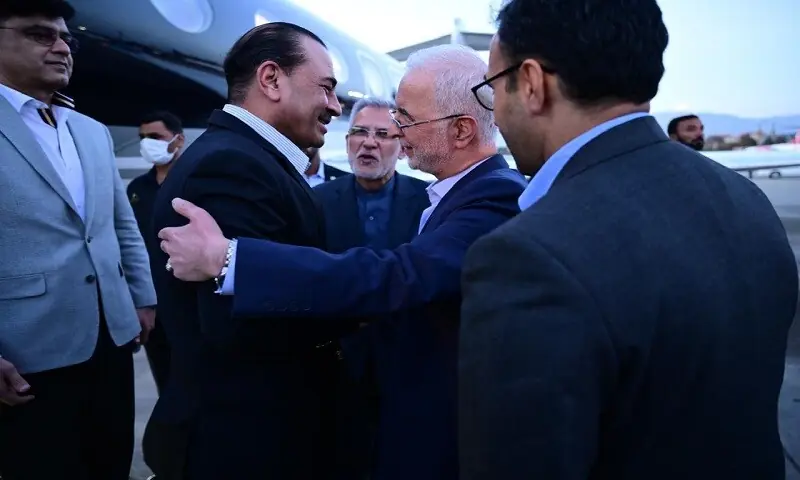
The visit comes at a critical juncture in negotiations between Washington and Tehran. US Secretary of State Marco Rubio expressed cautious optimism on Friday, citing 'slight progress' in the talks while warning that both sides are 'not there yet.' The United States maintains constant communication with Pakistan, which serves as the primary facilitator in this diplomatic process.
Alongside Pakistan's mediation role, a Qatari delegation has also arrived in Tehran to support the negotiations. Iran's Foreign Ministry spokesperson Esmaeil Baqaei confirmed that the Qatari team is holding talks with Iran's foreign minister. However, he emphasized that Pakistan remains the main mediator in the talks, signaling Islamabad's central role in keeping negotiations moving forward.
According to reports, Iran is currently examining a new US proposal to end the conflict that began on February 28. Iran's ISNA news agency reported that Tehran 'is responding to a text sent by the US.' The Pakistani army chief's visit is intended to help minimize gaps between the parties and facilitate an official announcement of understanding.
Despite the diplomatic activity, significant obstacles remain. Baqaei cautioned that disagreements between Iran and the United States are 'deep and extensive.' Major sticking points reportedly include Iran's nuclear program and control over the strategically vital Strait of Hormuz. This waterway is crucial for global oil trade, and Iran's blockade has raised international concerns.
The European Union is responding to the situation by preparing new sanctions against Iran over the Hormuz blockade. This development underscores the international dimension of the conflict and pressure on all parties to find a diplomatic solution.
Pakistan has established itself as an important regional mediator, partly due to its historical relationships with both Iran and the United States. Islamabad's role in this process highlights the significance of regional actors in resolving international conflicts. Qatar, which has previously served as a mediator in other regional crises, is coordinating its efforts closely with Washington.
The current talks represent the latest attempt to find a peaceful resolution to a conflict that threatens regional stability and global energy security. Iran's nuclear program remains a particular concern for the international community, while the Strait of Hormuz blockade has direct implications for global oil markets and supply chains.
While all parties express cautious optimism, statements from Iranian and American officials make clear that substantial work remains to reach an agreement. The presence of high-level mediators from both Pakistan and Qatar in Tehran signals at least a serious commitment from all parties to explore diplomatic avenues.
The intensive diplomatic efforts reflect the high stakes involved in the current crisis. The conflict has already had significant regional implications and threatens to escalate further without a negotiated settlement. Both Pakistan and Qatar bring unique advantages as mediators, with established relationships across the region and experience in facilitating complex negotiations.
The coming days will reveal whether the intensified diplomatic efforts can lead to concrete breakthroughs. The presence of senior mediators from Pakistan and Qatar in Tehran at least signals a serious commitment from all parties to explore diplomatic solutions before the situation deteriorates further.
Fast take
Pakistan's army chief Asim Munir arrived in Tehran on Friday evening as part of ongoing mediation efforts aimed at resolving the conflict between the United States and Iran.
NOFRAME signal
Stable coverage · 9 Sources · 3 Regions
What remains open
The source picture is relatively consistent. That still makes the details worth reading: small differences in wording, omissions, and source selection can reveal what each region treats as important.
Dossier compass
Which media spaces carry the story and how broad the source base is.
Source mix
Underlit angles
- Specific details about sanctions
- Concrete content of sticking points
- Details on Iranian positions
Open originals
Go straight to the linked articles. NOFRAME does not replace those sources.
Why it matters
The source picture is relatively consistent. That still makes the details worth reading: small differences in wording, omissions, and source selection can reveal what each region treats as important.
Timeline
Al-Monitor · May 22, 2026 at 06:30 PM
Pakistan military chief arrives in Tehran in push to end Iran war
Al Jazeera · May 22, 2026 at 07:11 PM
Pakistan’s army chief in Iran as US’s Rubio says ‘slight progress’ in talks
Straits Times · May 22, 2026 at 07:22 PM
Pakistan military chief arrives in Tehran, in push to end Iran war
Yonhap · May 22, 2026 at 07:33 PM
Rubio says Iran talks show 'some progress,' but two sides are 'not there yet'