Overnight on 19 July 2026, Russia launched one of the largest ballistic missile attacks on Kyiv since the start of the war. According to Ukrainian authorities, at least one person was killed and multiple others were injured. The attack struck not only the capital itself but also parts of the surrounding Kyiv region, including the Bucha district. Reports differ on the exact number of injured, with figures ranging from 7 to 16 people — a discrepancy that is not unusual in the immediate aftermath of such large-scale attacks, when damage assessments are still preliminary.
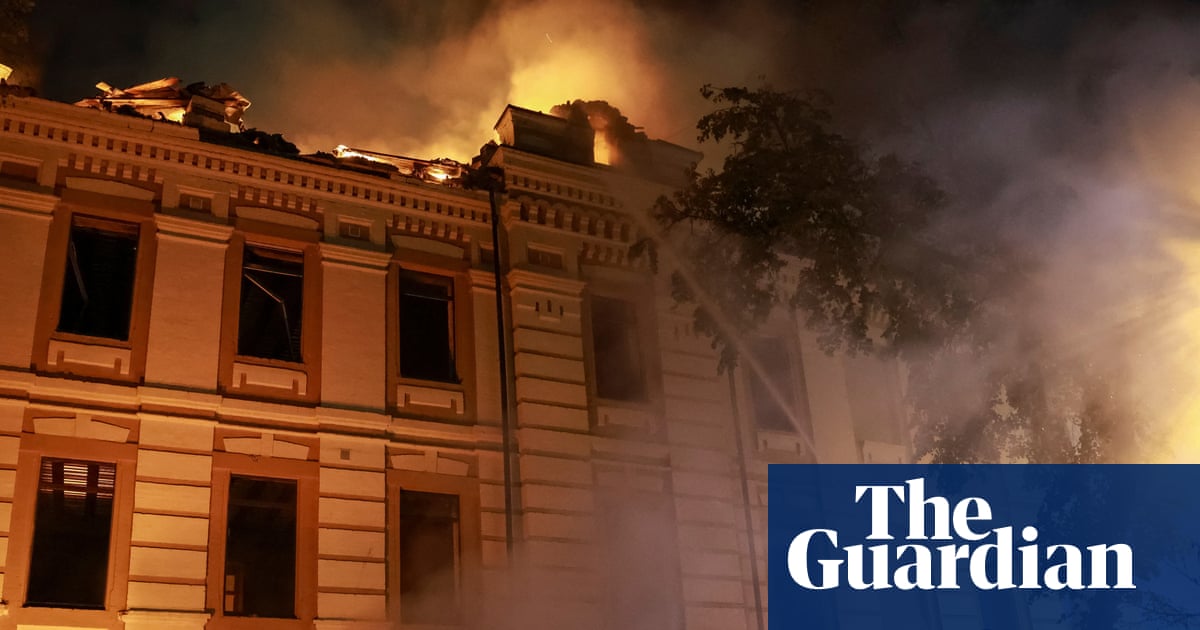
According to Ukrainian sources, Russia fired more than 40 missiles of various types during the attack, including Iskander-M short-range missiles and the hypersonic Zircon missile. The strike was accompanied by around 120 attack drones. Several Western outlets corroborate the scale, citing roughly 40 Iskander-M and Zircon missiles, and describe a five-hour assault during which residents repeatedly heard explosions and air defence fire. An air raid siren reportedly sounded around 1:30am, followed by a series of loud blasts.
Ukrainian Foreign Minister Andrii Sybiha described the attack as one of the most massive of the entire war, a characterization echoed by President Volodymyr Zelensky. Reports on the weapons used and the overall scale of the assault are largely consistent across sources, though some outlets emphasize different aspects. Al Jazeera, for instance, highlights that Ukraine is particularly vulnerable to ballistic missile attacks due to a shortage of interceptor munitions for its Patriot air defence systems — a structural issue that has been discussed independently of this specific incident for some time.
According to Ukraine's State Emergency Service, fires broke out in at least five districts of Kyiv as a result of the attack, with residential buildings and offices damaged. In the Kyiv region, specifically in the Bucha district, two people were injured and a fire broke out at one facility, which emergency workers managed to contain. These details come primarily from Ukrainian official sources, which provide considerably more granular reporting on individual districts and affected facilities compared to international coverage.
The timing of the attack is notable: it came one day after a Ukrainian drone strike on warehouses belonging to a Russian e-commerce company near Moscow. Several international outlets, particularly Western and Asian sources, explicitly link the two events, framing them as part of a reciprocal escalation. Ukrainian sources themselves largely omit this connection in their coverage of the Kyiv attack, illustrating how emphasis varies depending on the origin of the reporting.
Casualty figures vary across outlets. The Guardian reported seven injured, while ABC News cited eight. India Today put the number at 16, while Asian outlets such as the Straits Times and Channel News Asia reported 13. Such discrepancies are not uncommon during fast-moving events, as official figures are frequently updated throughout the day and different outlets report at different times.
The Kyiv strike is part of a broader pattern of Russian attacks on Ukrainian cities in recent days. On 17 July, according to Ukrainian officials, an elderly woman was killed when Russian forces struck a house in the Korabelnyi district of Kherson. Additionally, on 18 July, a special envoy of Pope Leo XIV, Archbishop Paul Richard Gallagher, visited the site of an earlier Russian missile strike in Kyiv that had destroyed residential buildings and killed civilians. This visit underscores continued international attention to the impact of Russian strikes on civilians.
Taken together, the 19 July attack once again highlights the vulnerability of Ukrainian cities to large-scale missile and drone assaults, particularly given constrained air defence resources. While the core facts — the massive scale of the attack, at least one fatality, and damage across multiple districts — are consistently confirmed across all sources, details regarding the exact casualty count and certain surrounding circumstances continue to vary by source. Ukrainian officials are likely to release updated and consolidated figures on casualties in the coming days.
Fast take
Overnight on 19 July 2026, Russia launched one of the largest ballistic missile attacks on Kyiv since the start of the war.
NOFRAME signal
High divergence · 10 Sources · 5 Regions
What remains open
This matters because the event itself is only part of the story. 5 media regions frame it with noticeably different priorities. Details that remain stable across those boundaries are more robust; details that appear in only one region need context.
Dossier compass
Which media spaces carry the story and how broad the source base is.
Source mix
Underlit angles
- Temporal link to Ukrainian drone attack on Moscow
- Detailed casualty figures in the Kyiv region
- Details on missile types used
Open originals
Go straight to the linked articles. NOFRAME does not replace those sources.
Why it matters
This matters because the event itself is only part of the story. 5 media regions frame it with noticeably different priorities. Details that remain stable across those boundaries are more robust; details that appear in only one region need context.
Timeline
ABC News · July 19, 2026 at 09:36 AM
1 killed, 8 injured in Russian attack on Kyiv
The Independent · July 19, 2026 at 09:46 AM
Ukraine-Russia war latest: Putin launches biggest ballistic missile attack on Kyiv since invasion
India Today · July 19, 2026 at 09:52 AM
Russian ballistic missile attack on Kyiv kills 1, injures 16 in overnight strike
Ukrinform · July 19, 2026 at 09:58 AM
Russia launches one of largest ballistic missile attacks on Kyiv — Zelensky