At this year's United Nations General Assembly in New York, South Korean President Lee Jae-myung presented a renewed offer of cooperation and peace to North Korea. The speech, delivered in the latter half of September 2026, was addressed both to the international community and directly to the leadership in Pyongyang. Lee expressed hope that dialogue between the United States and North Korea could resume without delay. The announcement is significant because it comes amid ongoing tensions on the Korean Peninsula and signals that Seoul, under its current administration, intends to pursue a different foreign policy approach toward the North than in previous years.
According to reporting by The New York Times, South Korea's leader is currently seeking a new approach to North Korea. The available reports did not specify concrete measures or a timeline, but the general direction — favoring dialogue over confrontation — is clearly emerging. Observers view this as an attempt to reopen channels of communication after periods of heightened tension and to help stabilize the region.
Alongside Lee's appearance at the United Nations, there were also signals of willingness to engage from the American side. According to a South Korean government official cited by the news agency Yonhap, U.S. President Donald Trump reaffirmed his commitment to dialogue with North Korea. This statement reportedly emerged in the context of discussions that also touched on progress in strategic U.S. investment projects in South Korea, as reported by the Japan Times. The linkage between economic issues and security matters suggests that talks between Washington and Seoul covered multiple policy areas simultaneously.
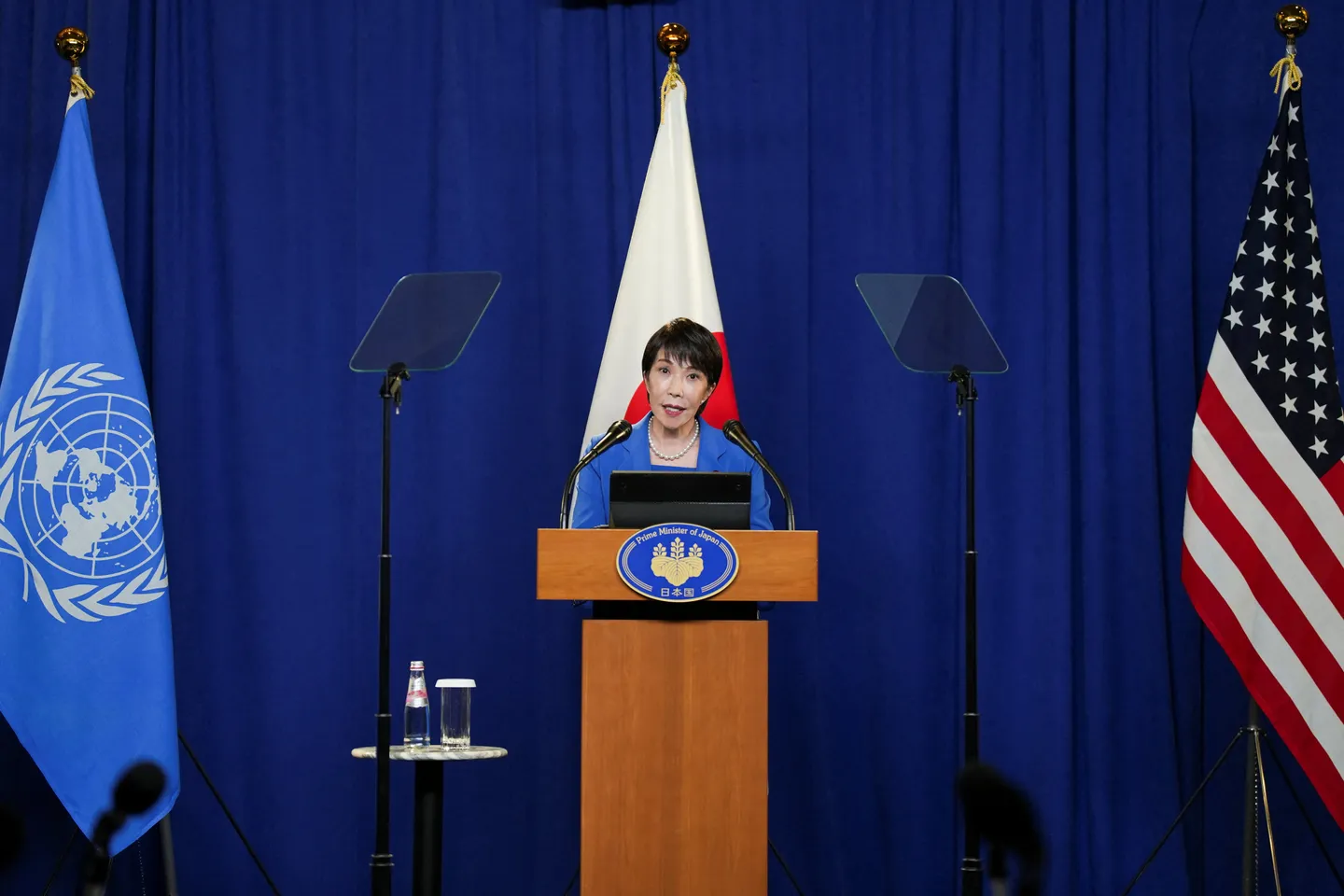
A contrasting note came from Japan. Prime Minister Sanae Takaichi issued a stark warning at the United Nations about North Korea's growing nuclear threat. According to TRT World, she called for the complete denuclearization of the country and stressed that the danger extends far beyond the Korean Peninsula, threatening peace across the wider region. This position stands in some contrast to South Korea's push, which places greater emphasis on rapprochement and openness to dialogue, even though both countries are fundamentally interested in resolving the North Korea issue.
The differing tones from Seoul and Tokyo illustrate that there is no unified strategy within the region toward North Korea. While South Korea under President Lee appears to be pursuing a policy of détente and gradual dialogue, Japan is urging caution and insisting on clear conditions, particularly North Korea's complete abandonment of nuclear weapons. These differences are not new, but they take on renewed significance against the backdrop of recent diplomatic initiatives.
What remains unclear from the available reports is how North Korea will respond to South Korea's offer. So far, there is no information about an official reaction from Pyongyang. It is also uncertain what concrete steps South Korea plans to take to translate the announced dialogue into practice, and within what timeframe any talks might occur. The exact role the United States might play in a possible resumption of direct talks with North Korea is likewise not fully clarified, even though Trump is said to have reaffirmed his general willingness to engage.
Analysts nevertheless view South Korea's approach as a clear signal of serious peace efforts. The address at the UN General Assembly gives Lee an international platform to reinforce his position and build support for a dialogue process. At the same time, Japan's reaction shows that regional partners have different priorities — a factor that could complicate future negotiations if a common line is not found.
In the coming weeks and months, it will be crucial to see whether these diplomatic signals translate into concrete action. Should North Korea respond to the offer, or should the United States indeed initiate new talks with Pyongyang, this could mark a noticeable shift in the long-stalled situation on the Korean Peninsula. For now, however, these remain statements of intent and diplomatic signals, with their practical implementation still to be seen.
Fast take
At this year's United Nations General Assembly in New York, South Korean President Lee Jae-myung presented a renewed offer of cooperation and peace to North Korea.
NOFRAME signal
Stable coverage · 4 Sources · 3 Regions
What remains open
The source picture is relatively consistent. That still makes the details worth reading: small differences in wording, omissions, and source selection can reveal what each region treats as important.
Dossier compass
Which media spaces carry the story and how broad the source base is.
Source mix
Underlit angles
- No notable omissions in the current source comparison.
Open originals
Go straight to the linked articles. NOFRAME does not replace those sources.
Why it matters
The source picture is relatively consistent. That still makes the details worth reading: small differences in wording, omissions, and source selection can reveal what each region treats as important.
Timeline
TRT World · September 23, 2026 at 02:18 AM
South Korea extends peace, cooperation offer to North Korea at UNGA
Yonhap · September 23, 2026 at 03:20 AM
(URGENT) Trump reaffirms commitment to dialogue with N. Korea: Seoul official
Japan Times · September 23, 2026 at 08:04 AM
South Korea says Trump welcomes progress in U.S. strategic investment projects
TRT World · September 23, 2026 at 09:16 AM
Japan urges North Korea's complete denuclearisation at UN