Sweden's Prime Minister Ulf Kristersson has announced his resignation after the left-wing opposition bloc, led by Social Democrat Magdalena Andersson, secured a narrow majority in the country's parliamentary election. Sweden's election authority confirmed on Thursday, September 17, 2026, after the completion of the full vote count, that the left-wing parties won 176 seats in parliament, compared with 173 seats for the incumbent right-wing bloc. The margin separating the two political camps nationwide was extremely thin, estimated at roughly 50,000 votes out of a total population of about 10.6 million people.
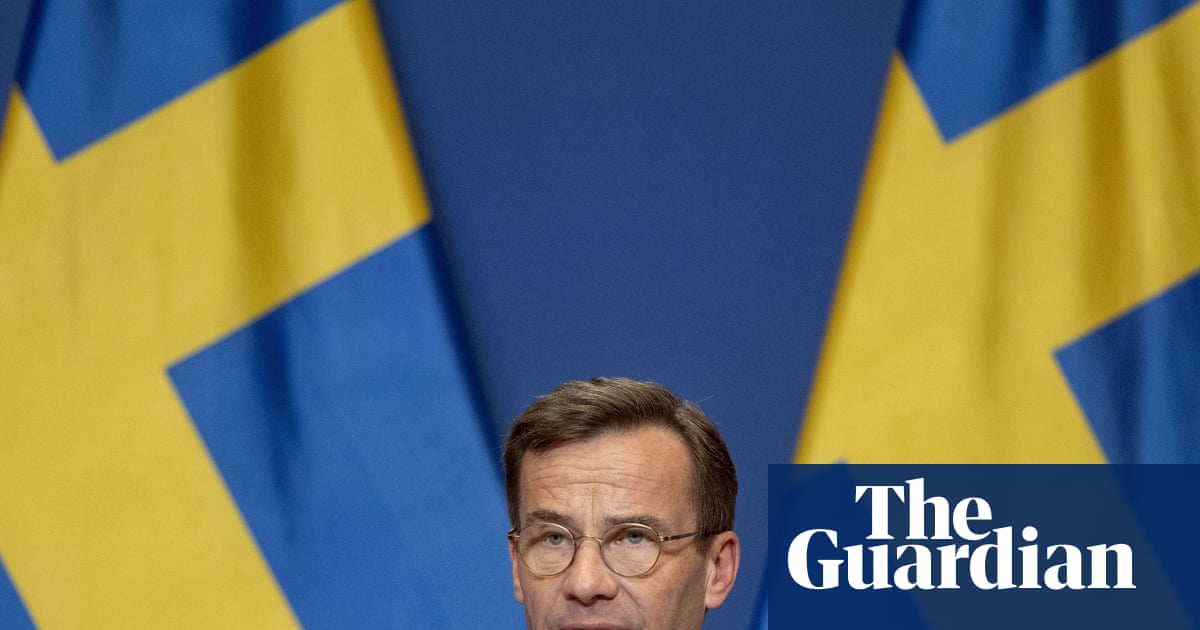
The election itself took place on Sunday, September 13, but due to how close the result was, the full counting of all ballots stretched over several days. It was only on Thursday that the election authority was able to announce a final outcome. Kristersson responded to the announcement by sending a letter to the speaker of parliament, formally requesting to be relieved of his duties as prime minister. He explained that it was now up to the speaker to lead the next steps toward forming a new government, and that this process needed to begin immediately.
Magdalena Andersson, leader of the Social Democrats and the presumptive next head of government, delivered a victory speech on Thursday in which she framed the election result as a clear message from the Swedish people. According to her remarks, voters had chosen a new direction for the country, chosen unity, and voted against division. In doing so, she distinguished her platform from that of the outgoing right-wing government without detailing specific criticisms of its record.
Kristersson had held the office of prime minister since 2022, leading a coalition composed of several right-wing and conservative parties. His party, the Moderate Party, formed the core of that coalition, which had shaped Swedish politics for the past four years. With the election result now confirmed, this era of right-wing governance appears to be coming to an end, provided Andersson and her allies succeed in forming a viable government.
Under Swedish constitutional practice, the speaker of parliament formally takes charge of the government formation process once a sitting prime minister resigns. According to multiple international news agencies, this process is set to formally begin on September 28. Given the razor-thin majority of just three seats, the upcoming coalition negotiations are expected to be demanding and potentially prolonged. Observers note that such a narrow majority could significantly strain the stability of any future government, particularly when it comes to contentious legislation or parliamentary votes.
Detailed information is not yet available regarding which specific parties make up the left-wing bloc or what policy priorities a future Andersson-led government might pursue. It also remains unclear how long the negotiations to form a government will take, and whether they will ultimately result in a stable majority government or require a minority arrangement, as has occurred multiple times in Swedish political history.
International coverage of the power shift has so far focused primarily on the facts of the election outcome and Kristersson's resignation, while deeper analysis of the political consequences for Sweden's domestic and foreign policy has been largely absent from initial reports. The coming weeks are therefore likely to be decisive in determining how Sweden's political landscape actually develops following this narrow but consequential election result.
Fast take
Sweden's Prime Minister Ulf Kristersson has announced his resignation after the left-wing opposition bloc, led by Social Democrat Magdalena Andersson, secured a narrow majority in the country's parliamentary election.
NOFRAME signal
Stable coverage · 8 Sources · 3 Regions
What remains open
The source picture is relatively consistent. That still makes the details worth reading: small differences in wording, omissions, and source selection can reveal what each region treats as important.
Dossier compass
Which media spaces carry the story and how broad the source base is.
Source mix
Underlit angles
- Exact seat distribution (176 to 173)
- Vote margin of roughly 50,000 votes
- Andersson's victory speech quote
Open originals
Go straight to the linked articles. NOFRAME does not replace those sources.
Why it matters
The source picture is relatively consistent. That still makes the details worth reading: small differences in wording, omissions, and source selection can reveal what each region treats as important.
Timeline
Al Jazeera · September 17, 2026 at 03:11 PM
Sweden prime minister to resign as left-wing bloc seals narrow election win
France24 · September 17, 2026 at 03:22 PM
Sweden: Andersson's centre left claims narrow win
South China MP · September 17, 2026 at 03:35 PM
Sweden’s PM Kristersson resigns after left-wing wins slim majority in election
The Guardian · September 17, 2026 at 05:28 PM
Sweden’s PM resigns after centre-left bloc wins slim majority in election