Three people were killed in an attack on the Islamic Center of San Diego by two teenage gunmen who subsequently died by suicide. The incident occurred at a mosque that also houses an Islamic day school where children were present during the attack. Police are investigating the shooting as a possible hate crime, while the incident has drawn attention from federal authorities and political leaders, reigniting debates about violence against religious institutions in the United States.
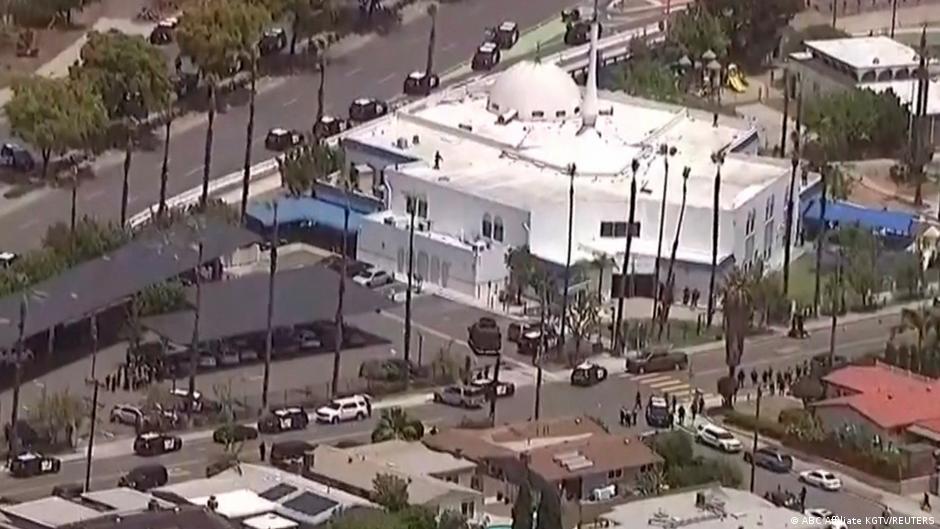
The attack took place at the Islamic Center of San Diego, a facility that serves both as a place of worship and an educational institution. The mosque houses an Islamic day school where several children were present during the shooting. According to authorities, all students at the day school were accounted for and remained physically unharmed, though they experienced significant trauma during the incident.
The situation was particularly harrowing for the children present during the attack. A nine-year-old student later recounted how he and his classmates were ushered into a closet during the shooting. The child described the events saying he "saw bad stuff," while he and other students trembled in fear as gunshots rang out around them. Despite the traumatic experience, all students of the Islamic day school were reported safe and uninjured by authorities.
The two perpetrators have been described as teenagers, though their identities and specific motives remain unclear. After attacking three men at the mosque, the shooters died by apparent suicide. The exact circumstances of their deaths and the chronology of events are still subject to ongoing investigation by law enforcement agencies.
Local police are treating the incident as a possible hate crime and have launched appropriate investigations. This classification suggests that authorities suspect a religiously or ethnically motivated background to the attack. Hate crimes against religious institutions fall under special criminal statutes in the United States and are often investigated by federal agencies as well as local law enforcement.
Political reactions came swiftly following the attack. President Trump described the incident as a "terrible situation," signaling federal attention to the case. Such statements are common following acts of violence against religious communities and serve to demonstrate both sympathy and the authorities' determination to pursue justice.
The attack adds to a troubling pattern of violence against religious institutions across the United States. Muslim communities have repeatedly reported threats and attacks in recent years. Synagogues, churches, and mosques have all been targets of similar attacks, fueling ongoing discussions about protecting religious minorities and combating hate crimes in American society.
Investigators are working to determine whether the attack was premeditated or occurred spontaneously, while also examining the shooters' backgrounds for potential connections to extremist groups or ideologies. The question of what specifically motivated these teenage perpetrators remains central to the ongoing investigation.
The broader implications of this attack extend far beyond San Diego. Muslim communities across the United States may reconsider their security measures, while policymakers will likely renew discussions about strategies for preventing hate crimes. The incident also raises questions about how religious institutions can balance openness and accessibility with necessary security precautions.
For the directly affected community in San Diego, a difficult process of healing and recovery now begins. The trauma experienced by the children who witnessed the attack will require careful attention and support. Community leaders will need to address both the immediate emotional needs of their members and longer-term concerns about safety and security.
Many questions remain unanswered as the investigation continues. Authorities are working to piece together the complete timeline of events, understand the perpetrators' motivations, and determine whether there were any warning signs that might have prevented the tragedy. The processing of the traumatic experiences of the children and the affected community will also take considerable time and resources.
The incident serves as a stark reminder of the ongoing challenges faced by religious minorities in the United States and the need for continued vigilance against hate-motivated violence. As the investigation proceeds, the focus will remain on providing justice for the victims while supporting the affected community through their recovery process.
Fast take
Three people were killed in an attack on the Islamic Center of San Diego by two teenage gunmen who subsequently died by suicide.
NOFRAME signal
Medium divergence · 5 Sources · 4 Regions
What remains open
Coverage is not fully split, but it is not identical either. That makes the comparison useful: the fact base shows the common core, while the perspectives show where political, regional, or institutional priorities change the emphasis.
Dossier compass
Which media spaces carry the story and how broad the source base is.
Source mix
Underlit angles
- Details about traumatized children
- Specific security measures
- Political reactions
Open originals
Go straight to the linked articles. NOFRAME does not replace those sources.
Why it matters
Coverage is not fully split, but it is not identical either. That makes the comparison useful: the fact base shows the common core, while the perspectives show where political, regional, or institutional priorities change the emphasis.
Timeline
DW News · May 19, 2026 at 05:51 AM
San Diego mosque shooting to be investigated as hate crime
Punch Nigeria · May 19, 2026 at 06:00 AM
Three killed in San Diego mosque shooting
Straits Times · May 19, 2026 at 06:13 AM
‘I saw bad stuff’, says 9-year-old who huddled in closet during San Diego mosque attack
Japan Times · May 19, 2026 at 07:44 AM
‘I saw bad stuff,’ says 9-year-old who hid in closet during California mosque attack