The United States has imposed sanctions on a sitting Cuban president for the first time in history, targeting Miguel Díaz-Canel in an unprecedented escalation of tensions between Washington and Havana. The sanctions, announced by the U.S. Treasury Department, also affect Díaz-Canel's wife, three other individuals, and five organizations, including Cuba's Ministry of the Revolutionary Armed Forces. This marks a significant departure from previous U.S. policy and represents the most direct action taken against Cuba's current leadership.
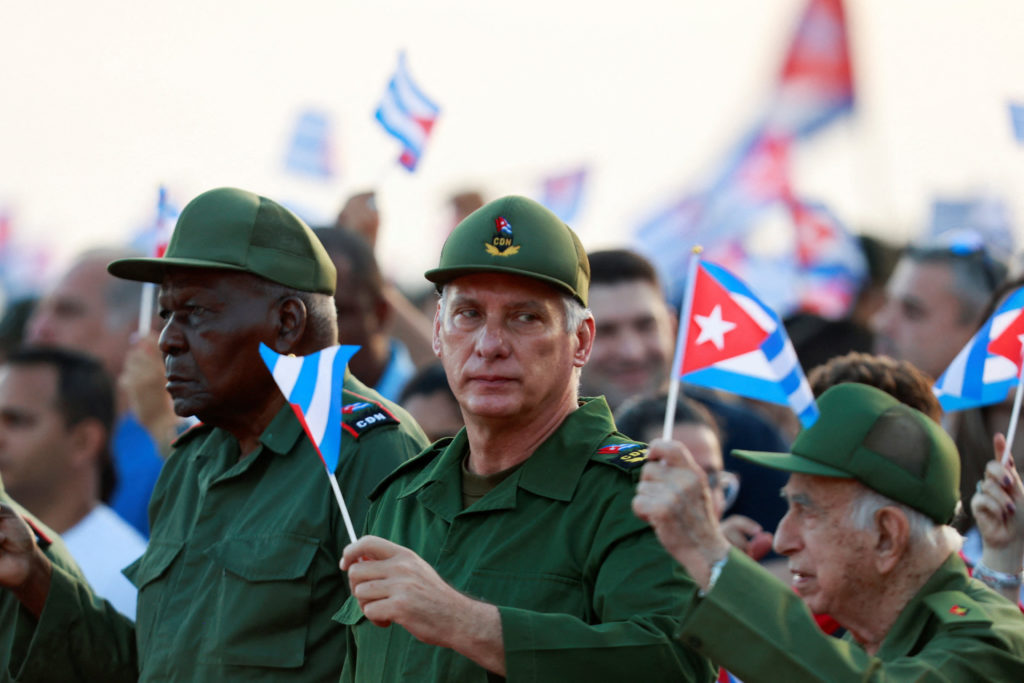
The sanctions are part of a broader pressure campaign by the Trump administration against the communist-led island nation. President Donald Trump has intensified pressure on Cuba in recent months, threatening military action against the country and reportedly discussing the possibility of taking over the island entirely. These developments have created the most volatile situation in U.S.-Cuba relations in decades.
Particularly noteworthy is the inclusion of Castro family members among those targeted by the sanctions. The Castro dynasty ruled Cuba for nearly six decades before Díaz-Canel assumed the presidency in 2018, succeeding Raúl Castro. By targeting Castro family members alongside the current president, the United States is signaling its intention to pressure the entire Cuban political establishment, both past and present.
The timing of these sanctions is crucial to understanding their significance. They follow a series of dramatic developments in the Caribbean region, most notably the ousting of Venezuelan President Nicolás Maduro in January. Following Maduro's removal, the United States imposed an energy blockade that severely restricted fuel shipments to Cuba, dealing a significant blow to the island's already struggling economy.
Trump signed an executive order expanding sanctions against Cuba as part of this escalating campaign. During a press conference, the U.S. President expressed his desire for Cuba to become "a nicely run country," a statement widely interpreted as a call for regime change in Havana. This rhetoric, combined with threats of military action, has raised concerns about potential U.S. intervention in the region.
The practical implications of these sanctions are far-reaching. All assets belonging to the sanctioned individuals and entities that fall under U.S. jurisdiction will be frozen. Additionally, American citizens and companies are prohibited from conducting business with those on the sanctions list. For Díaz-Canel personally, this represents another layer of international isolation and limits his ability to engage with the global financial system.
The Cuban government has responded with strong condemnation of the sanctions, characterizing them as an escalation of U.S. aggression against the island's sovereignty. Cuban officials argue that these measures primarily harm the Cuban people and exacerbate the country's economic difficulties. The government in Havana has historically used U.S. sanctions as a rallying point for domestic support, portraying them as evidence of American imperialism.
The international community is closely watching these developments, as sanctions against a sitting head of state represent an unusual diplomatic step. The move has raised tensions throughout the Caribbean region, with neighboring countries expressing concern about the potential for similar measures to be taken against them. Regional organizations have called for dialogue and peaceful resolution of disputes.
The inclusion of Cuba's Ministry of the Revolutionary Armed Forces among the sanctioned entities is particularly significant. This military institution plays a crucial role in Cuba's economy and political system, controlling numerous state enterprises and wielding considerable influence over government policy. By targeting the military directly, the United States is attempting to pressure one of the most powerful institutions in Cuban society.
Analysts view these sanctions as a potential turning point in U.S.-Cuba relations. While previous administrations primarily relied on economic isolation, the current rhetoric from the Trump administration suggests the possibility of more direct intervention. The threats of military action have created considerable unease in the region and raised questions about future stability in the Caribbean.
The economic impact of these measures extends beyond the immediate targets. Cuba's economy, already struggling under decades of U.S. embargo and recent energy shortages, faces additional pressure from these expanded sanctions. The country's limited access to international markets and financial systems will be further restricted, potentially affecting everything from trade relationships to humanitarian aid.
The long-term consequences of this escalation remain uncertain. While the United States intensifies its pressure campaign, Cuba has shown little sign of yielding to American demands. The sanctions could either force changes in Cuban policy or strengthen the resolve of the island's leadership to resist U.S. pressure. For the populations of both countries, this development represents a further deterioration in already strained bilateral relations, with implications that may extend far beyond the immediate political sphere.
Fast take
The United States has imposed sanctions on a sitting Cuban president for the first time in history, targeting Miguel Díaz-Canel in an unprecedented escalation of tensions between Washington and Havana.
NOFRAME signal
Medium divergence · 9 Sources · 4 Regions
What remains open
Coverage is not fully split, but it is not identical either. That makes the comparison useful: the fact base shows the common core, while the perspectives show where political, regional, or institutional priorities change the emphasis.
Dossier compass
Which media spaces carry the story and how broad the source base is.
Source mix
Underlit angles
- Trump's threats of military action
- Broader context of US-Cuba relations
- Political background and escalation context
Open originals
Go straight to the linked articles. NOFRAME does not replace those sources.
Why it matters
Coverage is not fully split, but it is not identical either. That makes the comparison useful: the fact base shows the common core, while the perspectives show where political, regional, or institutional priorities change the emphasis.
Timeline
France24 · June 4, 2026 at 10:26 PM
US sanctions Cuban president and Castro relatives in latest pressure campaign
Punch Nigeria · June 4, 2026 at 10:58 PM
US imposes new sanctions on Cuban president, Castro family members
The Independent · June 4, 2026 at 11:04 PM
Trump administration imposes sanctions on Cuban president in latest pressure campaign
Globe and Mail · June 4, 2026 at 11:49 PM
U.S. sanctions Cuban President, drawing condemnation from Havana