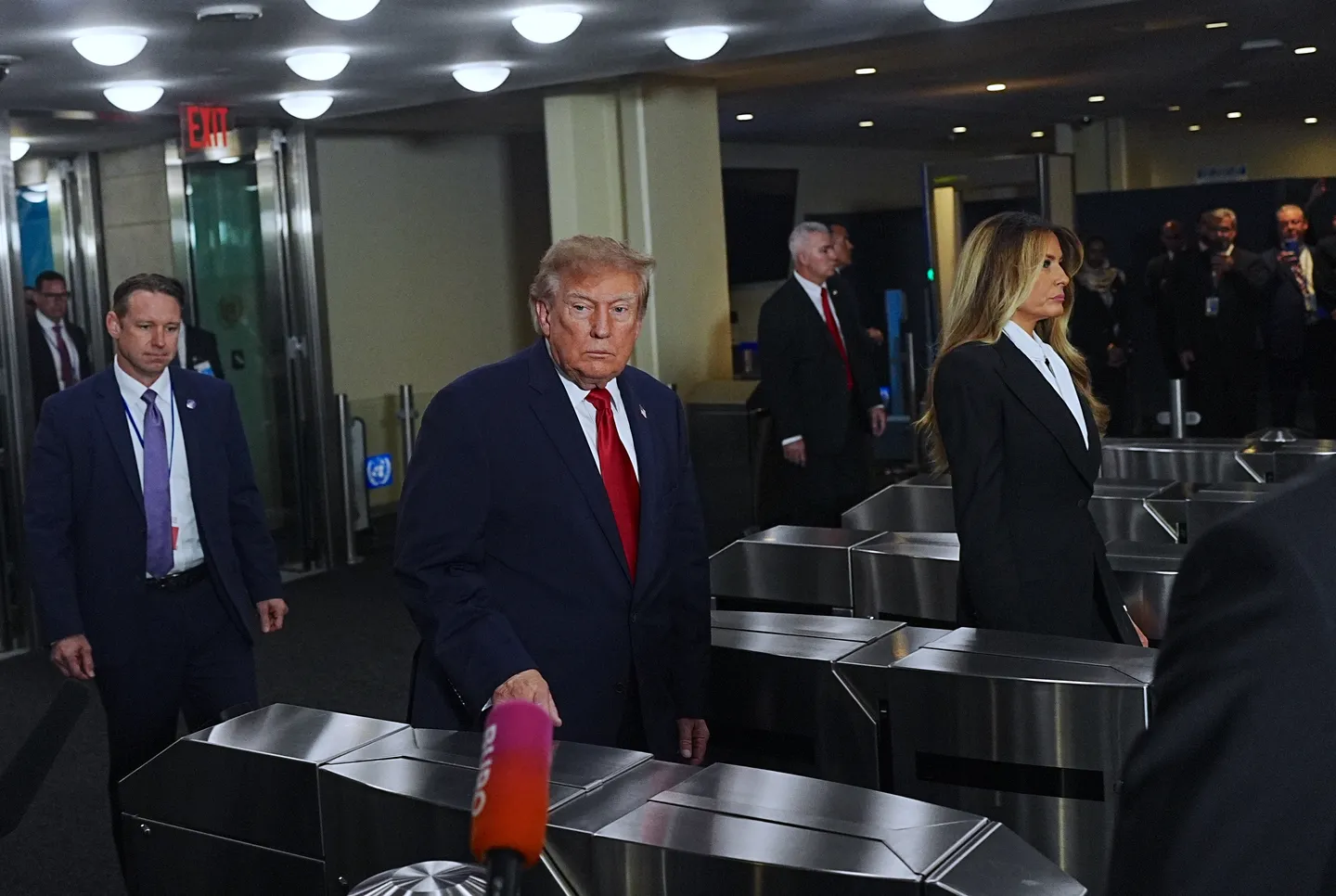
US President Donald Trump publicly confronted CNN reporter Kaitlan Collins on the sidelines of the United Nations General Assembly in New York, according to consistent reporting from several international outlets, including TRT World, India Today and Anadolu Agency. Trump reportedly questioned Collins' presence at the gathering, telling her she should not be there. The exchange came just days after CNN, along with news organizations MS NOW and Politico, were barred from accessing the White House, marking one of the most visible escalations yet in an ongoing dispute between the Trump administration and parts of the American press.
At the center of the dispute is the White House's decision to deny access to official premises and press briefings to the three news organizations. According to TRT World and Anadolu, the affected outlets view the measure as an improper restriction on press freedom and have taken legal action to challenge it in court. The reports available do not specify the exact date the bans took effect or the administration's stated justification, leaving open questions about the administrative or legal basis for the decision.
The UN General Assembly incident represents a moment in which the conflict moved from the corridors of the White House onto the international stage. Based on the available summaries, Trump addressed Collins directly and questioned her right to attend the event, even though it was a press occasion tied to the General Assembly, where accredited journalists typically have access. Neither India Today nor the other sources provide a complete verbatim account of the entire exchange, so the precise sequence of events and any additional remarks by Trump cannot be fully reconstructed from the available material.
The episode fits into a longer history of tension between Trump and major US news organizations. A report from NPR World quotes journalist Jim Acosta, who years earlier had his own White House press credentials temporarily revoked following a dispute with the Trump administration at the time. According to NPR, Acosta describes the current exclusion of multiple media organizations as different in kind, suggesting it represents a new level of confrontation. He is also cited as observing a growing sense of solidarity within the press corps, which he believes should have emerged sooner. This assessment reflects broader concerns among journalists that the simultaneous exclusion of several major outlets could pose a structural challenge to press access at the highest levels of government.
It remains unclear precisely how the affected media companies plan to pursue their legal challenges, including which courts have received or will receive the filings. No statement from the White House detailing the specific reasons behind the bans is referenced in the available reporting. Coverage of the incident has focused mainly on the public confrontation at the UN General Assembly and the reactions from within the journalism community, rather than on the legal or administrative specifics of the ban itself.
For the news organizations involved, the stakes are significant. Access to White House briefings and official events has traditionally been considered essential to political reporting in the United States. A prolonged exclusion could limit these outlets' ability to report directly on government decisions and statements. At the same time, the confrontation at the UN raises questions about whether such restrictions might extend to international events, where US media have historically enjoyed largely unimpeded access.
Coverage of the incident varies somewhat in emphasis across outlets. TRT World and Anadolu place greater emphasis on the legal pushback from the affected media organizations, while India Today focuses primarily on the direct exchange between Trump and Collins at the scene. NPR, meanwhile, situates the current dispute within a broader historical pattern of press-access conflicts involving the Trump administration. A fully verified, single timeline of events—such as the exact date the original ban was imposed or the current status of any court proceedings—cannot be established with certainty from the sources provided.
What happens next remains uncertain. Should courts rule in favor of the media organizations, it could affect access arrangements for future White House press events. It is also unclear whether the public exchange at the UN General Assembly will lead to similar confrontations at upcoming international appearances involving Trump.
Fast take
US President Donald Trump publicly confronted CNN reporter Kaitlan Collins on the sidelines of the United Nations General Assembly in New York, according to consistent reporting from several international outlets, including TRT World, India Today and Anadolu Agency.
NOFRAME signal
Stable coverage · 4 Sources · 3 Regions
What remains open
The source picture is relatively consistent. That still makes the details worth reading: small differences in wording, omissions, and source selection can reveal what each region treats as important.
Dossier compass
Which media spaces carry the story and how broad the source base is.
Source mix
Underlit angles
- No notable omissions in the current source comparison.
Open originals
Go straight to the linked articles. NOFRAME does not replace those sources.
Why it matters
The source picture is relatively consistent. That still makes the details worth reading: small differences in wording, omissions, and source selection can reveal what each region treats as important.
Timeline
NPR World · September 22, 2026 at 12:47 PM
A journalist once barred from the White House says this media ban is different
India Today · September 22, 2026 at 04:24 PM
You should not be here: Trump confronts CNN reporter Kaitlan Collins at UN
Anadolu EN · September 23, 2026 at 06:52 AM
Trump rebukes CNN journalist over UN coverage following White House press ban
TRT World · September 23, 2026 at 08:38 AM
Trump confronts CNN reporter at UN as media access fight intensifies