US President Donald Trump arrived in Beijing on Wednesday for a high-stakes summit with Chinese leader Xi Jinping, marking the first visit by an American president to China since Trump's own trip in 2017. Air Force One touched down at Beijing Capital International Airport at 7:52 PM local time, where Trump was greeted with an elaborate ceremony featuring a military honor guard and senior Chinese dignitaries.
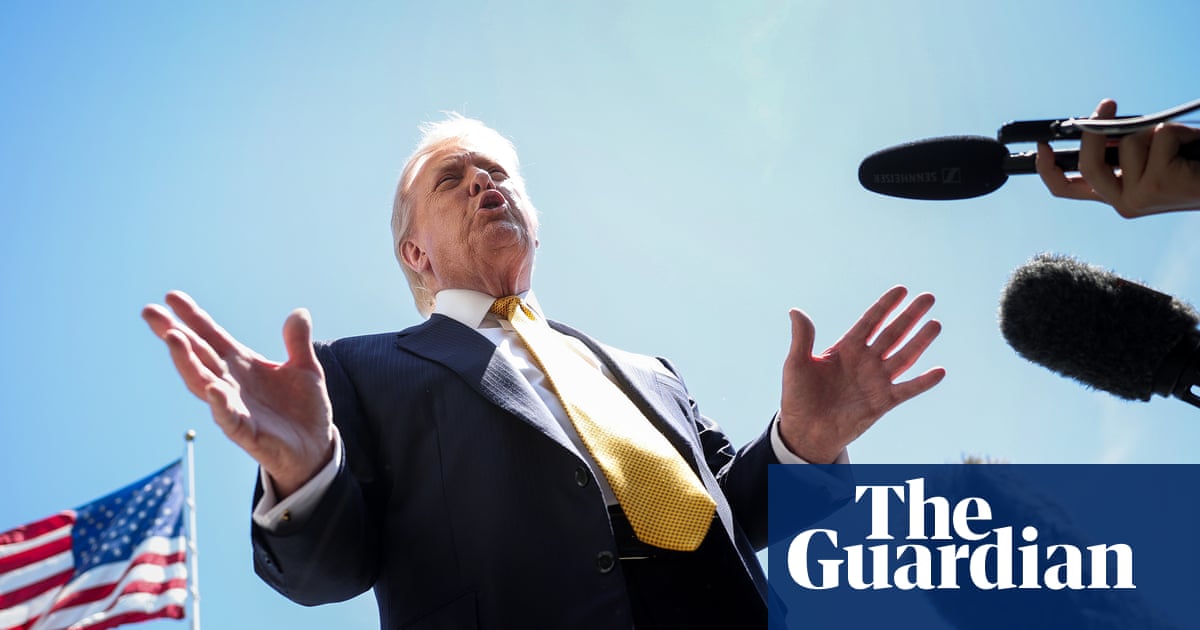
The two-day summit takes place against a backdrop of deep tensions between the world's two largest economies. The agenda encompasses a range of contentious issues including trade disputes, technology cooperation, the Taiwan question, and the ongoing conflict with Iran. The meeting was originally scheduled for March but was postponed due to the war in the Middle East.
Trump's delegation has drawn particular attention for its emphasis on business leaders, underscoring the economic focus of the visit. Nvidia CEO Jensen Huang joined the presidential aircraft at the last minute in Alaska, while Tesla chief Elon Musk also traveled aboard Air Force One. Before departing, Trump announced on social media that he would ask President Xi to "open up" China to American firms so these "brilliant people can work their magic" and help bring China "to an even higher level."
Central to the negotiations is the extension of the fragile trade truce sealed in Busan last October. At that time, China resumed purchasing American soybeans after completely halting such purchases during the trade war. Another critical issue involves China's controls over rare earth exports, which are crucial for the American technology industry. A key question hanging over the summit is whether China will agree to extend a temporary postponement of even tougher rare earth export controls.
The Taiwan issue promises to be particularly contentious. China reiterated its strong opposition to US arms sales to Taiwan ahead of Trump's arrival, calling on Washington to honor its commitments. Taiwan, which governs itself democratically, is viewed by China as its own territory. Arms sales to Taipei have been a persistent source of friction between Washington and Beijing.
Another sensitive topic involves Iran negotiations, where Trump seeks Chinese support. Before his departure, Trump made controversial remarks that generated significant attention. When asked by a reporter to what extent Americans' financial struggles were motivating him to make a deal, Trump responded: "Not even a little bit - the only thing that matters when I'm talking about Iran, they can't have a nuclear weapon. I don't think about Americans' financial situation, I don't think about anybody." This statement came as the US faces a three-year inflation high and rising fuel costs.
The summit occurs at a time when the power dynamics between the two superpowers have shifted significantly. China presents itself as far more confident and assertive than it was nearly a decade ago. Analysts view the meeting as a potential tipping point in superpower relations, with many expecting a shift in China's favor.
Technology cooperation, particularly in artificial intelligence, also features prominently on the agenda. The presence of Nvidia's CEO in Trump's delegation highlights the importance Washington places on tech collaboration. Nvidia is a key player in AI development and crucial to China's technological ambitions.
Beyond the headline issues, the summit will address various economic matters including the soybean trade, which has become symbolic of the broader US-China trade relationship. For decades, the US was China's preferred source of soybeans, with Beijing purchasing billions of dollars worth in 2024. However, when Washington launched its trade war, China stopped buying US soy altogether. The October truce saw China resume purchases, but questions remain about the long-term sustainability of this arrangement.
The meetings between Trump and Xi are scheduled for Thursday and Friday. Both sides have signaled their desire to ease tensions, but the multitude of controversial topics makes breakthroughs difficult to predict. The summit is being watched internationally with great interest, as US-China relations have far-reaching implications for global economic stability and security.
The current visit represents a significant diplomatic moment, coming as both nations grapple with domestic challenges while maintaining their global leadership roles. Trump's approach, emphasizing business deals and economic cooperation while addressing security concerns, reflects the complex nature of the US-China relationship in an era of strategic competition.
Fast take
US President Donald Trump arrived in Beijing on Wednesday for a high-stakes summit with Chinese leader Xi Jinping, marking the first visit by an American president to China since Trump's own trip in 2017.
NOFRAME signal
Medium divergence · 22 Sources · 4 Regions
What remains open
Coverage is not fully split, but it is not identical either. That makes the comparison useful: the fact base shows the common core, while the perspectives show where political, regional, or institutional priorities change the emphasis.
Dossier compass
Which media spaces carry the story and how broad the source base is.
Source mix
Underlit angles
- Economic cooperation opportunities
- Technology partnerships
- Positive trade prospects
Open originals
Go straight to the linked articles. NOFRAME does not replace those sources.
Why it matters
Coverage is not fully split, but it is not identical either. That makes the comparison useful: the fact base shows the common core, while the perspectives show where political, regional, or institutional priorities change the emphasis.
Timeline
Al Jazeera · May 13, 2026 at 02:55 PM
What Trump and Xi want from China visit
Africa News · May 13, 2026 at 02:59 PM
US President Trump arrives in Beijing for two-day summit with Xi Jinping
Al Jazeera · May 13, 2026 at 03:06 PM
Trump arrives in China for two-day summit with Xi
PBS NewsHour · May 13, 2026 at 03:27 PM
WATCH LIVE: Trump and Xi hold meeting as China state visit begins