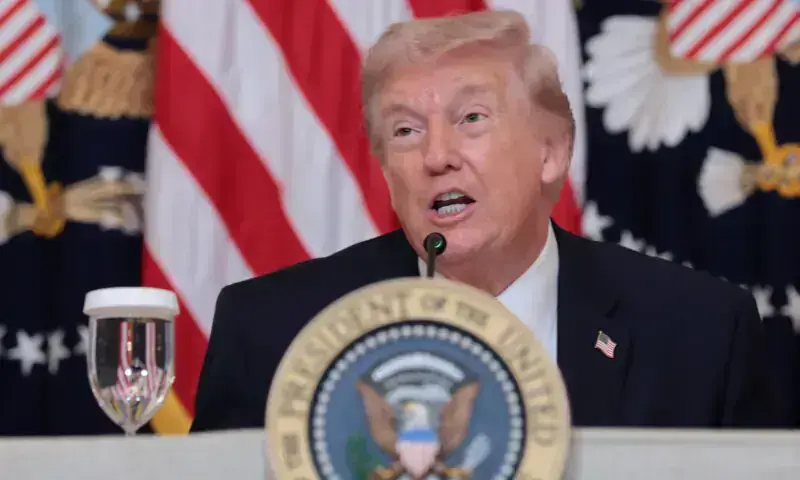
US President Donald Trump has signaled his willingness to engage in direct telephone conversations with Iranian officials, stating that Iran can call if it wants to talk, while Iranian Foreign Minister Abbas Araghchi continues an intensive diplomatic tour across multiple countries. Trump's comments represent a potential opening for dialogue amid ongoing regional tensions.
Iranian Foreign Minister Abbas Araghchi is currently conducting a multi-day diplomatic mission that has taken him to Pakistan, Oman, and Russia. Particularly noteworthy is that Araghchi visited Pakistan twice within just two days, underscoring the intensity of current diplomatic efforts. According to diplomatic sources, he landed at the Nur Khan air base in Rawalpindi before continuing his journey to Moscow.
Pakistan appears to be playing a central mediating role in current diplomatic efforts. Reports suggest that Pakistani officials are working to bring Washington and Tehran to the negotiating table. These mediation efforts are taking place against the backdrop of ongoing regional tensions and conflicts in the Middle East.
The diplomatic activities are occurring within a complex geopolitical environment. Araghchi's tour includes strategically important countries and suggests that Iran is seeking to strengthen its diplomatic relationships with various regional and global powers. The visit to Oman, a traditionally neutral mediator in the region, along with talks in Pakistan and planned meetings in Russia, demonstrates the breadth of Iran's diplomatic offensive.
Trump's statements about potential phone conversations represent a notable shift in communication strategy. While US-Iran relations have been marked by tensions in recent years, this willingness to engage in direct talks could signal a new diplomatic approach.
The timing coordination of these diplomatic initiatives is remarkable. While Araghchi continues his regional tour meeting important counterparts, Trump is simultaneously sending signals of willingness to engage. This could indicate coordinated efforts toward de-escalation.
The broader context includes ongoing maritime security concerns in the Gulf region and various regional conflicts that have contributed to tensions between the United States and Iran. The current diplomatic movements suggest that multiple parties are seeking pathways to dialogue and potential conflict resolution.
Experts are watching these developments with interest, as they may mark the beginning of a new phase in US-Iran relations. Pakistan's role as a mediator and the apparent willingness of both sides to engage in direct communication are being viewed as positive signs.
The international community is closely monitoring these efforts, as an improvement in US-Iran relations could have far-reaching implications for regional stability. The success or failure of these diplomatic initiatives may influence broader Middle Eastern dynamics and global security considerations.
Future developments will reveal whether these diplomatic initiatives lead to concrete talks and potentially to a relaxation of regional tensions. The willingness of key players to engage in dialogue represents a potentially significant shift from previous patterns of escalation and confrontation.
Fast take
US President Donald Trump has signaled his willingness to engage in direct telephone conversations with Iranian officials, stating that Iran can call if it wants to talk, while Iranian Foreign Minister Abbas Araghchi continues an intensive diplomatic tour across multiple countries.
NOFRAME signal
Medium divergence · 4 Sources · 3 Regions
What remains open
Coverage is not fully split, but it is not identical either. That makes the comparison useful: the fact base shows the common core, while the perspectives show where political, regional, or institutional priorities change the emphasis.
Dossier compass
Which media spaces carry the story and how broad the source base is.
Source mix
Underlit angles
- Details about Trump's specific statements
- Clarification about prospects for successful talks
- Detailed analysis of individual countries' mediating roles
Open originals
Go straight to the linked articles. NOFRAME does not replace those sources.
Why it matters
Coverage is not fully split, but it is not identical either. That makes the comparison useful: the fact base shows the common core, while the perspectives show where political, regional, or institutional priorities change the emphasis.
Timeline
Dawn · April 26, 2026 at 08:49 PM
Iran's Araghchi visits Pakistan for 2nd time in two days; envoy says trip undertaken to discuss regional developments
Japan Times · April 26, 2026 at 10:29 PM
Trump says Iran can phone if it wants to talk, as Iranian envoy returns to Pakistan
Rappler · April 27, 2026 at 01:30 AM
Trump says Iran can phone if it wants to talk; Iranian minister heads to Russia
Dawn · April 27, 2026 at 02:19 AM
Trump opts for talks with Iran over the phone