US President Donald Trump claimed in a podcast interview that Iran has agreed not to develop nuclear weapons and that Iran's Supreme Leader Mojtaba Khamenei is involved in negotiations with the United States. "They've already agreed they're not going to have a nuclear weapon," Trump stated during the Wednesday interview.
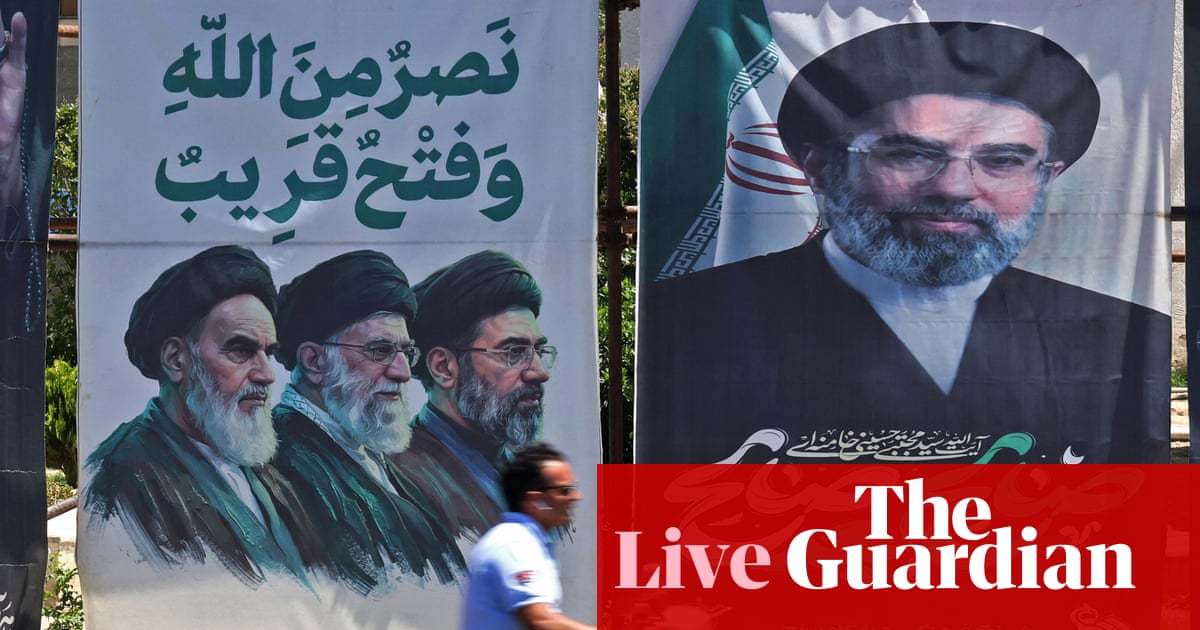
Trump also expressed willingness to meet personally with Iran's Supreme Leader if circumstances develop favorably. "I would like to meet with him," Trump said, suggesting such a meeting could occur at some point if things "work out" between the two nations.
The US President's statements come amid ongoing tensions in the Middle East. Reports indicate that an Iranian drone strike on Kuwait's airport injured 63 people and killed one person. Kuwait's health ministry confirmed these casualty figures after initially reporting one fatality from the attack.
Trump further stated that the US "does not need" ground forces in Iran, claiming that his military operations were proceeding successfully without the need to deploy troops. This assertion suggests the US is pursuing its regional objectives through alternative means rather than direct military occupation.
The Iranian nuclear issue has been a central point of contention in international relations for years. Various negotiation rounds and agreements, including the Joint Comprehensive Plan of Action (JCPOA), have attempted to limit Iran's nuclear program. The US has been involved in these efforts to varying degrees under different administrations.
If Trump's claims prove accurate, this would represent a significant shift in US-Iranian diplomacy. Direct involvement of the Supreme Leader in negotiations would be unusual, as such discussions typically occur through diplomatic channels or intermediaries. The Supreme Leader traditionally maintains distance from direct engagement with US officials.
However, Trump's statements have not been confirmed by Iranian officials or other international sources. The Iranian government has not yet publicly responded to the US President's claims. Other governments and international organizations have also not verified these assertions.
The credibility of such statements must be evaluated against the backdrop of complex and often contradictory signals in Middle East politics. Previous announcements of diplomatic breakthroughs have not always proven durable or substantive.
Middle East policy experts note that substantial changes in US-Iranian relations are typically communicated through formal diplomatic channels and supported by concrete agreements. The significance of Trump's statements will therefore only become clear through subsequent developments and official confirmations.
The timing of these claims coincides with broader regional tensions and ongoing military activities. The reported drone strike on Kuwait's airport illustrates the volatile security situation in the region, where various actors are engaged in conflicts that could be affected by any US-Iran diplomatic progress.
International observers are watching the situation closely, as any détente between the US and Iran could have significant implications for regional stability and global security. Previous attempts at diplomatic engagement have faced numerous obstacles, including domestic political pressures in both countries and opposition from regional allies.
The international community will likely seek official confirmation and concrete evidence of any agreements before adjusting their own policies toward Iran. Diplomatic breakthroughs typically require verification through multiple channels and formal documentation to be considered credible and lasting.
Fast take
US President Donald Trump claimed in a podcast interview that Iran has agreed not to develop nuclear weapons and that Iran's Supreme Leader Mojtaba Khamenei is involved in negotiations with the United States.
NOFRAME signal
Stable coverage · 4 Sources · 4 Regions
What remains open
The source picture is relatively consistent. That still makes the details worth reading: small differences in wording, omissions, and source selection can reveal what each region treats as important.
Dossier compass
Which media spaces carry the story and how broad the source base is.
Source mix
Underlit angles
- Context of current regional tensions
- Verification of the claims
- Details about military operations
Open originals
Go straight to the linked articles. NOFRAME does not replace those sources.
Why it matters
The source picture is relatively consistent. That still makes the details worth reading: small differences in wording, omissions, and source selection can reveal what each region treats as important.
Timeline
TASS · June 3, 2026 at 10:33 AM
Trump says he would like to meet with Iranian supreme leader
Al-Monitor · June 3, 2026 at 10:36 AM
Trump says Iran has agreed to not have a nuclear weapon
Channel News Asia · June 3, 2026 at 11:41 AM
Trump says Iran has agreed not to have a nuclear weapon
The Guardian · June 3, 2026 at 11:44 AM
Middle East crisis live: Trump claims Iranian supreme leader is involved in US negotiations