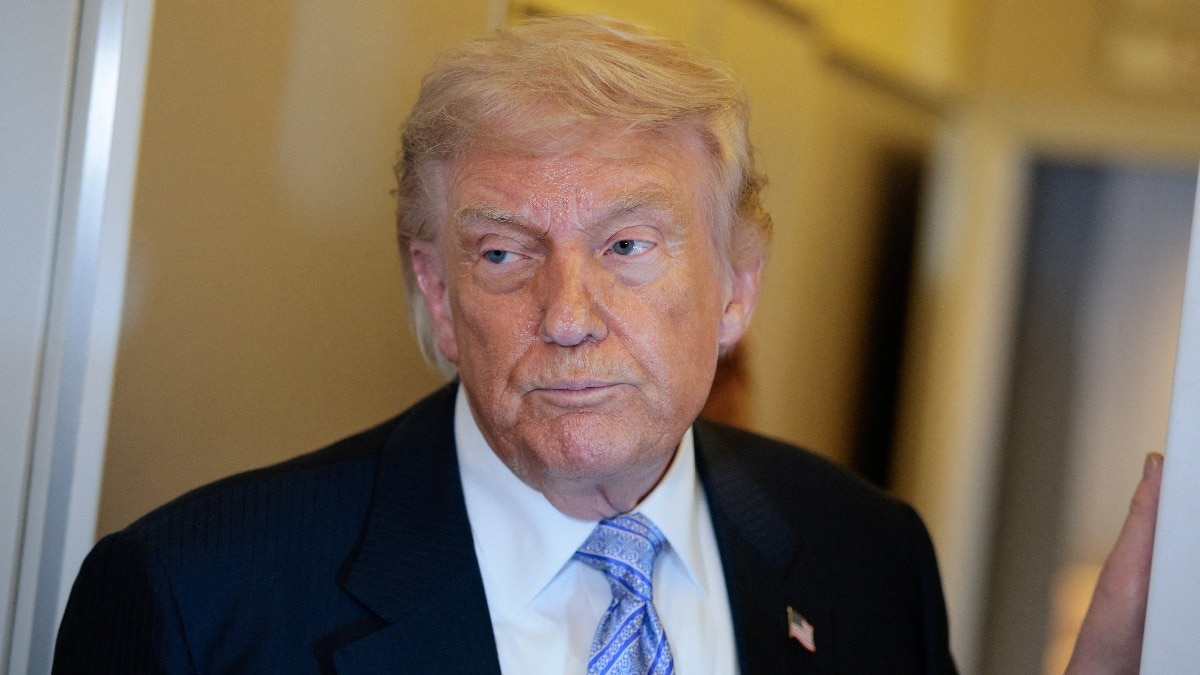
US President Donald Trump issued a stark warning to Iran on Sunday, demanding the country quickly agree to a peace deal or face severe consequences. In a post on his Truth Social platform, Trump wrote: "For Iran, the Clock is Ticking, and they better get moving, FAST, or there won't be anything left of them." The warning comes amid ongoing military tensions between the United States, Israel, and Iran that have escalated since late February.
The current conflict began on February 28 when US and Israeli forces launched major military strikes against Iran. Since then, Washington and Tehran have been locked in a deadlocked confrontation that has so far yielded no diplomatic progress toward ending the hostilities. The ongoing tensions have already shown tangible effects on the global economy, particularly through rising energy prices worldwide.
Trump's latest statements suggest the US administration is seeking to put significant pressure on Iran to agree to a negotiated solution. The President emphasized the urgency of the situation in his post, stating that "TIME IS OF THE ESSENCE." This rhetoric represents a clear escalation in diplomatic language and potentially signals a new phase in American-Iranian relations.
Parallel to Trump's public warning, there are reports of possible further military planning. Various sources indicate that Trump may hold a key meeting regarding potential military actions against Iran. While this information remains unconfirmed, it demonstrates the seriousness of the situation and the US government's willingness to consider all options.
The regional impact of the conflict is already clearly visible. The Middle East is experiencing a period of heightened instability that affects various sectors. International energy markets have been particularly affected, with uncertainty about future developments leading to price increases. These economic consequences illustrate that the conflict has implications far beyond the directly involved parties.
Iran's response to Trump's ultimatum has not yet become known. Tehran has not yet publicly commented on the US President's recent statements. This restraint could reflect both strategic considerations and internal consultations about the way forward. The international community is watching closely to see how Iran will respond to the escalated rhetoric from Washington.
The current situation represents a critical phase in American-Iranian relations. Since the beginning of military confrontations in late February, positions have hardened, and diplomatic efforts at de-escalation appear to have been unsuccessful so far. Trump's latest warning could be interpreted either as a final attempt at a diplomatic solution or as preparation for further military escalation.
Experts are watching the developments with great concern, as further escalation of the conflict could have serious consequences for the entire region. The combination of military threats, economic impacts, and diplomatic tensions creates a complex scenario whose outcome is currently difficult to predict. The coming days and weeks will show whether Trump's ultimatum leads to de-escalation or further intensification of the situation.
The international community is following developments with great attention, as the effects of the conflict are already being felt beyond the region. Rising energy prices are just one example of the global consequences of the ongoing tensions between the United States and Iran. The situation has created instability that extends far beyond the immediate theater of conflict.
The lack of clear Iranian response to Trump's demands adds another layer of uncertainty to an already volatile situation. While some observers interpret Tehran's silence as a sign of internal deliberation, others view it as a strategic pause before a potential response. The absence of immediate reaction from Iran leaves room for speculation about the country's next moves and whether it will engage with the proposed deal or reject the ultimatum outright.
As the situation continues to develop, the stakes remain high for all parties involved. The conflict that began with military strikes in February has evolved into a broader confrontation with global implications, affecting everything from energy markets to regional stability in the Middle East.
Fast take
US President Donald Trump issued a stark warning to Iran on Sunday, demanding the country quickly agree to a peace deal or face severe consequences.
NOFRAME signal
Medium divergence · 6 Sources · 4 Regions
What remains open
Coverage is not fully split, but it is not identical either. That makes the comparison useful: the fact base shows the common core, while the perspectives show where political, regional, or institutional priorities change the emphasis.
Dossier compass
Which media spaces carry the story and how broad the source base is.
Source mix
Underlit angles
- Details about planned military actions
- Iranian reactions or positions
- Background of the conflict
Open originals
Go straight to the linked articles. NOFRAME does not replace those sources.
Why it matters
Coverage is not fully split, but it is not identical either. That makes the comparison useful: the fact base shows the common core, while the perspectives show where political, regional, or institutional priorities change the emphasis.
Timeline
NDTV World · May 17, 2026 at 06:12 PM
Trump Likely To Hold Key Meeting Over Military Action On Iran: Report
Straits Times · May 17, 2026 at 06:43 PM
Trump warns ‘won’t be anything left’ of Iran unless it agrees to deal
Al-Monitor · May 17, 2026 at 07:00 PM
Trump issues dire warning to Iran to accept peace deal
TASS · May 17, 2026 at 07:34 PM
Trump warns Iran of harder strikes than before if there is no deal