Taiwan has reaffirmed its sovereignty following US President Donald Trump's warning against making a formal declaration of independence. The Taiwanese government stated it would maintain the status quo and deepen ties with the United States while emphasizing that it is already a sovereign and independent state.
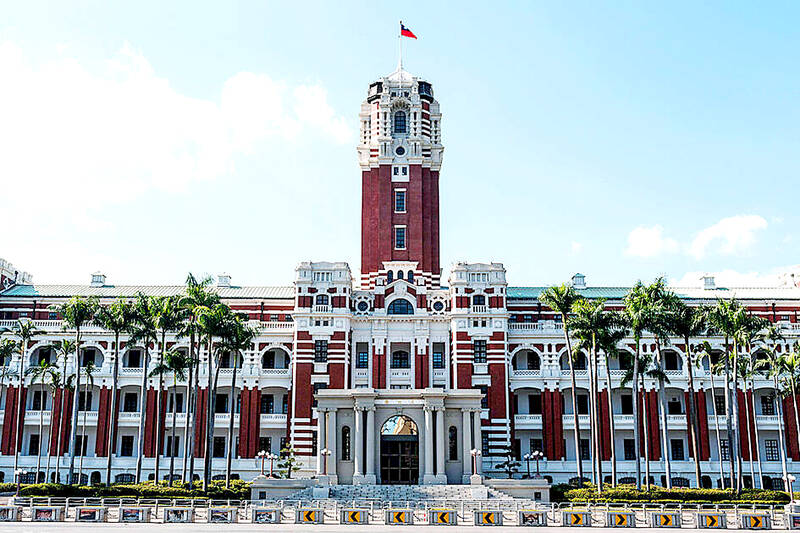
Trump's warning came immediately after his summit meeting with Chinese President Xi Jinping in Beijing. The US President cautioned Taiwan against taking steps that could be interpreted as a formal independence declaration. These remarks reflect the complex diplomatic balance the United States seeks to maintain in its relationships with both China and Taiwan.
Taiwan has been self-governed since 1949, when the Kuomintang government retreated to the island following its defeat in the Chinese Civil War. Since then, the People's Republic of China has claimed Taiwan as part of its territory and has never renounced the use of military force for reunification. Taiwan, meanwhile, has developed into a democratic society and considers itself a de facto independent state.
The United States has traditionally pursued a policy of strategic ambiguity, providing Taiwan with defensive support without recognizing its formal independence. This policy is based on the Taiwan Relations Act of 1979 and three joint communiqués between the US and China. Washington commits to supplying Taiwan with defensive weapons while simultaneously acknowledging the One China policy.
At the center of current discussions are planned US arms sales to Taiwan. Trump emphasized after his meeting with Xi that he had made no concessions in the negotiations. These weapons deliveries are a recurring point of contention between Washington and Beijing, as China views them as interference in its internal affairs.
Taiwan's response to Trump's warning was diplomatic but firm. The government in Taipei underscored its readiness to maintain the status quo while simultaneously reaffirming its position as a sovereign state. This stance reflects Taiwan's efforts to gain international recognition without taking actions that might provoke military conflict with China.
Tensions in the Taiwan Strait have increased in recent years as China has strengthened its military presence in the region. Regular Chinese military exercises and airspace violations have heightened concerns about possible escalation. Taiwan has meanwhile expanded its defense capabilities and is working on developing its own drone technology.
For the international community, the Taiwan question remains one of the most complex geopolitical challenges. While many countries view Taiwan as an important democratic partner, most do not recognize its formal independence to avoid jeopardizing their relationships with China. This situation forces Taiwan to shape its international participation through informal channels and economic relationships.
The current developments highlight the continuing significance of the Taiwan question for regional stability in East Asia. While all parties officially emphasize peace, the situation remains fragile and requires continuous diplomatic efforts to avoid misunderstandings or unintended escalations. The delicate balance between maintaining Taiwan's democratic autonomy and avoiding actions that could trigger conflict continues to define the complex triangular relationship between Washington, Beijing, and Taipei.
Fast take
Taiwan has reaffirmed its sovereignty following US President Donald Trump's warning against making a formal declaration of independence.
NOFRAME signal
Stable coverage · 5 Sources · 4 Regions
What remains open
The source picture is relatively consistent. That still makes the details worth reading: small differences in wording, omissions, and source selection can reveal what each region treats as important.
Dossier compass
Which media spaces carry the story and how broad the source base is.
Source mix
Underlit angles
- Details about Trump-Xi summit content
- Specific US arms sales
- Taiwan's explicit sovereignty declaration
Open originals
Go straight to the linked articles. NOFRAME does not replace those sources.
Why it matters
The source picture is relatively consistent. That still makes the details worth reading: small differences in wording, omissions, and source selection can reveal what each region treats as important.
Timeline
BBC World · May 16, 2026 at 05:01 PM
Taiwan insists it is independent after Trump warning
India Today · May 16, 2026 at 05:54 PM
Trump warns Taiwan against independence push, Taipei declares we are sovereign
Al Jazeera · May 16, 2026 at 07:44 PM
In response to Trump, Taiwan says it is ‘sovereign and independent’
Taipei Times · May 17, 2026 at 12:00 AM
Taiwan vows to maintain 'status quo'