Chinese President Xi Jinping traveled to Washington this week for a multi-day state visit and held talks with US President Donald Trump at the White House. It marks Xi's first visit to the United States in more than a decade, a fact that several outlets have highlighted as an indication of the summit's significance. The agenda covered core points of contention in US-China relations: trade tariffs, rare earth minerals, artificial intelligence, and geopolitical flashpoints including Taiwan, the war in Iran, and the war in Ukraine. The outcome matters globally, since decisions made by the world's two largest economies can directly affect supply chains, technology markets, and international conflict resolution.
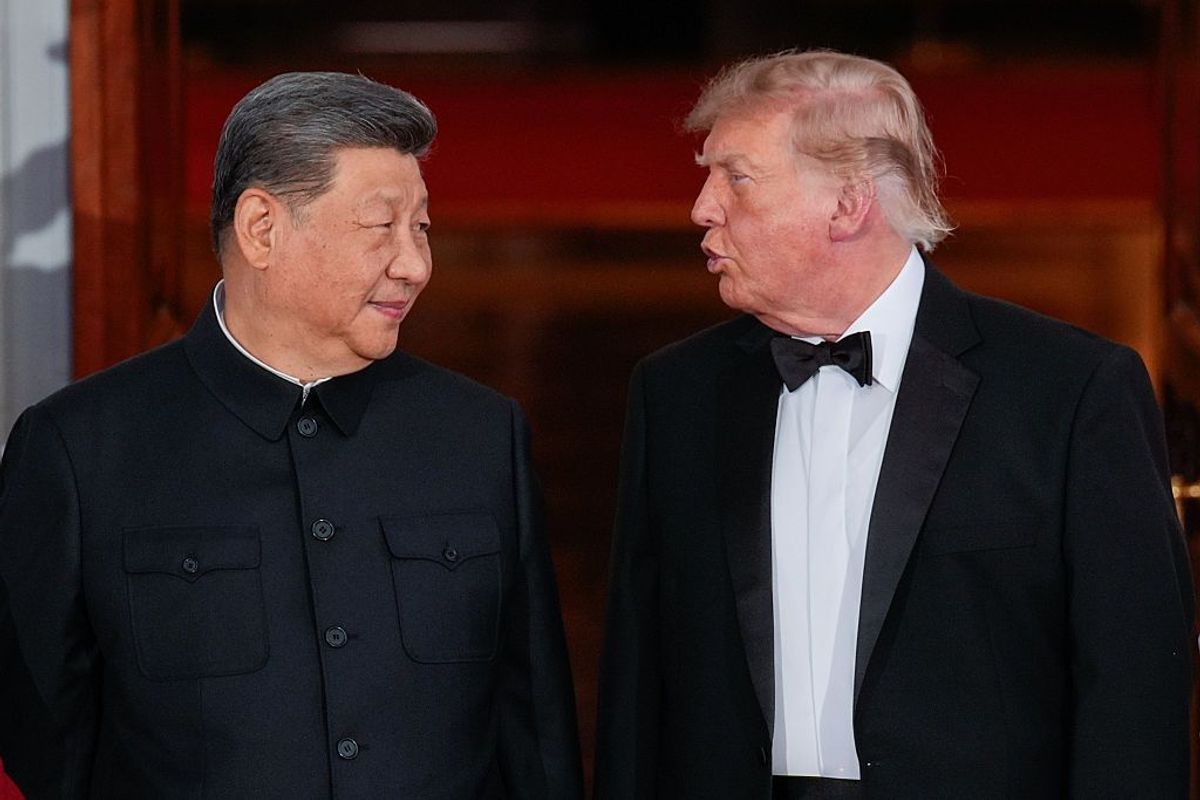
Following the meeting, both sides publicly expressed satisfaction. Trump described the talks as a "great meeting," and according to multiple reports, staged a notably warm atmosphere — US media described Trump as rolling out a "red carpet" for his Chinese guest. The two leaders subsequently appeared together before the press on the White House South Lawn. Several international news agencies confirmed that Trump characterized the encounter as having gone very well.
Artificial intelligence emerged as a central topic of the summit. Xi Jinping told Trump that both countries bear the capability and responsibility to develop and manage AI for the benefit of humanity, stressing that the technology must always remain "under human control" and must not be misused. This statement was quoted verbatim by numerous outlets and was treated as a notable point of the summit, suggesting a degree of alignment between the two governments on AI governance even as technological rivalry between Washington and Beijing continues unabated in other areas. Several reports also emphasized that the two countries remain locked in intense competition for AI supremacy, while apparently sharing an interest in oversight mechanisms.
On the trade front, multiple outlets reported that the US administration had postponed planned additional tariffs against China. This detail has not been uniformly confirmed across all sources — some reports present it as a concrete outcome of the summit, while others mention it only briefly or leave specifics about its scope unclear. If confirmed, the tariff delay would signal a temporary easing in the long-running trade dispute between the two countries, though it would not resolve underlying disagreements over trade balances and market access.
Beyond trade and technology, geopolitical tensions were also on the table. According to several reports, no visible progress was made on Taiwan's status, the war in Iran, or the question of future US arms sales to Taiwan. Some outlets reported that Xi Jinping called on the United States and Iran to return to the negotiating table to end the conflict in the Middle East. Four key areas of dispute — Iran, Taiwan, trade, and the broader strategic rivalry — reportedly remained unresolved despite the cordial public tone of the meeting.
Ahead of the summit, Ukrainian President Volodymyr Zelensky also weighed in. He said he hoped Trump would encourage Xi Jinping to use his influence over Russian President Vladimir Putin to help advance the peace process in the war against Ukraine. Whether and to what extent Ukraine was actually discussed during the Trump-Xi meeting itself is not consistently reflected in available reporting; some sources mention it only as a peripheral agenda item, without citing concrete outcomes.
International coverage of the summit diverged notably in emphasis. Western outlets largely focused on the diplomatic choreography of the reception and the debate over technological supremacy, while commentators from parts of Asia paid closer attention to whether the warmth Trump projected toward Xi was genuinely reciprocated or appeared largely one-sided. Other reports centered on which of the two powers currently holds the stronger negotiating position given economic and military factors.
Overall, the summit presents a mixed picture: on one hand, a deliberately friendly public display accompanied by possible short-term signals of easing trade tensions; on the other, unresolved structural conflicts between the two powers spanning Taiwan, the trade balance, and approaches to Russia's war in Ukraine. Observers are likely to watch closely in the coming weeks whether these symbolic gestures translate into concrete policy steps — including whether announced tariff measures are actually implemented, and whether China exerts any tangible influence on Russia's conduct of the war in Ukraine.
Fast take
Chinese President Xi Jinping traveled to Washington this week for a multi-day state visit and held talks with US President Donald Trump at the White House.
NOFRAME signal
Stable coverage · 12 Sources · 5 Regions
What remains open
The source picture is relatively consistent. That still makes the details worth reading: small differences in wording, omissions, and source selection can reveal what each region treats as important.
Dossier compass
Which media spaces carry the story and how broad the source base is.
Source mix
Underlit angles
- Details on the specific tariff postponement
- Ukraine angle and potential influence on Russia
- Details of the AI discussion between Trump and Xi
Open originals
Go straight to the linked articles. NOFRAME does not replace those sources.
Why it matters
The source picture is relatively consistent. That still makes the details worth reading: small differences in wording, omissions, and source selection can reveal what each region treats as important.
Timeline
Straits Times · September 25, 2026 at 12:55 AM
Trump hails their ‘great friendship’, but does Xi feel the same?
Kyiv Independent · September 25, 2026 at 01:49 AM
Ukraine, Taiwan on agenda at Trump-Xi summit in Washington
Al Jazeera · September 25, 2026 at 01:51 AM
Trump-Xi summit: Four key takeaways from the Washington, DC, meeting
Nikkei Asia · September 25, 2026 at 02:03 AM
Trump-Xi summit live: US, China should keep AI under human control, Xi says