Diplomatic efforts to end the nearly three-month war between the United States and Iran achieved significant progress on Saturday, with all involved parties reporting optimism about ongoing negotiations mediated by Pakistan. Both Washington and Tehran expressed positive assessments of talks that could potentially conclude within days.
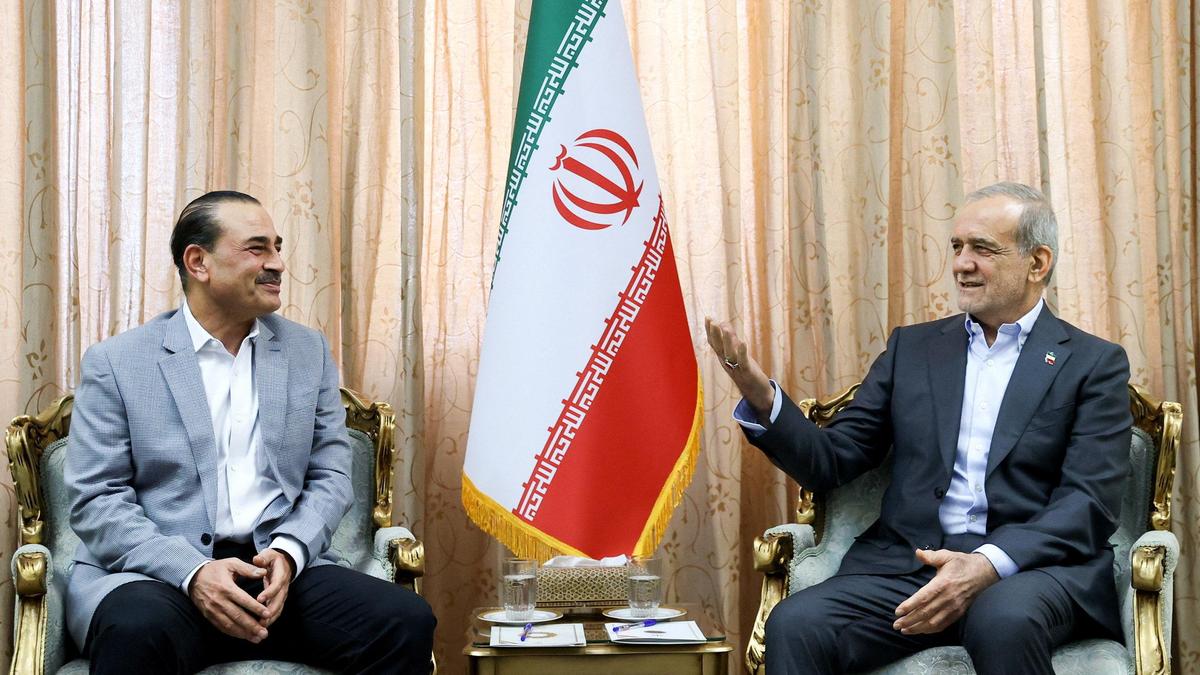
Iranian Foreign Ministry spokesperson Esmaeil Baqaei told state broadcaster IRIB that Tehran is in the final stages of drafting a framework agreement aimed at ending the war with the United States. The proposed memorandum of understanding would consist of 14 clauses and could pave the way for a final agreement within 30 to 60 days. 'Our intention was first to draft a memorandum of understanding, a kind of framework agreement composed of 14 clauses,' Baqaei explained.
Pakistan's army chief Field Marshal Asim Munir played a central role as mediator between the conflicting parties. After concluding two days of talks in Tehran with senior Iranian officials, including meetings with President Masoud Pezeshkian and top negotiator Mohammad Baqer Qalibaf, Pakistan's military described the negotiations as producing 'encouraging progress towards final understanding.' The discussions focused on reaching 'a conclusive agreement,' according to Pakistani military statements.
Positive signals also emerged from the American side. US Secretary of State Marco Rubio expressed optimism about developments during his visit to New Delhi. 'There's been some progress done, some progress made, even as I speak to you now, there's some work being done. There is a chance that, whether it's later today, tomorrow, in a couple days, we may have something to say,' Rubio told reporters.
According to a Financial Times report, mediators are close to finalizing a deal between the US and Iran to extend the ceasefire by 60 days. The proposed agreement would reportedly include the gradual reopening of the strategically crucial Strait of Hormuz, alongside talks on diluting or transferring Iran's stockpile of highly enriched uranium. In return, Washington would ease the blockade on Iranian ports, offer sanctions relief, and begin the phased release of Iranian assets frozen overseas.
The Strait of Hormuz represents one of the world's most important shipping routes, with approximately one-fifth of global oil trade passing through the waterway. Its blockade or disruption during the conflict had significant impacts on international energy markets and the global economy. A reopening would not only contribute to de-escalation but also stabilize global supply chains.
Despite the optimistic tone, Iranian representatives acknowledged that gaps remain between the parties. However, Iran signaled a convergence of views with the United States. Importantly, the contentious nuclear dispute would not be part of the initial discussions, clearing the path for focusing on the immediate cessation of hostilities.
Pakistan's role as mediator underscores the complex geopolitical dynamics in the region. The country maintains important relationships with both the US and Iran and has positioned itself as a neutral actor. Successful mediation could enhance Pakistan's diplomatic standing both regionally and internationally.
The talks occur against the backdrop of a conflict that has persisted for nearly three months with significant regional and global implications. A successful agreement would not only end the immediate military escalation but could also lay the groundwork for broader normalization of relations between Washington and Tehran.
The timing appears crucial, with all parties expressing urgency about reaching a conclusion. The involvement of multiple high-level officials from all three countries suggests the seriousness of the current diplomatic push. Iran's Foreign Minister Abbas Araqchi's direct participation in meetings with Pakistani mediators indicates Tehran's commitment to the process.
While specific details of the 14-clause framework remain undisclosed, the structured approach suggests comprehensive coverage of key issues. The 30-60 day timeline for a final agreement provides a realistic timeframe for addressing complex technical and political details while maintaining momentum from current progress.
Fast take
Diplomatic efforts to end the nearly three-month war between the United States and Iran achieved significant progress on Saturday, with all involved parties reporting optimism about ongoing negotiations mediated by Pakistan.
NOFRAME signal
High divergence · 6 Sources · 4 Regions
What remains open
This matters because the event itself is only part of the story. 4 media regions frame it with noticeably different priorities. Details that remain stable across those boundaries are more robust; details that appear in only one region need context.
Dossier compass
Which media spaces carry the story and how broad the source base is.
Source mix
Underlit angles
- Specific details about war causes
- Extent of previous casualties or damages
- Details about sanctions relief
Open originals
Go straight to the linked articles. NOFRAME does not replace those sources.
Why it matters
This matters because the event itself is only part of the story. 4 media regions frame it with noticeably different priorities. Details that remain stable across those boundaries are more robust; details that appear in only one region need context.
Timeline
Middle East Eye · May 23, 2026 at 03:18 PM
Are US and Iran close to a war-ending agreement?
Globe and Mail · May 23, 2026 at 03:25 PM
U.S., Iran cite progress in war-ending talks
Middle East Eye · May 23, 2026 at 03:43 PM
US, Iran and Pakistan say talks progressing towards agreement
The Hindu · May 23, 2026 at 03:54 PM
Iran signals convergence of views with U.S., says gaps remain