The U.S. State Department announced on Friday the approval of military sales worth over $8.6 billion to four Middle Eastern allies: Israel, Qatar, Kuwait, and the United Arab Emirates. The announcement represents one of the larger recent military transactions by the United States in the strategically important Middle East region.
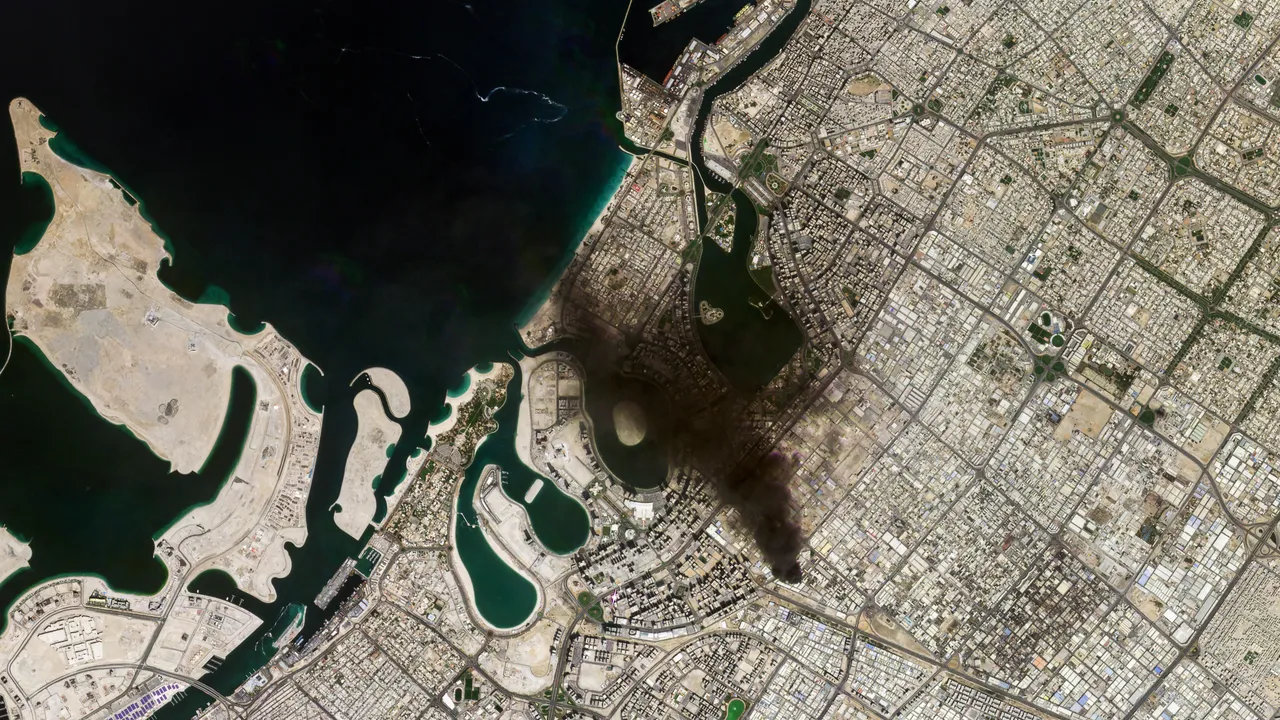
The timing of these approvals coincides with a period of heightened regional tensions. According to multiple media reports, a conflict involving a U.S.-Israeli alliance against Iran has been ongoing for nine weeks. A fragile ceasefire in this conflict has been in effect for more than three weeks, though the situation remains volatile.
The approved weapons sales underscore Washington's continued commitment to supporting its strategic partners in the Middle East through military cooperation and arms transfers. The four recipient countries are considered key allies of the United States in a geopolitically sensitive region where multiple powers compete for influence.
Israel has traditionally been one of the largest recipients of American military aid and weapons sales. The country maintains a special security relationship with the United States, receiving significant annual military assistance. The Gulf states of Qatar, Kuwait, and the UAE have intensified their security cooperation with the U.S. in recent years, seeking to modernize their defense capabilities amid various regional threats.
Specific details about the weapons systems and equipment included in these sales have not been fully disclosed. Such transactions typically encompass aircraft, missile defense systems, ammunition, and other military hardware. The approval process for such sales normally goes through multiple levels within the U.S. government, including congressional notification requirements.
The announcement comes against the backdrop of broader geopolitical tensions in the Persian Gulf region. Iran's Supreme Leader Ali Khamenei recently stated that U.S. military bases in the Middle East cannot protect Washington's allies and declared that the United States has no place in the future of the Persian Gulf. These statements reflect the ongoing rivalry between Iran and the U.S.-led alliance in the region.
Regional tensions have escalated in recent months, with various actors in the Middle East engaged in complex alliances and conflicts. The United States seeks to influence the regional balance through weapons sales and military cooperation with its allies, while Iran and its proxies challenge American influence in the region.
The weapons sales raise questions about the future development of regional security dynamics. While the fragile ceasefire continues, observers note that the underlying tensions remain unresolved. The arms transfers signal both support for allies and potentially contribute to regional military buildup.
For the recipient countries, the weapons purchases represent a strengthening of their military capabilities in an uncertain security environment. However, they also deepen their dependence on American military technology and support. The sales reflect the complex web of relationships and rivalries that characterize Middle Eastern geopolitics.
The long-term implications of these weapons sales for regional stability remain to be seen. As the ceasefire holds but tensions persist, the international community continues to monitor developments in this strategically vital region where energy resources and shipping lanes are of global importance.
Fast take
The U.
NOFRAME signal
Medium divergence · 4 Sources · 3 Regions
What remains open
Coverage is not fully split, but it is not identical either. That makes the comparison useful: the fact base shows the common core, while the perspectives show where political, regional, or institutional priorities change the emphasis.
Dossier compass
Which media spaces carry the story and how broad the source base is.
Source mix
Underlit angles
- Details about specific weapons systems
- Reactions from other regional actors
- Detailed analysis of regional implications
Open originals
Go straight to the linked articles. NOFRAME does not replace those sources.
Why it matters
Coverage is not fully split, but it is not identical either. That makes the comparison useful: the fact base shows the common core, while the perspectives show where political, regional, or institutional priorities change the emphasis.
Timeline
TASS · May 1, 2026 at 04:12 PM
US military bases in Middle East cannot protect Washington’s allies — Khamenei
Al-Monitor · May 1, 2026 at 10:36 PM
US approves military sales of over $8.6 billion to Middle East allies
Straits Times · May 1, 2026 at 10:58 PM
US approves military sales of nearly $11 billion to Middle East allies
TRT World · May 1, 2026 at 11:10 PM
US approves weapons sales of over $8.6B to Israel, UAE, Kuwait, Qatar amid Iran war truce