US Secretary of State Marco Rubio indicated on Friday that there has been slight progress in ongoing talks with Iran, though he emphasized that significant challenges remain. Speaking to reporters after a NATO foreign ministers meeting in Sweden, Rubio stated, "There's been some progress. I wouldn't exaggerate it. I wouldn't diminish it. There's more work to be done. We're not there yet. I hope we get there."
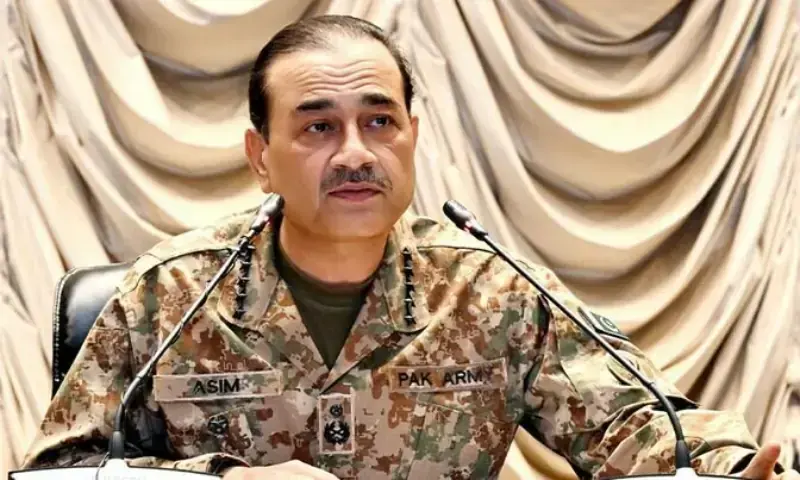
The diplomatic efforts are being facilitated primarily through Pakistani mediation, with Pakistan playing a crucial intermediary role between Washington and Tehran. Pakistan's Chief of Defence Forces and Chief of Army Staff Field Marshal Syed Asim Munir departed on Friday for an official visit to Iran, marking a significant development in the mediation process.
Rubio confirmed that the United States is in "constant communication" with Pakistani mediators, stating that "the highest levels of our government are constantly talking to him." The reference appears to be directed at Field Marshal Munir, whose visit to Tehran is being closely watched as an indicator of diplomatic momentum.
Alongside the military chief's visit, Pakistani Interior Minister Mohsin Naqvi is also in Iran as part of the coordinated diplomatic mission. The simultaneous presence of high-ranking Pakistani officials in Tehran underscores Islamabad's intensive mediation efforts and suggests a coordinated approach to facilitating dialogue between the two adversaries.
Iranian officials have also reportedly confirmed progress in the talks with the United States, according to Al Jazeera reporting. This mutual acknowledgment of advancement, albeit cautious, indicates that both sides see some value in continuing the diplomatic process despite longstanding tensions.
The negotiations are taking place against a backdrop of significant regional tensions and unresolved disputes between Washington and Tehran. Key sticking points reportedly include Iran's uranium stockpile and control over the strategically vital Strait of Hormuz. The strait is a critical chokepoint for global oil shipments, making its control a matter of international economic and security concern.
The NATO meeting in Sweden where Rubio made his comments also addressed issues related to policing the Strait of Hormuz, highlighting the international dimensions of the US-Iran tensions. The involvement of NATO allies in discussions about the region demonstrates the broader implications of any potential agreement or continued conflict.
Pakistan's emergence as a key mediator is notable given the country's complex relationships with both the United States and Iran. The deployment of both the defense chief and interior minister to Tehran suggests a high-level commitment from Islamabad to facilitate meaningful dialogue between the two powers.
Despite the reported progress, substantial obstacles remain. Previous reporting has described both sides as maintaining "rigid stances" on key issues, and the complexity of the disputes suggests that any comprehensive agreement will require significant compromises from both parties.
The timing of these diplomatic efforts is particularly significant given ongoing regional instability and uncertainty about whether tensions might escalate into broader conflict. The cautious optimism expressed by officials on both sides suggests a recognition that diplomatic solutions, while challenging, remain preferable to military confrontation.
While specific details about the content of the negotiations remain confidential, the coordinated nature of the Pakistani mediation efforts and the measured but positive statements from both American and Iranian officials indicate serious attempts at finding common ground.
The international community is closely monitoring these developments, as any significant breakthrough or failure in US-Iran relations would have far-reaching implications for Middle Eastern stability and global energy markets. The Strait of Hormuz's role as a critical shipping lane means that tensions in the region directly impact global oil prices and supply chains.
Fast take
US Secretary of State Marco Rubio indicated on Friday that there has been slight progress in ongoing talks with Iran, though he emphasized that significant challenges remain.
NOFRAME signal
Medium divergence · 7 Sources · 4 Regions
What remains open
Coverage is not fully split, but it is not identical either. That makes the comparison useful: the fact base shows the common core, while the perspectives show where political, regional, or institutional priorities change the emphasis.
Dossier compass
Which media spaces carry the story and how broad the source base is.
Source mix
Underlit angles
- Specific details about negotiation content
- Concrete obstacles in the talks
- Details about Iranian reactions
Open originals
Go straight to the linked articles. NOFRAME does not replace those sources.
Why it matters
Coverage is not fully split, but it is not identical either. That makes the comparison useful: the fact base shows the common core, while the perspectives show where political, regional, or institutional priorities change the emphasis.
Timeline
Al-Monitor · May 22, 2026 at 02:15 PM
Iran talks see momentum as Pakistani officials visit Tehran
Middle East Eye · May 22, 2026 at 02:23 PM
US Secretary of State Rubio indicates "slight progress" in talks with Iran
Al-Monitor · May 22, 2026 at 02:36 PM
Rubio cites some progress on Iran talks but "we're not there yet"
Dawn · May 22, 2026 at 02:51 PM
CDF Asim Munir leaves for official visit to Iran: security sources