A dispute between the Trump administration and several of America's largest news organizations escalated into open confrontation in late September 2026, testing the boundaries between government access and press freedom in the United States. The conflict began when the administration barred CNN, MS NOW and Politico from entering White House grounds. On Monday, the three outlets responded with a joint lawsuit against President Donald Trump and several administration officials, alleging that the ban violates their constitutionally protected rights to free speech and a free press under the First Amendment.
The response from the remaining major networks was notably unified. ABC, CBS, Fox News and NBC announced they would suspend their shared 'pool' video coverage of the president in solidarity with the barred outlets. The press pool system is a decades-old arrangement in which a rotating team of journalists supplies video and audio coverage of the White House on behalf of all participating networks. The collective withdrawal marks a significant break from this practice and has been described by observers as a rare show of unity among normally competing broadcasters.
The practical effects of the standoff became immediately visible during a public event. At the unveiling of a new helicopter landing pad on the White House's South Lawn, Trump used oversized gold scissors to cut a red, white and blue ribbon before addressing officials and construction workers present at the ceremony. Because major networks did not send their own camera crews, Trump's remarks were largely inaudible or only partially accessible to national television audiences.
In response to losing its usual broadcast presence, the White House announced the launch of its own streaming service, branded 'Trump TV,' offering round-the-clock access to the president's speeches, appearances and past announcements. Critics view the platform as an attempt to establish a direct, unfiltered communication channel between the president and the public that bypasses traditional journalistic scrutiny.
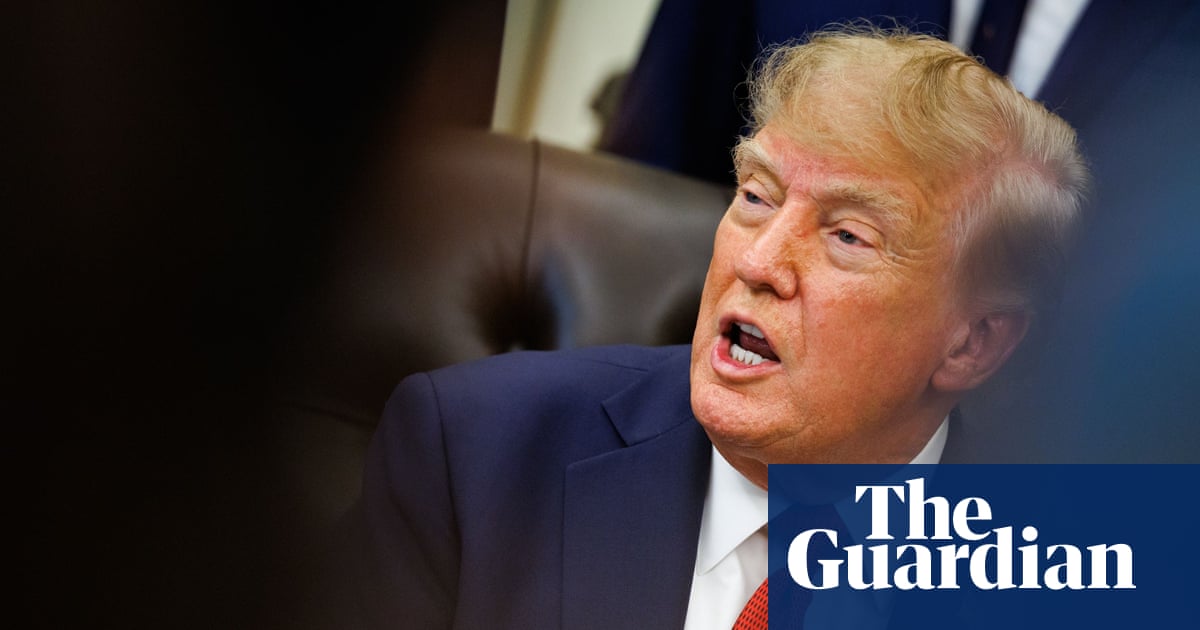
President Trump firmly rejected the allegations raised by the suing media organizations. He said the Oval Office and the conduct of presidential business must be treated with 'decorum, respect, and dignity,' and accused CNN, MS NOW and Politico of systematically distorting coverage of his administration. In his view, the lawsuit itself—not the entry ban—represented an attack on democratic principles.
At the same time, several outlets reported an apparent exception to the administration's strict stance. According to reports, First Lady Melania Trump allowed a CNN reporter to cover one of her own public events in New York. Observers interpreted the episode as evidence that enforcement of the ban has not been entirely consistent within the administration.
International coverage of the episode varies considerably. Western outlets and many Global South publications largely frame the story as a matter of press freedom and constitutional checks on executive power. Russian state media, by contrast, have used the dispute to question the legitimacy and cohesion of Western press institutions. Chinese and other Asian outlets have generally reported the lawsuit and the networks' boycott in a comparatively factual manner, without pronounced editorial framing.
Whether and when a court will rule on the lawsuit remains unclear, as does whether the entry ban will remain in place or be reversed under legal or political pressure. The outcome is likely to set an important precedent for how far executive authorities can restrict journalists' access to official government spaces without breaching constitutional protections.
Fast take
A dispute between the Trump administration and several of America's largest news organizations escalated into open confrontation in late September 2026, testing the boundaries between government access and press freedom in the United States.
NOFRAME signal
Stable coverage · 12 Sources · 5 Regions
What remains open
The source picture is relatively consistent. That still makes the details worth reading: small differences in wording, omissions, and source selection can reveal what each region treats as important.
Dossier compass
Which media spaces carry the story and how broad the source base is.
Source mix
Underlit angles
- Details of the filed lawsuit and its legal grounds are largely missing
- Little discussion of the long-term significance for US press freedom
- Legal arguments of the suing media organizations are barely presented
Open originals
Go straight to the linked articles. NOFRAME does not replace those sources.
Why it matters
The source picture is relatively consistent. That still makes the details worth reading: small differences in wording, omissions, and source selection can reveal what each region treats as important.
Timeline
NDTV World · September 22, 2026 at 04:42 AM
White House Launches Trump TV, 24/7 Streaming Platform After US Networks Ban
India Today · September 22, 2026 at 05:26 AM
Melania allows CNN to cover her event amid Trump's White House press ban
India Today · September 22, 2026 at 05:35 AM
Trump TV goes live: White House launches 24/7 streaming platform after media ban
Daily Maverick · September 22, 2026 at 06:36 AM
CNN, MS NOW and Politico sue Trump, challenging White House ban