The World Health Organization declared a public health emergency of international concern on Sunday over an Ebola outbreak in the Democratic Republic of Congo and Uganda. The decision came just one day after the outbreak was officially announced, following confirmation of cases in the capitals of both countries.
According to WHO data, approximately 88 people have died from the highly contagious hemorrhagic fever in the Democratic Republic of Congo, with one death reported in Uganda. At least 336 suspected cases have been documented overall, with DR Congo accounting for all cases except two that were reported in neighboring Uganda. The organization cautioned that the outbreak's real scale remains unclear.
Particularly concerning is that the current outbreak is caused by the Bundibugyo strain of the Ebola virus, for which no approved vaccine is currently available. This distinguishes the situation from previous outbreaks where vaccines could be deployed for containment efforts. The WHO emphasized significant uncertainties regarding the true number of infected persons and geographic spread associated with this event.
Despite declaring the international health emergency, the WHO clarified that the outbreak does not meet the criteria for a pandemic emergency – the highest-level alert introduced in 2024. This distinction is important for the type of international response and resource mobilization that will follow.
The rapid spread to urban areas, including the capitals of both countries, has heightened concerns among health authorities. Urban centers provide ideal conditions for virus transmission due to high population density and mobility. The confirmation of cases in Kinshasa and Kampala demonstrates that the virus has already reached major transportation hubs.
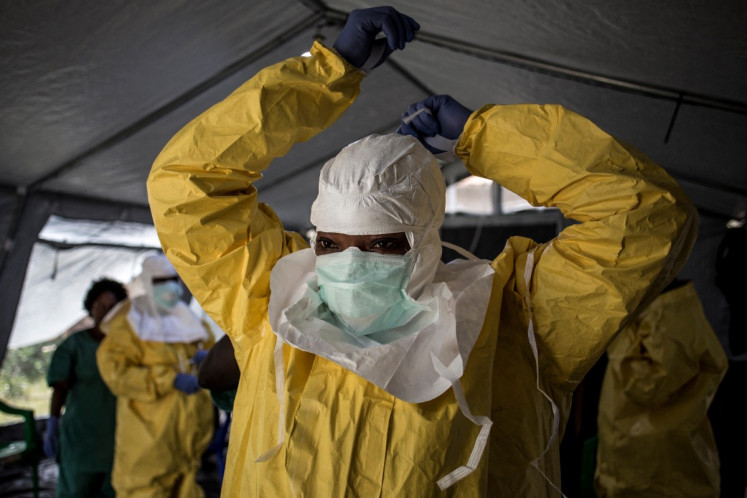
Medical relief organizations are already responding to the crisis. Médecins Sans Frontières is preparing a large-scale response, drawing on its experience treating Ebola patients in the region. The organization has previously established treatment centers during past outbreaks in DR Congo, deploying personnel equipped with personal protective equipment.
The WHO's declaration of a public health emergency of international concern triggers various mechanisms, including enhanced international coordination, resource mobilization, and support for affected countries. This can accelerate the provision of medical personnel, equipment, and financial resources to combat the outbreak.
The Democratic Republic of Congo has experienced multiple Ebola outbreaks in the past, including the devastating 2018-2020 outbreak in eastern provinces that claimed over 2,000 lives. Experiences from previous outbreaks have led to improved surveillance and response systems, but challenges remain significant.
The international community is closely monitoring the situation, as Ebola outbreaks have the potential to spread across borders. Neighboring countries of DR Congo and Uganda are expected to strengthen their surveillance measures and tighten border controls. The WHO is working closely with regional health authorities to ensure a coordinated response and prevent further spread.
The absence of an approved vaccine for the Bundibugyo strain presents additional challenges for containment efforts. Unlike the Zaire strain of Ebola, for which effective vaccines were developed and used in previous outbreaks, medical teams must rely primarily on isolation, contact tracing, and supportive care to manage cases.
Health workers face significant risks in treating patients, requiring extensive protective equipment and training. The outbreak's emergence in urban areas complicates contact tracing efforts, as infected individuals may have had numerous interactions before symptoms appeared. Swift identification and isolation of cases remain critical for preventing further transmission in densely populated areas.
Fast take
The World Health Organization declared a public health emergency of international concern on Sunday over an Ebola outbreak in the Democratic Republic of Congo and Uganda.
NOFRAME signal
Stable coverage · 11 Sources · 5 Regions
What remains open
The source picture is relatively consistent. That still makes the details worth reading: small differences in wording, omissions, and source selection can reveal what each region treats as important.
Dossier compass
Which media spaces carry the story and how broad the source base is.
Source mix
Underlit angles
- Detailed information about the Bundibugyo strain
- Specific challenges in vaccine development
- Specific details about treatment options
Open originals
Go straight to the linked articles. NOFRAME does not replace those sources.
Why it matters
The source picture is relatively consistent. That still makes the details worth reading: small differences in wording, omissions, and source selection can reveal what each region treats as important.
Timeline
BBC World · May 17, 2026 at 07:08 AM
WHO declares Ebola outbreak in DR Congo a global health emergency
Africa News · May 17, 2026 at 07:10 AM
WHO declares Ebola outbreak an emergency of international concern
NY Times World · May 17, 2026 at 07:23 AM
W.H.O. Declares Ebola Outbreak a Global Health Emergency
India Today · May 17, 2026 at 07:28 AM
Ebola Outbreak: Understanding the rare Bundibugyo strain behind the crisis