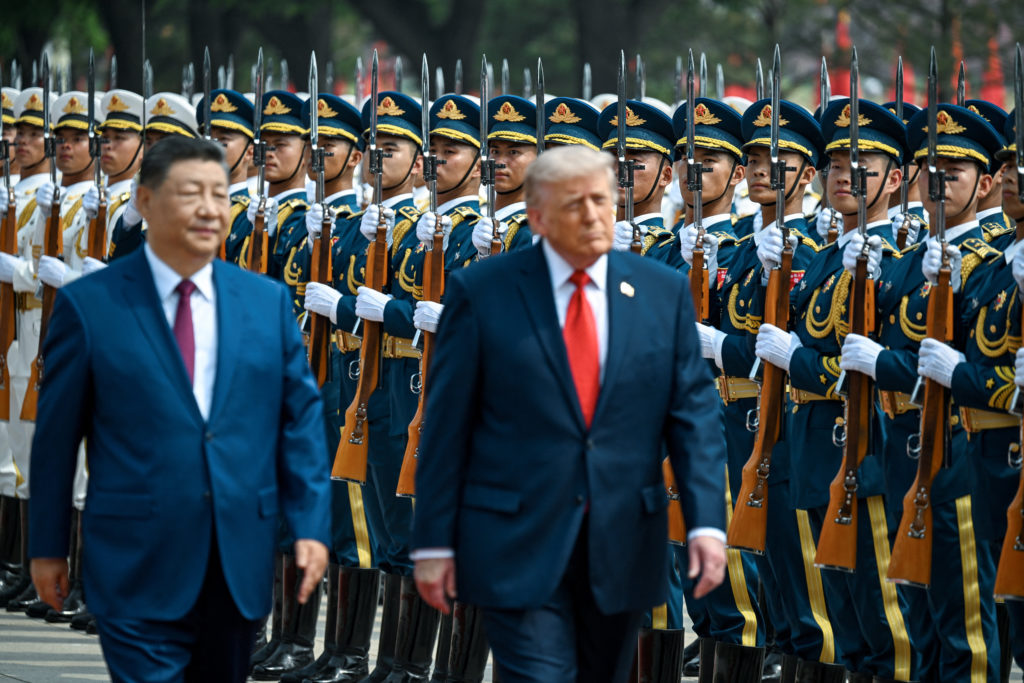
Chinese President Xi Jinping issued a stark warning to US President Donald Trump during their Beijing summit, cautioning that mishandling of Taiwan issues could lead to conflict between the United States and China. The warning came during a highly anticipated meeting that exposed deep disagreements between the two superpowers across multiple critical areas.
Taiwan has stood at the center of US-China tensions for decades. The self-governing island is viewed by Beijing as a breakaway province that must be reunified with the mainland, by force if necessary. The United States, while maintaining no official diplomatic relations with Taiwan since 1979, supports the island through arms sales and political backing under the Taiwan Relations Act.
Joe Mazur, a geopolitics analyst at consultancy Trivium China, interpreted Xi's statements as an unambiguous warning: "He is warning the US side in no uncertain terms not to screw around." This assessment underscores the seriousness with which Beijing treats the Taiwan question and how sensitively China reacts to any perceived US support for the island.
US Secretary of State Marco Rubio responded calmly to Xi's warning following the summit, emphasizing that American Taiwan policy remains unchanged. Rubio downplayed the significance of the Chinese statements by noting that China routinely raises the Taiwan issue in bilateral discussions. This reaction reflects Washington's efforts to maintain existing policy while avoiding further escalation.
The summit addressed additional contentious issues beyond Taiwan that strain US-China relations. These included ongoing trade disputes, differing positions on the war in Iran, and fundamental questions about global power distribution. This range of topics illustrates the complexity of relations between the world's two largest economies.
Despite substantive differences, both sides made efforts to maintain a respectful atmosphere. Xi Jinping made the remarkable observation at a banquet honoring Trump that China's rejuvenation and Trump's "Make America Great Again" agenda could indeed go hand in hand. This statement suggests Beijing's willingness to maintain constructive dialogue despite disagreements.
Observers also analyzed the body language of both leaders during the meeting. While Trump spoke in conciliatory terms - a marked contrast to his often sharp China rhetoric at home - Xi appeared resolute and principled in his positions. These different presentations possibly reflected the various domestic political constraints both politicians face.
The Taiwan question remains one of the most dangerous flashpoints in international relations. Military experts have warned for years about the risk of inadvertent escalation that could lead to direct conflict between the US and China. Such a conflict would have catastrophic implications not only for the region but for the entire global economy.
The summit's outcomes demonstrate that despite diplomatic efforts, fundamental conflicts of interest between Washington and Beijing remain unresolved. Both sides face the challenge of pursuing their strategic objectives without provoking a confrontation that would have devastating consequences for all involved.
The exchange highlighted the delicate balance both nations must maintain between competition and cooperation. While Xi's warning was direct and uncompromising, the overall tone of the summit suggested both leaders recognize the importance of keeping communication channels open even amid serious disagreements.
Analysts noted that the meeting's significance extends beyond bilateral relations, as US-China dynamics increasingly shape global politics, economics, and security arrangements. The international community watches these interactions closely, understanding that stability between the superpowers affects worldwide prosperity and peace.
Fast take
Chinese President Xi Jinping issued a stark warning to US President Donald Trump during their Beijing summit, cautioning that mishandling of Taiwan issues could lead to conflict between the United States and China.
NOFRAME signal
Stable coverage · 6 Sources · 3 Regions
What remains open
The source picture is relatively consistent. That still makes the details worth reading: small differences in wording, omissions, and source selection can reveal what each region treats as important.
Dossier compass
Which media spaces carry the story and how broad the source base is.
Source mix
Underlit angles
- Details about Trump's conciliatory tone compared to his domestic rhetoric
- Detailed analysis of body language and conversation dynamics
- Xi's specific statement about coexistence of China's rejuvenation and MAGA
Open originals
Go straight to the linked articles. NOFRAME does not replace those sources.
Why it matters
The source picture is relatively consistent. That still makes the details worth reading: small differences in wording, omissions, and source selection can reveal what each region treats as important.
Timeline
PBS NewsHour · May 14, 2026 at 06:31 PM
Xi tells Trump U.S. and China could clash over Taiwan
NY Times World · May 14, 2026 at 07:24 PM
Trump Was Flattering, Xi Was Resolute. The Difference Spoke Volumes.
NY Times World · May 14, 2026 at 07:55 PM
The Body Language of the Trump-Xi Summit Spoke Volumes
Taipei Times · May 15, 2026 at 12:00 AM
U.S. Taiwan policy unchanged after Trump-Xi summit in Beijing: Rubio