Iran is awaiting an official response from Washington after the Wall Street Journal reported that US President Donald Trump had rejected a plan submitted by Tehran to end fighting across the Middle East. The proposal calls for reopening the Strait of Hormuz — a waterway critical to global oil supplies — within seven days, alongside a broader halt to regional hostilities. The development directly concerns US-Iran relations but also carries wider significance for global energy markets, given the strait's importance as one of the world's key oil transit routes.
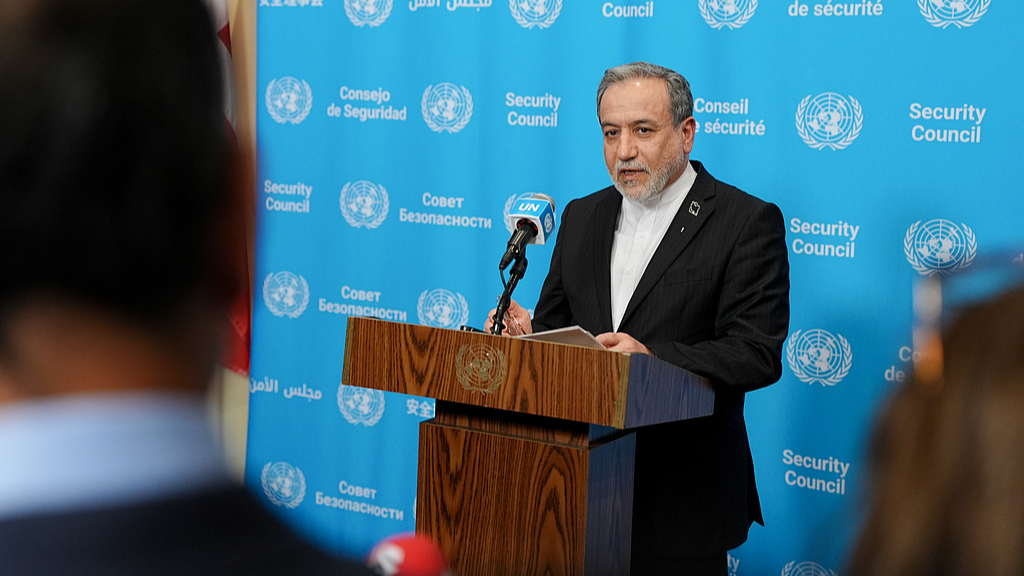
Iran presented the plan on the sidelines of the United Nations General Assembly in New York, saying it had been transmitted to American officials through Qatari mediators. Iran's foreign minister stated that the decision on the proposal now rests with the United States. This diplomatic push comes after nearly seven months of stalemate in the conflict between Washington and Tehran. The renewed mediation efforts during the UN gathering had initially raised some cautious optimism about progress toward a deal.
However, within hours of Iran's proposal becoming public, the Wall Street Journal reported, citing unnamed US officials, that Trump had rejected it. According to the report, the president told aides he expects bombing to resume after the November congressional elections. This claim remains contested, as it has not been officially confirmed by Trump or his administration and rests solely on anonymous sourcing from the Wall Street Journal.
The report also indicated that Trump expressed skepticism that Iran would actually meet the conditions set by the United States. This suggests that, from the US administration's perspective, considerable distrust persists regarding Iranian commitments, even though the proposal formally set out a concrete seven-day window for reopening the strait and ending hostilities.
Alongside these developments, Trump and Chinese President Xi Jinping held talks on the sidelines of the UN General Assembly regarding the situation in the Middle East. According to reports, Trump warned Xi against providing support to Iran, while China assured him it would not do so. Some accounts additionally suggest China urged Trump to return to a previously existing memorandum of understanding. The precise content and context of this conversation remain unclear, as different reports emphasize different details and do not offer a consistent account.
International coverage of these events shows notable differences in emphasis. Some reports foreground Iran's proposal and the role of Qatari mediators, stressing that the decision now lies with Washington. Others focus more heavily on Trump's reported expectation of resuming airstrikes after the November elections. Still other coverage centers primarily on the Trump-Xi conversation and China's assurance regarding Iran, while giving less attention to Tehran's perspective on the negotiation process.
An official US response to the Wall Street Journal report has not yet been issued. This leaves unclear whether Washington fully rejects Iran's plan or whether the position reported is preliminary, potentially shaped by domestic political considerations tied to the upcoming midterm elections. The precise conditions the United States expects Iran to meet have also not been publicly detailed.
The situation is being closely watched internationally, since both a possible escalation involving renewed military action and a possible de-escalation through diplomatic mediation could have significant consequences for the region and global oil markets. With no official US reaction yet available, the outcome of the initiative remains uncertain. Observers note that the coming weeks — particularly in light of the US congressional elections in November — could prove decisive in determining whether the prolonged standoff between the two countries begins to ease or whether tensions escalate further.
Fast take
Iran is awaiting an official response from Washington after the Wall Street Journal reported that US President Donald Trump had rejected a plan submitted by Tehran to end fighting across the Middle East.
NOFRAME signal
Medium divergence · 9 Sources · 4 Regions
What remains open
Coverage is not fully split, but it is not identical either. That makes the comparison useful: the fact base shows the common core, while the perspectives show where political, regional, or institutional priorities change the emphasis.
Dossier compass
Which media spaces carry the story and how broad the source base is.
Source mix
Underlit angles
- Less emphasis on details of Trump's alleged post-election bombing intentions
- Iran's own perspective on the negotiation process is less elaborated
- The role of Qatari mediators and details of Iran's proposal receive little attention
Open originals
Go straight to the linked articles. NOFRAME does not replace those sources.
Why it matters
Coverage is not fully split, but it is not identical either. That makes the comparison useful: the fact base shows the common core, while the perspectives show where political, regional, or institutional priorities change the emphasis.
Timeline
Al-Monitor · September 26, 2026 at 04:46 AM
Iran awaits US move after WSJ report says Trump rejects peace plan
CGTN · September 26, 2026 at 04:48 AM
Trump rejects Iran's 'seven-day' proposal to reopen Strait of Hormuz
India Today · September 26, 2026 at 04:48 AM
Trump rejects Iran's peace plan, US likely to resume bombing after midterm polls
RT · September 26, 2026 at 05:11 AM
Trump prepares to bomb Iran after midterms – WSJ